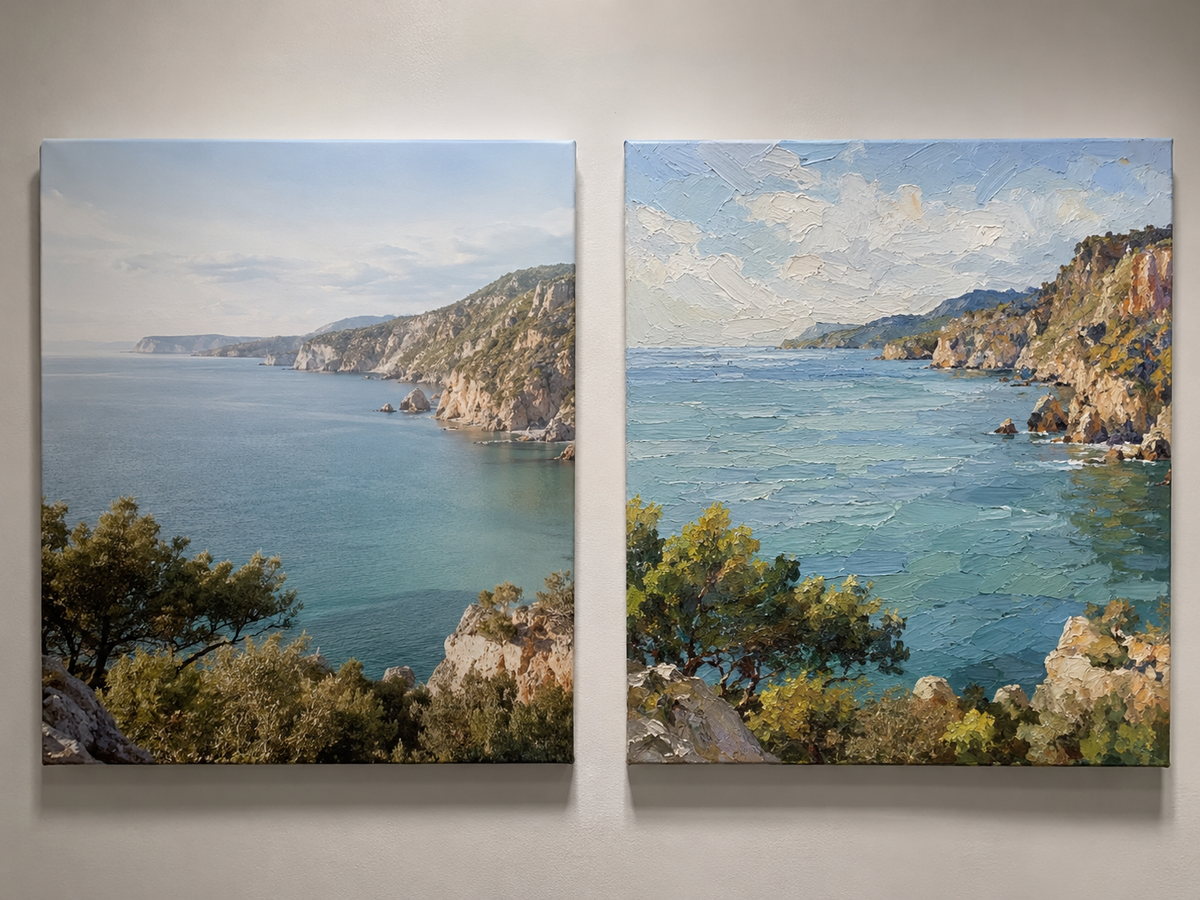
 A well-designed gallery wall should feel intentional, but it should not look overly controlled.
This balance is not always easy to achieve. When every frame is perfectly aligned and every object follows the same shape, color, and spacing, the result can feel rigid. On the other hand, when too many unrelated pieces are combined without a clear visual relationship, the wall can feel chaotic.
3D wall art offers a more flexible solution.
Through raised surfaces, layered materials, sculptural forms, and visible texture, three-dimensional artwork can bring structure to a wall without making the space feel formal or stiff. It creates visual rhythm while allowing the composition to remain organic.
For modern homes, hotels, offices, and interior design projects, 3D gallery wall art can provide both order and personality.
What Is 3D Gallery Wall Art?
3D gallery wall art refers to wall decor that uses physical depth, layered surfaces, or sculptural elements to create a more dimensional display.
Unlike flat prints, dimensional artwork interacts with light and shadow. Its appearance may change throughout the day as natural or artificial light moves across the surface.
Common forms include:
-
Textured canvas paintings
-
Sculptural wall panels
-
Layered abstract artwork
-
Relief-style wall art
-
Mixed-media compositions
-
Raised plaster or palette-knife paintings
The goal is not simply to make the artwork project outward from the wall. Effective 3D wall art uses depth as part of the composition.
This can make a gallery wall feel more architectural while still preserving softness and movement.
Explore our collection of 3D textured wall art designed for modern residential and commercial interiors.
Why Some Gallery Walls Feel Too Stiff
A gallery wall often feels stiff when it depends too heavily on repetition.
Perfectly matched frames, equal spacing, identical artwork sizes, and strict symmetry can create visual order. However, too much consistency can remove character.
The problem is not structure itself. The problem is structure without variation.
A successful gallery wall usually combines both:
-
Repetition for cohesion
-
Variation for movement
For example, you may repeat a neutral color palette while changing the artwork size. You may use similar textures while mixing horizontal and vertical formats. You may keep the composition balanced without making both sides exactly symmetrical.
Three-dimensional artwork naturally supports this approach because texture introduces variation even when the color palette remains restrained.
How 3D Wall Art Creates Visual Structure
Structure does not always come from straight lines or perfect alignment.
It can also come from repeated shapes, layered textures, consistent spacing, and a controlled palette.
Depth Creates Hierarchy
A flat wall arrangement can sometimes feel visually equal, with every piece competing for the same level of attention.
3D wall art creates hierarchy.
Raised areas catch the light, deeper sections form shadows, and larger textured elements naturally become focal points. This gives the eye a clear path through the arrangement.
Texture Adds Rhythm
Texture can create movement without using bright color.
Repeated ridges, curved lines, rough surfaces, or layered materials guide the eye across the wall. This produces rhythm and helps separate the composition from a standard framed print display.
Neutral Colors Maintain Balance
Many forms of modern 3D wall art use beige, white, gray, brown, black, and muted natural tones.
These colors allow the physical texture to remain the main feature. They also make it easier to combine several pieces without creating visual overload.
Structured Does Not Mean Symmetrical
Symmetry can be useful, but it is not the only way to create balance.
An asymmetrical gallery wall can still feel structured when the visual weight is distributed carefully.
For example, one large textured painting can be balanced by two smaller pieces on the opposite side. A darker artwork may be balanced by a lighter but larger piece. A strong vertical form can be offset by a wide horizontal composition.
This creates a wall that feels composed but not predictable.
The objective is to make the arrangement feel stable without making every element identical.
Choosing the Right 3D Wall Art
The right artwork depends on the scale, materials, and function of the room.
Consider the Size of the Wall
Small artwork can disappear on a large wall, while too many small pieces can make the space feel fragmented.
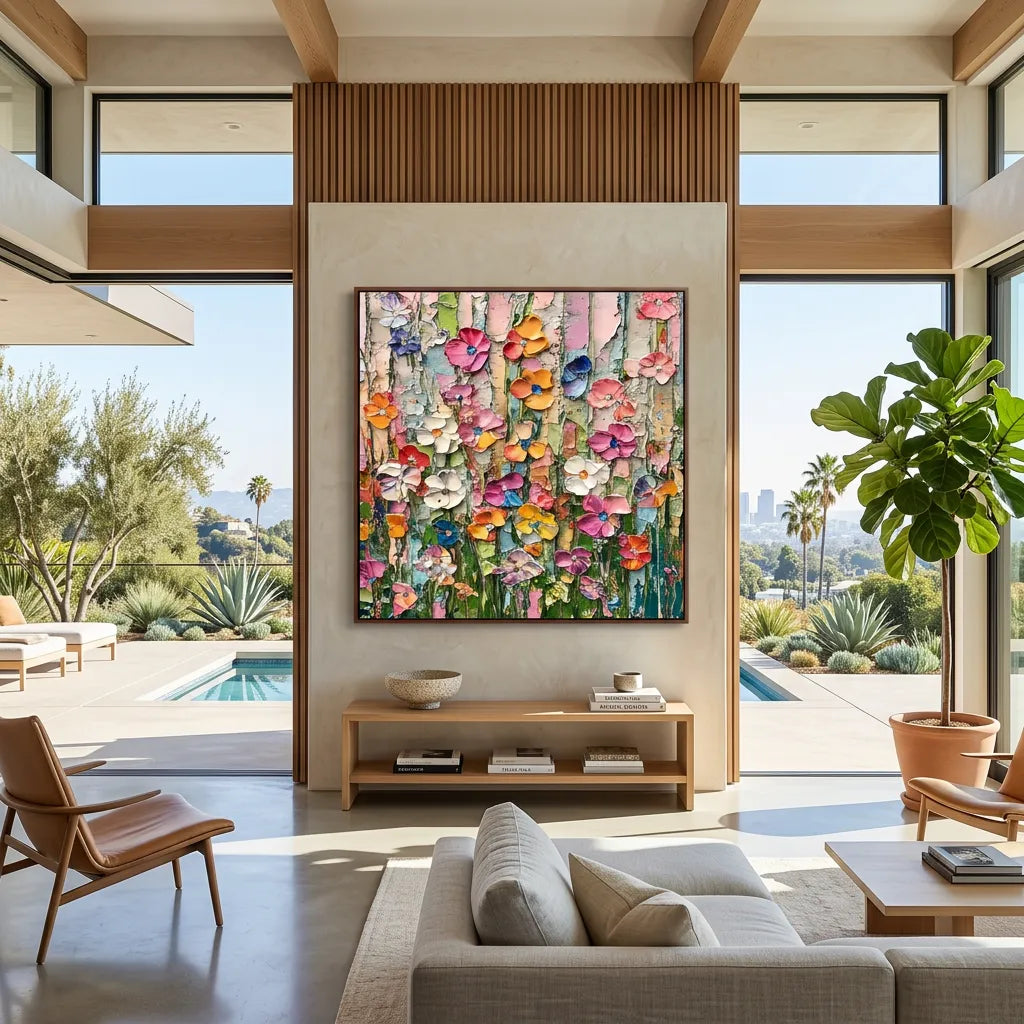
For living rooms, dining rooms, hotel lobbies, and offices, one large textured artwork may create more impact than several unrelated pieces.
A larger piece also allows the texture to be appreciated from a distance.
Match the Texture to the Interior
A room with smooth walls, simple furniture, and clean architectural lines can benefit from heavily textured wall art.
If the space already contains rough stone, strong wood grain, decorative plaster, or sculptural furniture, a more restrained artwork may create better balance.
The goal is contrast, not competition.
Think About Lighting
Lighting is especially important for dimensional wall art.
Side lighting, wall washers, track lighting, and natural window light can highlight raised surfaces and create changing shadows.
Flat front lighting may reduce the visible depth of the artwork.
Before choosing a piece, consider where the light comes from and how it will move across the surface.

3D Wall Art for the Living Room
The living room is one of the best places to use dimensional artwork.
A large textured painting above the sofa can anchor the seating area and give the room a clear visual center. It can also introduce depth without requiring many additional decorative objects.
For a modern living room, consider:
-
Large neutral textured paintings
-
Black-and-white relief artwork
-
Organic abstract forms
-
Beige sculptural wall art
-
Multi-panel textured compositions
The artwork should relate to the width of the sofa, console, or wall, but it does not need to match the furniture exactly.
A stronger result often comes from coordinating tone and material rather than copying color.
Using 3D Art in a Gallery Wall Arrangement
When combining several pieces, choose one artwork to act as the anchor.
This is usually the largest, most textured, or visually strongest piece. Other artworks should support it rather than compete with it.
Keep the arrangement cohesive by repeating one or two elements:
-
A shared neutral palette
-
Similar frame finishes
-
Related shapes
-
Consistent texture
-
Repeated spacing
Avoid repeating everything at once.
For example, if all the artwork uses similar colors, allow the sizes and shapes to vary. If the sizes are consistent, vary the surface texture.
This is what makes the wall feel structured but not stiff.
Hand-Painted 3D Wall Art vs. Flat Prints
Flat prints can reproduce an image, but they cannot fully reproduce physical texture.
Hand-painted 3D wall art contains real surface variation. Raised materials, palette-knife marks, layered paint, and irregular details make each piece visually distinct.
These surfaces respond to light in ways that printed texture cannot.
For interiors where craftsmanship, depth, and material quality matter, hand-painted dimensional artwork usually creates a stronger presence.
It also works well in minimalist rooms because a single textured piece can provide enough visual interest without requiring excessive decoration.
Our 3D textured painting collection includes hand-painted designs created for living rooms, bedrooms, offices, hotels, and custom interior projects.
Custom 3D Wall Art for Interior Projects
Standard sizes do not always suit large or unusually proportioned walls.
Custom 3D wall art allows buyers, designers, and project managers to adjust:
-
Size
-
Orientation
-
Color
-
Texture level
-
Composition
-
Frame style
-
Panel arrangement
This is especially useful for hotel projects, model homes, offices, restaurants, and large residential interiors.
A custom piece can maintain the visual language of the room while fitting the exact wall dimensions.
Final Thoughts
The best 3D gallery wall art does more than decorate an empty surface.
It creates depth, rhythm, and visual structure. It can organize a room without making it feel controlled and add personality without creating clutter.
The key is balance.
Use repetition to create cohesion, but allow variation in scale, shape, and texture. Choose artwork that interacts with the room’s materials and lighting. Most importantly, avoid treating structure as the same thing as perfect symmetry.
A well-composed wall should feel deliberate, but it should still feel natural.
Discover our full collection of hand-painted 3D wall art and find textured artwork for modern residential and commercial spaces.
Frequently Asked Questions
What is 3D wall art?
3D wall art is artwork with raised surfaces, layered materials, sculptural forms, or physical texture that creates visible depth and shadow.
Is 3D wall art suitable for modern interiors?
Yes. It works particularly well in modern, minimalist, contemporary, organic modern, and luxury interiors because it adds depth without requiring bright colors or complex decoration.
How do I make a gallery wall feel structured but not stiff?
Use a consistent color palette or material, but vary the artwork size, orientation, and texture. Avoid making every piece identical or perfectly symmetrical.
Where should I place 3D wall art?
Common locations include above a sofa, bed, console table, dining area, fireplace, reception desk, or office wall.
Is hand-painted 3D wall art better than printed wall art?
Hand-painted 3D wall art has real surface depth and interacts more naturally with light. Printed wall art may copy the appearance of texture but cannot fully reproduce its physical presence.
Can 3D textured wall art be customized?
Yes. Size, color, texture, composition, orientation, and frame style can often be customized to suit specific residential or commercial projects.