 In a world filled with polished surfaces, fast-changing trends, and mass-produced decoration, many homeowners are beginning to look for interiors that feel calmer, more personal, and more authentic.
This is where wabi-sabi wall art becomes especially meaningful.
Rooted in Japanese philosophy, wabi-sabi celebrates simplicity, natural materials, irregular textures, and the beauty of imperfection. Instead of demanding flawless symmetry or excessive decoration, it encourages us to appreciate objects that feel honest, quiet, and shaped by time.
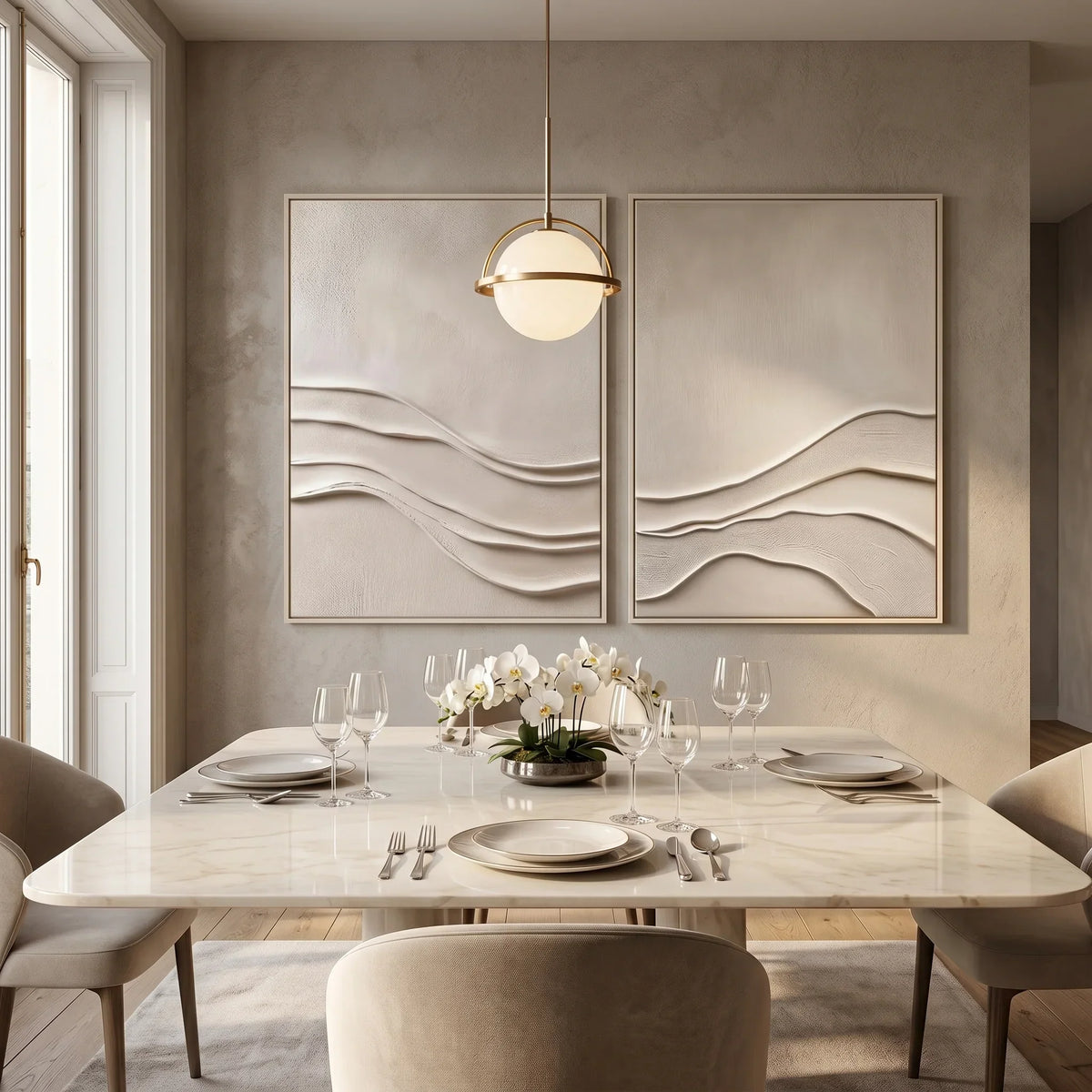
When introduced into a home through wall art, the wabi-sabi aesthetic can create a sense of warmth and stillness without making a room feel empty or unfinished. A textured painting, a neutral abstract composition, or a hand-painted canvas with visible brushwork can become a subtle focal point while supporting the overall atmosphere of the space.
For interiors that value restraint, craftsmanship, and natural character, wabi-sabi wall art offers a timeless alternative to temporary design trends.
What Is Wabi-Sabi Wall Art?
Wabi-sabi wall art is artwork inspired by the Japanese appreciation of imperfection, simplicity, transience, and natural beauty.
Rather than relying on bright colors, sharp geometry, or highly polished finishes, this style often features:
-
Uneven or organic compositions
-
Neutral and earthy colors
-
Visible texture and brushwork
-
Natural-looking materials
-
Muted contrasts
-
Minimalist forms
-
Deliberately imperfect surfaces
A wabi-sabi painting may include rough plaster-like textures, faded beige tones, soft gray areas, irregular lines, or subtle cracks and marks. These details are not treated as flaws. They are part of the artwork’s identity.
This approach gives each piece a sense of depth and individuality. It also makes wabi-sabi artwork especially suitable for interiors that are intended to feel calm, grounded, and lived-in.
You can explore our collection of wabi-sabi wall art to see how neutral tones, handmade textures, and minimalist compositions work together in contemporary spaces.
The Connection Between Wabi-Sabi Art and Japanese Minimalism
Wabi-sabi and Japanese minimalism are closely related, but they are not exactly the same.
Japanese minimalism focuses on reducing visual clutter and creating purpose through simplicity. Wabi-sabi adds another layer by embracing age, irregularity, and imperfection.
A minimalist room may be clean and highly controlled. A wabi-sabi room, by contrast, may include handmade pottery, weathered wood, linen fabrics, rough stone, and textured artwork. The space remains restrained, but it does not feel sterile.
This balance is one of the reasons wabi-sabi wall art works well in modern interiors.
It adds warmth without creating visual noise. It brings character without relying on elaborate ornament. It can make a carefully designed room feel more human.
The goal is not to fill every wall. The goal is to choose fewer objects with greater meaning.
Why Texture Matters in Wabi-Sabi Wall Art
Texture is one of the most important elements of wabi-sabi art.
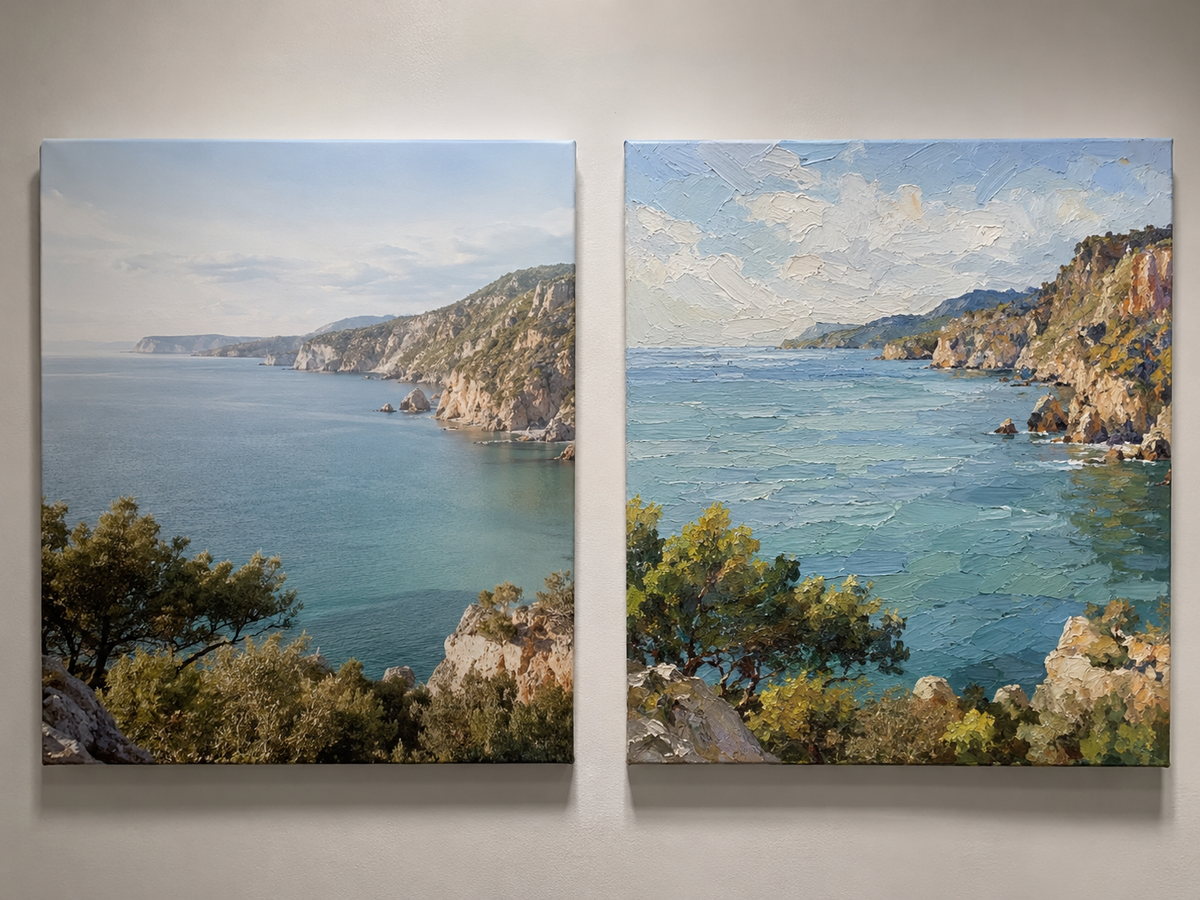
A flat printed image can reproduce color and composition, but it cannot fully recreate the physical presence of a hand-painted surface. Raised layers, uneven marks, palette-knife details, and visible brushstrokes interact with light throughout the day.
As natural light changes, shadows move across the surface of the painting. This gives the artwork depth and allows it to feel different from one angle to another.
Textured wall art also creates a stronger relationship with other natural materials in the room, including:
-
Linen
-
Raw wood
-
Travertine
-
Concrete
-
Clay
-
Wool
-
Aged metal
-
Natural stone
For this reason, textured wabi-sabi wall art is not simply decorative. It can become part of the room’s material composition.
In a minimalist setting, where there may be fewer decorative objects, surface quality becomes more important. A single hand-painted artwork with rich texture can provide enough visual interest without overwhelming the room.
The Color Palette of Wabi-Sabi Artwork
Wabi-sabi interiors are usually built around quiet, natural colors.
Common shades include:
-
Warm white
-
Ivory
-
Sand
-
Beige
-
Taupe
-
Clay
-
Soft brown
-
Stone gray
-
Charcoal
-
Muted olive
-
Dusty black
These colors are not chosen simply because they are neutral. They reflect materials found in nature and help create a sense of continuity between the artwork, furniture, and architecture.
For example, a beige textured painting can work well with light oak furniture and linen upholstery. A charcoal wabi-sabi artwork can create contrast in a pale room without introducing a bright or distracting color.
The most effective palette usually includes subtle variation rather than one completely flat tone. Layers of cream, gray, brown, and off-white can make a neutral painting feel rich and dimensional.
How to Choose Wabi-Sabi Wall Art for Your Space
Choosing the right piece involves more than matching the artwork to the color of the sofa.
You should consider scale, texture, visual weight, room function, and the amount of empty space surrounding the painting.
Consider the Mood of the Room
Start by deciding how you want the space to feel.
For a quiet bedroom, choose softer tones and gentle compositions. For a living room, a larger and more heavily textured piece can create a stronger focal point. For a dining room or entryway, darker neutral colors may add depth and architectural presence.
The artwork should support the room’s purpose rather than compete with it.
Choose the Right Scale
Wabi-sabi art often works best at a generous scale.
A painting that is too small may look disconnected from the furniture and leave the wall feeling unfinished. A larger artwork can create visual calm because it replaces several smaller decorative objects with one coherent composition.
As a general guideline, artwork displayed above a sofa, console, or bed should occupy a substantial proportion of the furniture width. The exact size will depend on the wall, ceiling height, and surrounding space.
For unusually large walls, custom sizing may provide a better result than choosing a standard format.
Look at the Existing Materials
Consider the surfaces already present in the room.
A heavily textured painting can complement smooth furniture and clean architectural lines. A softer painting may work better in a room that already contains rough stone, decorative plaster, or strongly grained wood.
The objective is balance.
You do not need every object in the room to be rustic or imperfect. In fact, wabi-sabi wall art often looks strongest when placed against a clean, simple background.
Wabi-Sabi Wall Art for the Living Room
The living room is one of the most effective places to use wabi-sabi art because it usually contains the largest uninterrupted wall areas.
A large artwork above a sofa can anchor the seating arrangement and give the room a clear visual center. Neutral tones help the piece blend naturally with furniture, while textured surfaces prevent the space from feeling flat.
Suitable choices include:
-
Large beige textured paintings
-
Minimalist black-and-white compositions
-
Earth-toned abstract artwork
-
Soft plaster-effect paintings
-
Organic geometric forms
-
Diptychs or triptychs for wide walls
When selecting wabi-sabi wall art for a living room, avoid choosing a piece based only on the main furniture color. Consider the entire palette, including the rug, flooring, curtains, lighting, and wood finishes.
A strong artwork does not need to match everything exactly. It should create a visual relationship with the room.
Wabi-Sabi Wall Art for the Bedroom
A bedroom usually benefits from softer compositions and lower visual contrast.
Artwork placed above the bed can introduce depth while maintaining a restful atmosphere. Warm white, beige, muted gray, and light brown are particularly suitable because they feel calm and natural.
Avoid overly busy designs or aggressive color combinations. The bedroom should not feel visually demanding.
A horizontal textured painting can work well above a wide bed, while a vertical piece may be more suitable beside a dresser, reading chair, or narrow wall.
Hand-painted surfaces also bring warmth to bedrooms that contain simple bedding, neutral fabrics, and minimal furniture.
Why Large Wabi-Sabi Wall Art Creates More Impact
Large wabi-sabi wall art can make a room feel more composed, not more crowded.
This may seem contradictory, but one large artwork often creates less visual noise than several small pieces. It gives the eye a clear place to rest and allows the texture and subtle color variation to be appreciated from a distance.
Oversized artwork is particularly effective in:
-
Open-plan living rooms
-
Double-height spaces
-
Hotel lobbies
-
Luxury bedrooms
-
Dining rooms
-
Offices
-
Reception areas
-
Interior design projects
Scale also strengthens the emotional quality of the artwork. A large neutral composition can influence the atmosphere of the entire room without relying on bold color.
The key is proportion. Large art should feel intentional, not squeezed into the available wall space.
Handmade vs. Printed Wabi-Sabi Wall Art
Printed wall art can be an affordable decorative option, but hand-painted artwork offers qualities that printing cannot fully reproduce.
A handmade painting contains physical variation. Brushstrokes, palette-knife marks, layered materials, and small irregularities make every surface slightly different.
This individuality closely reflects the principles of wabi-sabi.
Hand-painted work also responds more dynamically to lighting. Raised areas catch the light, while recessed sections create natural shadow. This gives the artwork a changing visual presence throughout the day.
Printed art may be suitable for temporary decoration or budget-conscious projects. However, for homeowners, designers, and commercial buyers seeking depth, craftsmanship, and a stronger focal point, handmade textured artwork usually offers greater visual value.
Our wabi-sabi art collection includes hand-painted designs created for residential and commercial interiors.
How to Style Wabi-Sabi Wall Art
Wabi-sabi art is most effective when the surrounding space is allowed to remain simple.
You do not need to decorate every surface. Instead, focus on a few materials and objects that share a natural, understated character.
Consider combining the artwork with:
-
Linen or cotton upholstery
-
Light or dark natural wood
-
Handmade ceramics
-
Soft indirect lighting
-
Neutral rugs
-
Stone side tables
-
Sculptural branches
-
Simple metal frames
-
Matte wall finishes
Leave enough empty space around the artwork. Negative space is an active part of minimalist design. It helps the painting feel intentional and gives the texture room to breathe.
Avoid placing too many small accessories directly beneath or beside the artwork. This can reduce its impact and create unnecessary competition.
Custom Wabi-Sabi Art for Interior Projects
Standard artwork sizes do not always fit large residences, hotels, model homes, offices, or commercial spaces.
Custom artwork allows buyers and designers to adjust:
-
Canvas dimensions
-
Orientation
-
Color palette
-
Texture level
-
Composition
-
Frame style
-
Number of panels
This is especially useful when the artwork must coordinate with furniture dimensions, architectural features, or a specific interior design concept.
A custom wabi-sabi painting can preserve the quiet character of the original style while adapting to the practical requirements of the space.
For large walls, unusual proportions, or multi-piece installations, customized sizing often produces a more balanced result than forcing a standard painting into the room.
The Lasting Appeal of Wabi-Sabi Wall Art
Wabi-sabi is not simply a decoration trend.
Its appeal comes from a deeper preference for authenticity, craftsmanship, natural materials, and spaces that feel emotionally grounded.
As homes become increasingly influenced by fast production and digital imagery, handmade artwork offers something physical and individual. It introduces evidence of the artist’s process and reminds us that beauty does not require perfect uniformity.
A textured surface, an uneven line, or a faded neutral tone can carry more emotional weight than a highly polished but impersonal object.
This is why wabi-sabi wall art continues to work across different interior styles, from Japanese minimalism and organic modern design to contemporary, rustic, and quiet luxury interiors.
The style is understated, but it is not empty. It is imperfect, but it is intentional.
Bring Quiet Texture Into Your Interior
The right artwork can change how a room feels without changing its entire design.
Wabi-sabi wall art introduces calm, texture, and natural character while allowing furniture and architecture to remain visually balanced. Whether you are decorating a bedroom, living room, hotel, office, or large commercial space, the style offers a thoughtful alternative to mass-produced decoration.
Explore our full wabi-sabi wall art collection to discover hand-painted pieces featuring neutral colors, organic forms, and layered textures.
Frequently Asked Questions
What is wabi-sabi wall art?
Wabi-sabi wall art is artwork inspired by the Japanese appreciation of simplicity, imperfection, natural materials, and the passage of time. It often uses neutral colors, organic forms, and irregular textures.
What colors are commonly used in wabi-sabi art?
Common colors include beige, ivory, cream, taupe, clay, soft brown, gray, charcoal, muted olive, and black. These shades create a calm and natural atmosphere.
Is wabi-sabi wall art suitable for modern interiors?
Yes. Wabi-sabi artwork works especially well in modern, minimalist, organic modern, rustic, and contemporary interiors because it adds warmth and texture without creating excessive visual clutter.
Where should I hang wabi-sabi wall art?
It can be displayed above a sofa, bed, console table, fireplace, dining area, office desk, or reception space. The most suitable location depends on the size and orientation of the artwork.
How large should wabi-sabi wall art be?
The artwork should be proportionate to the wall and nearby furniture. Larger pieces are generally more effective above sofas, beds, and wide consoles, while vertical pieces work well on narrow walls.
Is handmade wabi-sabi art better than printed art?
Handmade artwork offers genuine texture, visible brushwork, natural variation, and stronger interaction with light. Printed art may be more affordable, but it cannot fully reproduce the depth and individuality of a hand-painted surface.
Can wabi-sabi artwork be customized?
Yes. Wabi-sabi paintings can often be customized in size, color, orientation, texture, composition, and framing to suit residential or commercial interiors.