 A room can be beautifully furnished and still feel visually unfinished. In many cases, the missing element is not more furniture or decoration, but a carefully chosen piece of art.
Minimalist art works especially well in modern interiors because it adds character without creating visual clutter. Through simple forms, controlled colors, negative space, and thoughtful proportions, minimalist artwork can give a room a clearer focal point and a more balanced atmosphere.
Whether placed above a sofa, bed, console table, or office desk, the right artwork can make a space feel more intentional.
What Is Minimalist Art?
Minimalist art is defined by simplicity, restraint, and careful composition. Rather than using many decorative elements, it focuses on essential forms, lines, colors, materials, and space.
The Minimalist art movement became influential during the 1960s, when artists began reducing their work to basic geometric forms and limited visual elements.
In interior design, however, minimalist art can include much more than strict geometric artwork. It may also include:
-
Simple abstract compositions
-
Black-and-white paintings
-
Neutral textured artwork
-
Minimal line art
-
Monochrome canvas paintings
-
Organic shapes in muted colors
Minimalist art does not need to look empty or cold. A hand-painted work with subtle texture, irregular lines, or layered neutral colors can still feel warm and expressive.
How Minimalist Art Improves a Space
It Creates a Clear Focal Point
Minimalist interiors often use clean furniture, open layouts, and restrained color palettes. Without a focal point, these spaces can feel unfinished or overly plain.
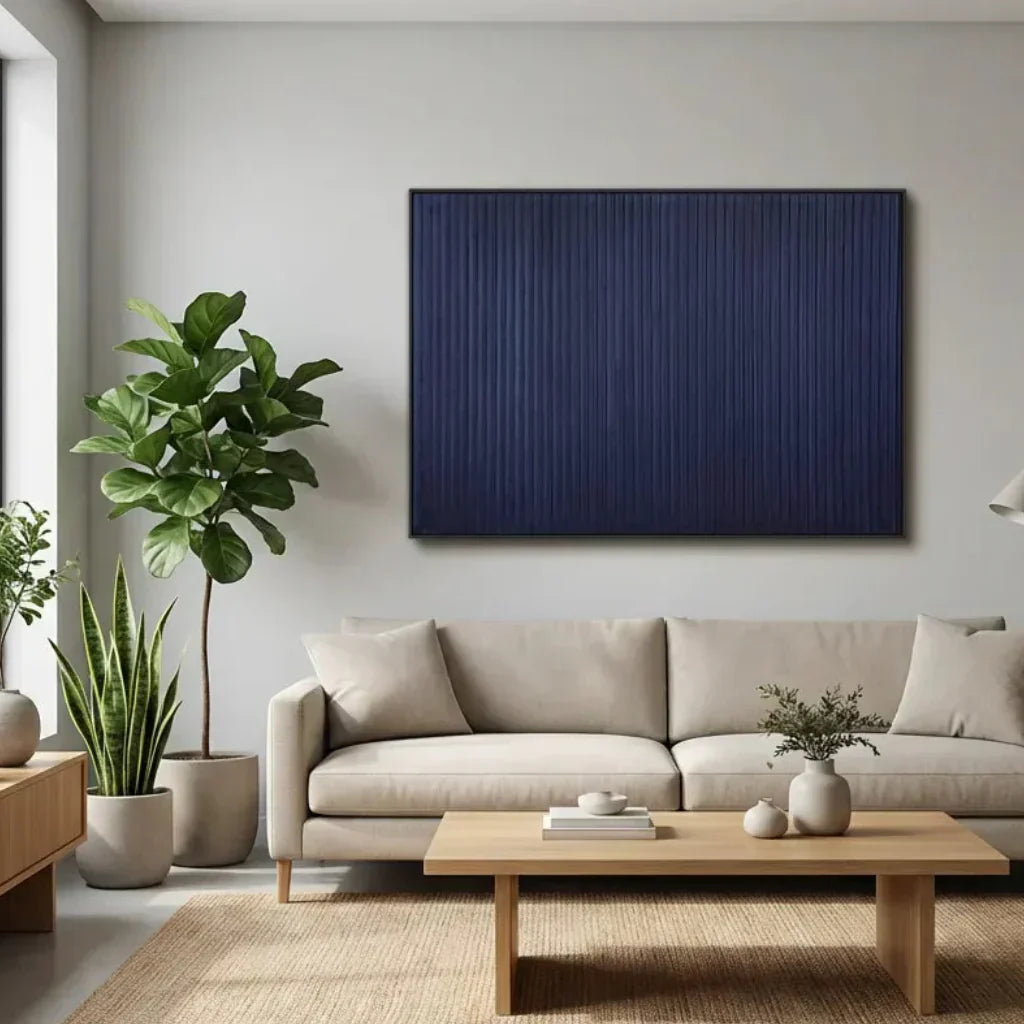
A single piece of large minimalist wall art can direct attention toward an important area, such as the wall above a sofa or dining table.
Because the artwork has a controlled composition, it becomes visually important without overwhelming the room.
For modern homes, black-and-white compositions are particularly effective. They create contrast while remaining easy to coordinate with furniture, lighting, and architectural details.
Explore our collection of minimalist wall art for hand-painted works designed for modern and neutral interiors.
It Adds Personality Without Clutter
One of the main challenges of minimalist interior design is creating personality without filling the room with too many objects.
Artwork solves this problem by concentrating color, texture, and emotion in one intentional area.
Instead of decorating a wall with many small accessories, homeowners can use one or two stronger pieces. This keeps the space visually clean while preventing it from feeling impersonal.
A minimalist abstract painting can also reflect the homeowner’s style through its movement, brushwork, or color balance.
It Makes a Room Feel Calmer
Minimalist art often uses negative space, soft colors, and balanced forms. These qualities can make a room feel quieter and more organized.
Neutral wall art in beige, ivory, gray, cream, or soft brown works well in bedrooms, living rooms, and reading spaces. These colors connect naturally with linen fabrics, wood furniture, stone surfaces, and warm lighting.
Black-and-white artwork creates a stronger visual effect, while neutral paintings produce a softer and more relaxed atmosphere.
The correct choice depends on whether the room needs contrast or calmness.
Choosing the Right Minimalist Art
Minimalist artwork may look simple, but choosing it requires attention to size, color, texture, and placement.
| Element | Recommended Approach |
|---|---|
| Size | Choose artwork large enough to relate to the furniture below it |
| Color | Repeat one or two colors already present in the room |
| Contrast | Use dark artwork on light walls for a stronger focal point |
| Texture | Add textured artwork to prevent a neutral room from feeling flat |
| Placement | Keep the artwork connected visually to the furniture below it |
Choose the Correct Size
One of the most common mistakes is selecting artwork that is too small for the wall.
For artwork above a sofa, bed, or console table, the painting should usually be around 60% to 75% of the width of the furniture below it. This creates a visual relationship between the artwork and the surrounding space.
For example, a wide sofa normally works better with a horizontal painting, while a narrow wall may require vertical artwork.
Large minimalist wall art is often more effective than several small pieces because it creates one clear statement without adding unnecessary visual noise.
Coordinate, but Do Not Match Everything
The artwork does not need to match every color in the room.
In fact, matching the wall, sofa, rug, and painting too closely can make the artwork disappear.
A better approach is to repeat one or two existing colors while introducing a small amount of contrast.
For example:
-
A beige room can use black-and-white minimalist art for contrast.
-
A gray interior can use cream or warm brown artwork to soften the space.
-
A modern white room can use textured neutral art to add depth.
-
A dark interior can use light abstract artwork to create balance.
You can also explore minimalist abstract paintings with restrained colors and simple compositions for contemporary interiors.
Use Texture to Add Warmth
Minimalist rooms can sometimes feel too smooth, especially when they contain plain walls, simple furniture, and limited colors.
Textured artwork adds depth without requiring more decoration.
Raised brushstrokes, layered paint, and sculptural surfaces react to changing light throughout the day. This gives the room more visual interest while preserving its clean appearance.
Texture is especially useful in neutral interiors because it creates contrast through surface rather than bright color.
Minimalist Art for Different Rooms
Living Room
In a living room, minimalist art can act as the main visual anchor. Place a large horizontal painting above the sofa or a vertical work beside a fireplace or console.
Choose stronger contrast if the room feels too neutral.
Bedroom
For bedrooms, use softer colors and calmer compositions. Beige, ivory, gray, and muted blue artwork can help create a more restful atmosphere.
Avoid artwork with too many competing elements above the bed.
Dining Room
A large minimalist abstract painting can make a dining space feel more refined. Artwork with subtle texture works especially well under warm pendant lighting.
Office
Minimalist office wall art can create a professional background without becoming distracting. Black-and-white compositions, geometric forms, and neutral abstract paintings are suitable choices.
Customizing Minimalist Art for Your Interior
Standard artwork sizes do not always fit unusually wide walls, high ceilings, or specific furniture arrangements.
Custom artwork allows the dimensions, colors, orientation, texture, and frame to be adjusted to the room.
This is particularly valuable for large living rooms, hotel spaces, offices, and interior design projects where proportion matters.
Rosemary Art offers custom minimalist artwork based on wall dimensions, reference images, preferred colors, and framing requirements.
A wall mock-up can also help you evaluate the scale before production begins.
Final Thoughts
Minimalist art enhances interior design by creating focus, balance, and personality without adding unnecessary visual clutter.
The strongest minimalist interiors are not empty. They are selective.
A well-proportioned painting with simple forms, controlled colors, and visible texture can make a room feel more complete, calm, and intentional.
Instead of asking how much decoration a space needs, consider which single artwork can make the greatest visual impact.