
Wabi-sabi wall art may appear simple at first glance, but high-quality pieces depend on far more than neutral colors and an irregular surface.
The canvas must be stable enough to support the artwork. The paint and texture should create real depth rather than only imitate it. The frame needs to protect the canvas while complementing the composition. Even the final surface treatment can influence how the colors, shadows, and handmade details appear.
Understanding these elements can help you choose quality wabi-sabi wall art that feels authentic, lasts longer, and brings genuine character into your space.
Why Materials Matter in Wabi-Sabi Wall Art
Wabi-sabi celebrates simplicity, natural variation, and the beauty of imperfection. However, this does not mean that poor construction or careless finishing should be accepted as part of the style.
A well-made wabi-sabi painting balances artistic irregularity with reliable craftsmanship.
The surface may feature uneven lines, raised textures, subtle cracks, or organic shapes, but the canvas should still be properly stretched. The colors may appear soft and weathered, but the paint should remain secure. The frame may look understated, but its joints and hanging hardware should still be strong.
True wabi-sabi character comes from intentional handmade variation—not weak materials or avoidable defects.
Start With a Strong Canvas
The canvas forms the foundation of a painting. This is especially important for textured wabi-sabi wall art, because raised materials and multiple paint layers can add more weight than a flat printed image.
Cotton canvas is widely used for decorative paintings because it is flexible, practical, and suitable for many sizes. Linen canvas is often valued for its strength and refined surface, although it is usually more expensive and is not essential for every interior project.
Regardless of the fabric, a quality canvas should be:
- Stretched evenly without visible sagging
- Secured to a stable wooden stretcher frame
- Properly reinforced for large sizes
- Free from severe warping or loose corners
- Strong enough to support textured materials
For oversized wall art, internal crossbars can provide additional stability and reduce the risk of deformation during shipping or long-term display.
A beautiful surface cannot compensate for a weak structure underneath it.
Real Texture vs. Printed Texture
Texture is one of the defining features of wabi-sabi art.
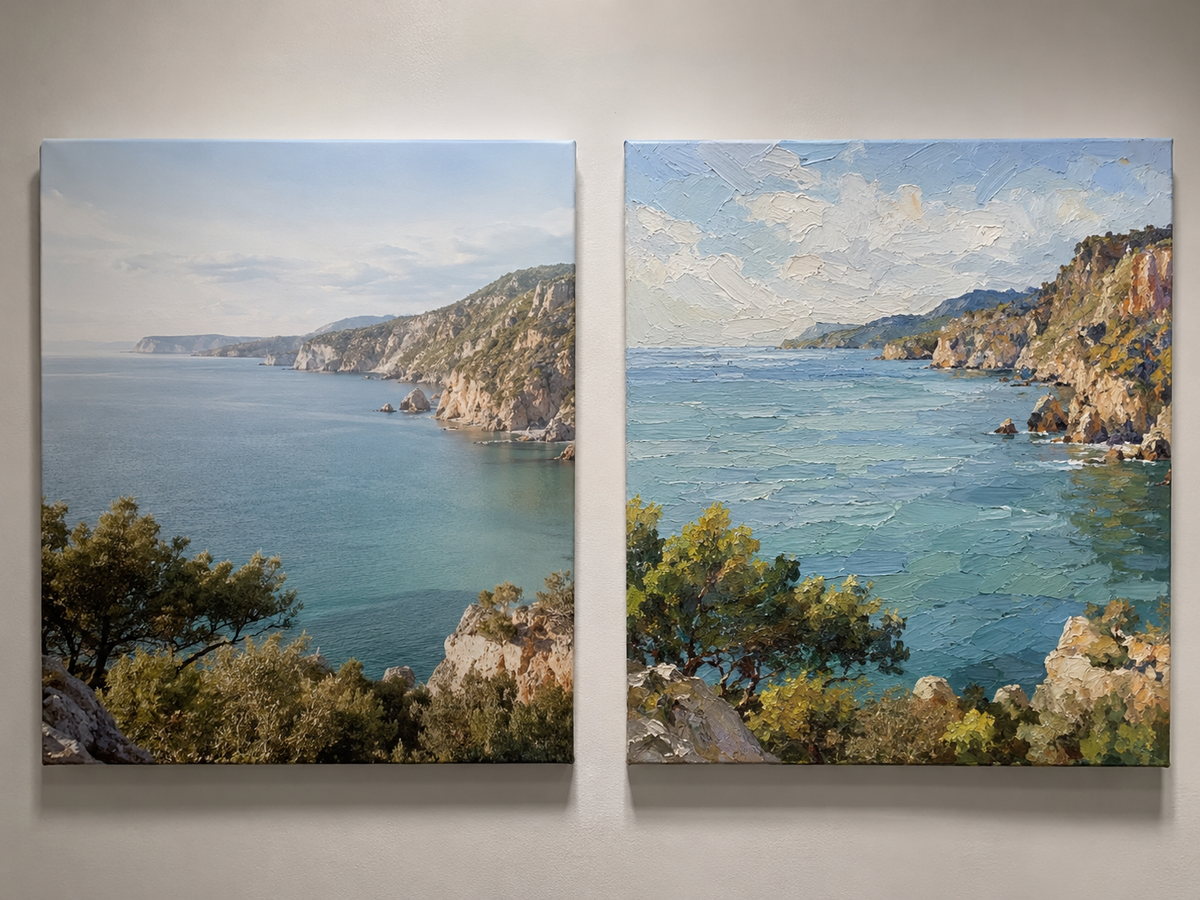
In a hand-painted textured artwork, the surface has real physical depth. Brushstrokes, palette-knife marks, layered paint, and raised materials interact with natural light. As the light changes throughout the day, the artwork may reveal different shadows and details.
Printed texture is different. A high-resolution print can visually imitate brushstrokes or rough surfaces, but the canvas usually remains mostly flat.
Neither option is automatically wrong. Printed art can be practical for buyers with a limited budget, while handmade work offers greater individuality, depth, and physical presence.
When comparing the two, look at the artwork from the side rather than only from the front. Real texture should create visible shadows, uneven elevations, and natural variations across the surface.
You can explore our hand-painted wabi-sabi wall art collection to see how layered surfaces and organic forms can create a stronger sense of depth.
Paint Quality and Color Depth
Wabi-sabi paintings often use restrained palettes, including beige, ivory, warm gray, clay, brown, black, muted green, and off-white.
Because the colors are subtle, paint quality and layering become especially important. A poorly made neutral painting can appear flat or lifeless. A carefully painted piece may contain several related shades, transparent layers, and variations in tone that become more visible at close range.
When examining a painting, look for:
- Natural transitions between light and dark areas
- Layered color rather than one flat background tone
- Controlled texture without excessive loose material
- Balanced contrast between rough and smooth sections
- Consistency between the artwork and product photographs
A handmade painting does not need to be completely identical to a reference image. Small differences in texture, color blending, and brushwork are part of the handmade process.
However, the overall composition, palette, dimensions, and visual balance should still match what the buyer approved.
Why the Frame Matters
The frame is not only decorative. It helps protect the canvas edges, improves stability, and creates a more complete presentation.
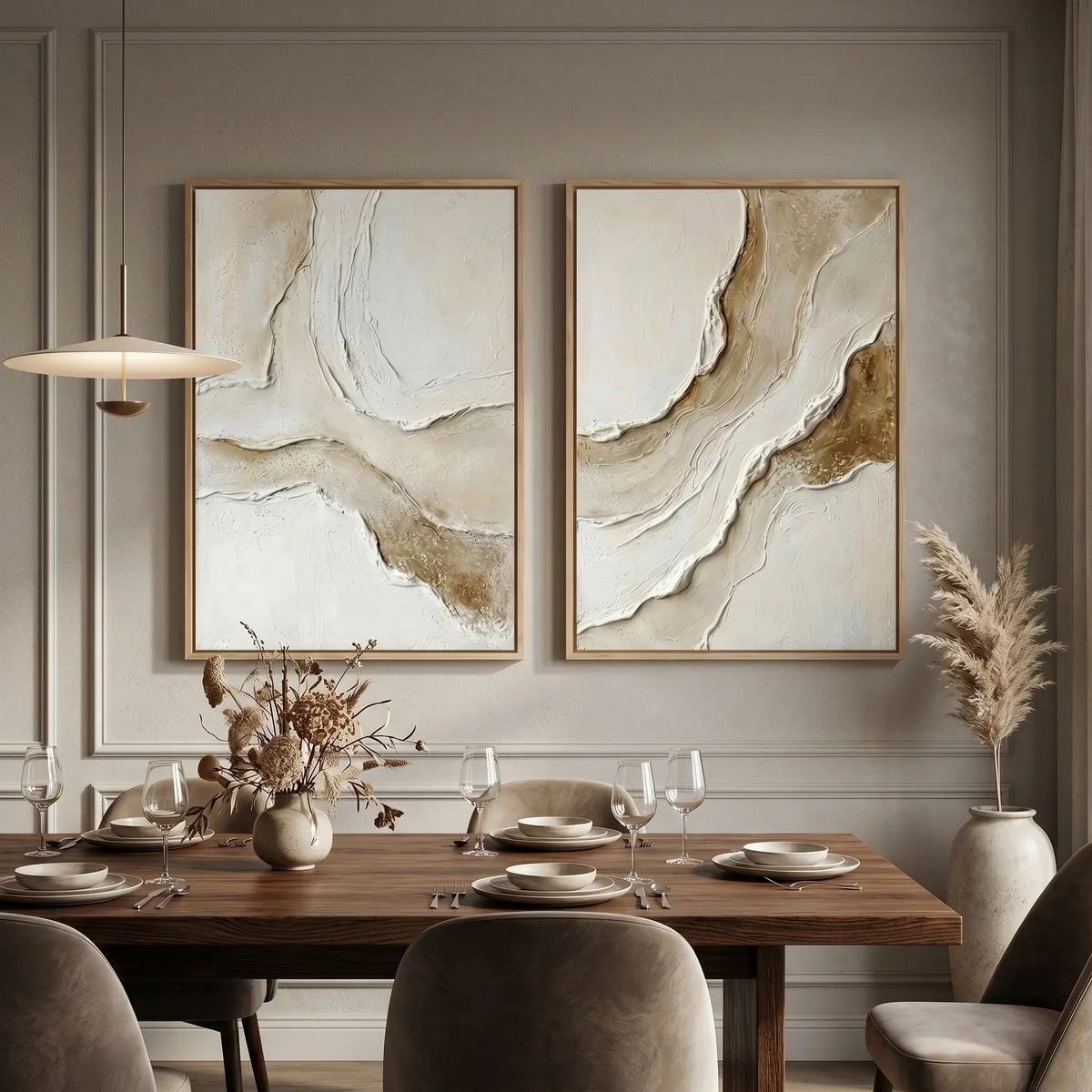
Floating frames are particularly suitable for framed wabi-sabi canvas art. A narrow gap is left between the painting and the outer frame, making the canvas appear to float inside it.
This style works well because it preserves the irregular edges and visible texture of the artwork without covering the composition.
Popular frame options include:
- Black floating frames for modern interiors
- Natural wood frames for warm, organic spaces
- Dark brown frames for earthy color palettes
- Soft metallic finishes for more refined rooms
A quality frame should have clean corner joints, an even gap around the canvas, and secure hanging hardware. The frame should support the painting without visually overpowering it.
For large wall art, buyers should also confirm whether additional reinforcement and heavy-duty hanging fittings are included.
The Right Finish Should Protect the Artwork
The final surface treatment can influence both protection and appearance.
Wabi-sabi art usually looks best with a matte or low-sheen finish because strong gloss may create distracting reflections and make the surface feel overly polished.
A suitable finish should help preserve the visual clarity of the artwork without hiding its natural texture.
Before purchasing, consider asking:
- Does the artwork have a matte, satin, or glossy surface?
- Is the finish suitable for textured paint?
- Should the artwork be kept away from direct sunlight?
- Is it suitable for humid rooms?
- How should the surface be cleaned?
Not every painting requires exactly the same treatment. The appropriate finish depends on the paint, texture materials, and intended environment.
Quality Checklist for Wabi-Sabi Wall Art
| Element | What to Check |
|---|---|
| Canvas | Firmly stretched, stable, and properly reinforced |
| Texture | Real raised detail rather than only printed visual texture |
| Paint | Natural color variation and secure layered surfaces |
| Frame | Clean joints, even spacing, and strong construction |
| Finish | Low reflection without hiding the texture |
| Back | Neat structure and reliable hanging hardware |
| Size | Accurate dimensions for the intended wall |
| Approval | Clear photos or videos available before shipping |
This checklist is especially useful when purchasing large wabi-sabi wall art, where construction quality becomes more important because of the artwork’s size and weight.
Handmade Variation Is Part of the Value
One of the main differences between handmade art and mass-produced decoration is that no two pieces are completely identical.
In wabi-sabi art, this variation is not something that needs to be eliminated. Slight differences in knife marks, texture placement, tonal blending, and surface movement can give each piece its own character.
That does not mean every difference should be accepted. Major changes in composition, incorrect dimensions, unsuitable colors, or unstable materials are quality problems—not artistic variation.
A reliable seller should clearly explain what can vary and what will remain consistent.
Final Thoughts
High-quality wabi-sabi wall art is not simply artwork that looks aged, rough, or imperfect.
It combines intentional irregularity with strong materials, stable construction, real texture, thoughtful framing, and an appropriate surface finish.
Before purchasing, examine more than the front image. Ask about the canvas, texture method, frame construction, finish, dimensions, and approval process. These details determine whether the artwork will simply fill an empty wall or become a lasting part of the space.
Browse our wabi-sabi art collection to discover handmade textured paintings in neutral tones, organic forms, custom sizes, and frame options for modern interiors.