3D Ocean Wall Art: How to Add Depth, Texture, and Calm to Your Space

3D Ocean Wall Art: How to Add Depth, Texture, and Calm to Your Space
A plain wall can make even a well-designed room feel unfinished. That is where 3D Ocean Wall Art becomes more than decoration. With raised texture, layered color, and the quiet movement of waves, it can bring depth, softness, and a coastal mood into a room without making the space feel themed or overdone.
For homeowners, interior designers, hotel buyers, and art collectors, ocean-inspired artwork has a clear appeal: it feels calm, open, and easy to live with. But here’s the thing — not every ocean piece has the same effect. A flat print may add color, while a hand-painted textured ocean painting can change how the wall feels in natural light.
Why 3D Ocean Wall Art Feels So Good in a Room
Ocean scenes naturally suggest space, movement, and fresh air. Even when the painting is abstract, the viewer often reads the curves, foam, and horizon as something familiar. This is why 3D Ocean Wall Art works especially well in rooms where people want to slow down — living rooms, bedrooms, spa suites, hotel lobbies, coastal homes, and quiet commercial interiors.
The science of waves also helps explain the visual feeling. NOAA notes that waves carry energy across water, often shaped by wind moving across the ocean surface. That idea of repeated motion is exactly what many artists translate into brushstrokes and raised texture. A good ocean wave wall art piece does not need to show every detail; it only needs to suggest rhythm, light, and depth. NOAA Ocean Service
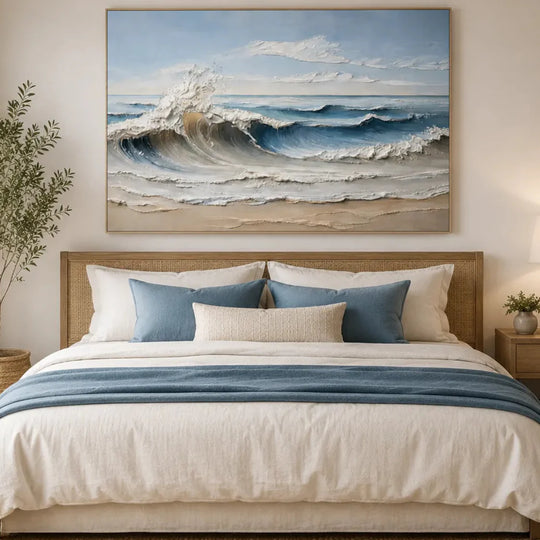
In interior design, that rhythm matters. A heavily textured wave can soften a room filled with straight lines, stone surfaces, glass, or modern furniture. A pale blue or sand-toned ocean canvas wall art piece can also make a room feel more open, especially when placed above a sofa, bed, console table, or reception desk.
For more ocean-inspired handmade artwork, you can view <u>Rosemary Art’s ocean wall art collection</u>.
What Makes 3D Ocean Artwork Different from Flat Coastal Wall Art
Flat coastal wall art usually depends on image and color. It may show a beach, sea view, boat, or wave. There is nothing wrong with that. But 3D ocean artwork adds something more physical: surface.
Texture creates shadow. Shadow creates depth. Depth makes the artwork feel present in the room.
A hand-painted 3D ocean painting may include:
- Raised palette knife waves
- Thick white foam details
- Layered blue, teal, ivory, gray, or beige tones
- Matte and glossy areas that catch light differently
- Visible brush marks that show human touch
This is the key difference. A printed image shows an ocean. A textured ocean wall art piece can feel closer to the movement of water itself.
That matters for high-end spaces. In a hotel corridor, a flat image may disappear after one glance. A textured painting changes as guests walk past it. Morning light, evening lamps, and side lighting all reveal different parts of the surface.
How to Choose the Right Ocean Texture for Your Space
Not every texture should be heavy. This is where many buyers make a mistake. They see “3D” and think more texture always means better. It does not.
The right texture depends on the room.
| Space Type | Recommended Texture | Visual Effect |
|---|---|---|
| Bedroom | Soft, flowing texture | Calm and restful |
| Living room | Medium raised waves | Elegant focal point |
| Hotel lobby | Stronger 3D texture | More visual presence |
| Spa or wellness room | Smooth wave texture | Quiet and clean |
| Coastal villa | Layered blue and white texture | Fresh, airy, relaxed |
| Commercial reception | Large textured ocean painting | Premium but not loud |
For a bedroom, avoid overly sharp contrast unless the room already has a bold style. Soft blue, warm white, misty gray, and sand tones usually work better. For a living room, you can choose more movement — a larger wave, stronger brushwork, or a wider horizontal format.
For hotels and commercial spaces, scale becomes important. A small painting can look weak on a large wall. In these settings, a custom size may be worth considering, especially when the artwork needs to match a lobby wall, corridor, suite, or restaurant seating area.
Color Is the Quiet Power Behind Ocean Wave Wall Art

Color decides whether ocean wave wall art feels peaceful, dramatic, fresh, or luxurious.
Blue is the obvious choice, but it is not the only good one. Many modern interiors now use warmer ocean palettes: ivory foam, beige sand, pale gray sky, muted teal, soft green, and deep navy accents.
A simple way to think about it:
- Blue and white: clean, coastal, fresh
- Teal and sand: relaxed, slightly warmer
- Gray and ivory: modern, quiet, mature
- Navy and white: bold, elegant, hotel-like
- Beige and pale blue: soft, organic, easy to match
For rooms with beige sofas, oak furniture, linen curtains, or travertine tables, a warm textured ocean painting often works better than bright blue. For white walls and black accents, a deeper blue 3D ocean painting can create a stronger focal point.
Color should support the room, not fight it.
Size Matters More Than Most Buyers Think
A beautiful piece can still look wrong if the size is weak. This is especially true with 3D ocean wall art because texture needs room to breathe.
For artwork above furniture, a useful rule is to choose a width around 60% to 75% of the furniture below it. For example, above a 90-inch sofa, a painting around 54 to 68 inches wide often feels balanced. For a king bed, a large horizontal piece can make the wall feel complete without needing several small items.
For open walls, hotel spaces, or large homes, bigger artwork usually feels more intentional. A small ocean canvas wall art piece may look decorative. A large hand-painted ocean piece feels architectural.
If the wall is very wide, consider:
- One large horizontal painting
- A diptych or triptych ocean wave wall art set
- A custom panoramic size
- A framed textured ocean painting with enough visible wall space around it
The point is not to fill every inch. The point is to give the artwork enough presence.
Why Hand-Painted Texture Has Better Long-Term Value
A hand-painted ocean piece has variation. The brushwork is not perfectly repeated. The wave edge may be slightly softer in one area, thicker in another. The foam may rise from the canvas in a way that a machine surface cannot fully copy.
That human variation is part of the value.
For interior designers and project buyers, this matters because artwork is not only a color block. It helps define how the space feels. A real textured ocean painting can make a room feel warmer, more considered, and more finished.
For homeowners, the value is more personal. You are not just buying “blue coastal decor.” You are choosing something that can stay with the home through furniture changes, seasonal styling, and different lighting.
And honestly, that is where hand-painted artwork earns its place. It does not need to shout. It simply needs to keep giving the room depth.
Custom Ocean Wall Art for Designers, Hotels, and Homes
One advantage of choosing handmade 3D ocean artwork is flexibility. A finished product may already be close to what you need. But in many real projects, close is not enough.
You may need:
- A custom size for a wide wall
- A softer blue to match upholstery
- More ivory texture for a neutral room
- A black, gold, silver, or natural wood frame
- A diptych or triptych version
- A less dramatic wave for a calm bedroom
- Stronger texture for a hotel lobby or restaurant wall
This is where custom oil painting becomes useful. Instead of forcing the room to match the artwork, the artwork can be adjusted to support the room.
Interior designers often care about proportion, mood, lead time, and consistency across several spaces. A hand-painted studio can help with these practical details: size planning, color direction, frame choice, and visual fit.
You can explore handmade coastal styles through <u>Rosemary Art’s textured ocean wall art collection</u> and use it as a starting point for a custom request.
Where 3D Ocean Painting Works Best
A 3D ocean painting can work in many places, but it performs best where people pause.
Above a sofa, it creates a calm center for the living room. Above a bed, it gives the bedroom a softer mood. In a dining room, ocean texture can balance stone, wood, and metal finishes. In a hotel lobby, it gives guests a visual cue: this space is polished, calm, and considered.
It also works well in commercial interiors that want elegance without feeling cold. Law offices, wellness clinics, real estate showrooms, design studios, and executive lounges can all use coastal wall art when the palette is mature and the composition is controlled.
The mistake to avoid is making the room too literal. Shells, anchors, beach signs, and bright tourist colors can cheapen the mood fast. A refined ocean canvas wall art piece should feel like art first, coastal second.
How to Style Textured Ocean Wall Art Without Overdoing It
Let the painting lead, then keep the surrounding decor simple.
If your artwork has strong blue tones, pair it with neutral furniture, warm wood, white ceramics, linen, or stone. If the piece is mostly ivory and beige, you can add soft blue cushions or glass accents nearby. Small echoes are enough.
Lighting also matters. Side lighting can reveal raised texture beautifully. A wall washer, picture light, or soft lamp placed nearby can make the surface more visible at night.
Frame choice should match the room, not just the painting. Black frames feel crisp and modern. Gold frames add warmth. Silver frames feel cooler and more contemporary. Natural wood frames work well in coastal, organic, and relaxed interiors.
Final Thought: Choose Depth, Not Just Decoration
The strongest rooms do not feel filled. They feel finished.
That is the real value of 3D Ocean Wall Art. It adds movement without noise, texture without clutter, and calm without looking plain. Whether you are styling a home, sourcing artwork for a hotel, or planning a commercial project, a hand-painted ocean piece can give the wall a sense of depth that flat decor often lacks.
Choose the right size, the right texture, and the right color mood. Then let the artwork do what ocean-inspired art does best — make the room breathe.
3. FAQ
1. What is 3D Ocean Wall Art?
3D Ocean Wall Art is ocean-inspired artwork made with raised texture, layered paint, or sculptural surface details. In hand-painted versions, artists often use palette knives and thick oil paint to create wave foam, water movement, and visible depth.
2. Is textured ocean wall art good for a modern living room?
Yes. Textured ocean wall art works well in modern living rooms because it softens clean lines and adds movement to plain walls. Choose muted blue, ivory, gray, or sand tones for a more refined look.
3. What size ocean wave wall art should I choose above a sofa?
For ocean wave wall art above a sofa, choose a width around 60% to 75% of the sofa width. Larger horizontal pieces usually look more balanced than small artwork on a wide wall.
4. Can a 3D ocean painting be customized?
Yes. A 3D ocean painting can often be customized by size, color palette, texture level, composition, and frame style. This is useful for bedrooms, living rooms, hotel suites, lobbies, and designer projects.
5. Is ocean canvas wall art only for coastal homes?
No. Ocean canvas wall art can work in city apartments, modern homes, hotels, offices, and wellness spaces. The key is choosing a mature palette and texture level that matches the room.
Continue exploring: Browse our Ocean Wall Art collection, see this week's new arrivals, or shop our best sellers — every piece 100% hand-painted, frame included.