Do Paintings Fade in Sunlight? How to Protect Original Art (2026 Guide)
Yes, paintings can fade in direct sunlight — but a hand-painted oil or acrylic canvas is far tougher than a paper print, and a few simple placement choices keep it looking new for decades. The real culprit isn't sunshine in general; it's hours of hard, direct UV hitting the same spot day after day. Get the hanging position right and light becomes your friend, not your enemy.
I run a studio where every piece is painted by hand, so I care about this more than most people should. Here's the honest version, minus the scare tactics.
Why does sunlight fade a painting?
When ultraviolet light hits pigment, it triggers photochemical degradation — a slow chemical reaction that breaks down color molecules and, over time, the canvas fibers underneath. Some pigments are stubborn and barely budge after years of exposure. Others, especially certain reds, pinks, and a few organic yellows, are more sensitive and can shift or lighten if they bake in an afternoon window. Heat plays a supporting role too: a canvas that swings from hot to cool every day expands and contracts, and that stresses the paint film. If you want the chemistry, the entry on photodegradation lays it out.
Oil paint has one quiet advantage. It cures into a tough, flexible film, and a proper varnish layer — which we apply, and which is included on our canvases — adds a sacrificial shield that takes the hit before your pigment does.

A luminous white-and-gold textured abstract on the studio easel. Light-toned, varnished surfaces like this handle bright rooms with ease.
How much sun is too much?
A little daylight won't hurt anything. A painting in a bright room that never catches a direct beam is fine. The problem is direct sun landing on the surface for an hour or more a day — think a west-facing wall that gets the full golden-hour glare. That's the spot to avoid for anything you want to keep for years. If the sun physically lands on the frame at some point in the day, move the piece or filter the light.
How do I protect original art from fading?
You don't need a museum budget. A handful of habits cover almost everything:
- Mind the wall. Hang away from windows that get direct afternoon sun. A wall perpendicular to the window usually gets plenty of light without the direct beam.
- Filter the room, not the painting. Sheer curtains, blinds, or a UV-blocking window film cut the harmful wavelengths while keeping the room bright.
- Light it on purpose. LED picture lights give you gallery glow with almost no UV and almost no heat — far safer than a halogen bulb or a raw sunbeam.
- Rotate. If you own a few pieces, swap them between walls once or twice a year. Everything ages evenly and your rooms stay fresh.
And keep up the basics — dusting, stable temperature, no damp. I wrote a full walkthrough on that in our guide to cleaning and caring for canvas art, and there's a companion piece on preserving original oil paintings if you want to go deeper.

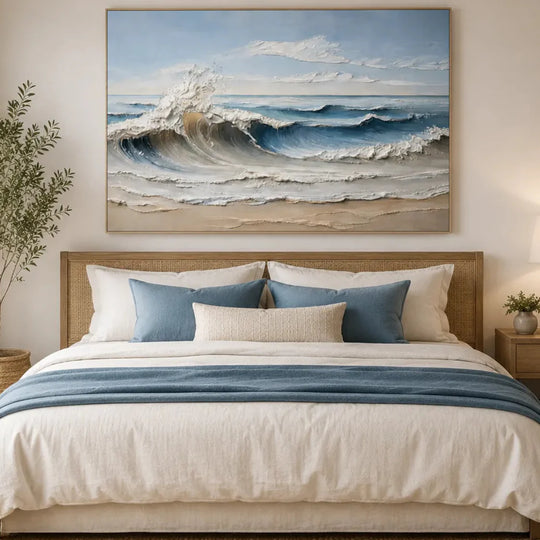
Deep silver-blue impasto. All that raised texture only reads because light rakes across it — which is exactly why placement matters.
Does this mean I should hide my art in a dark room?
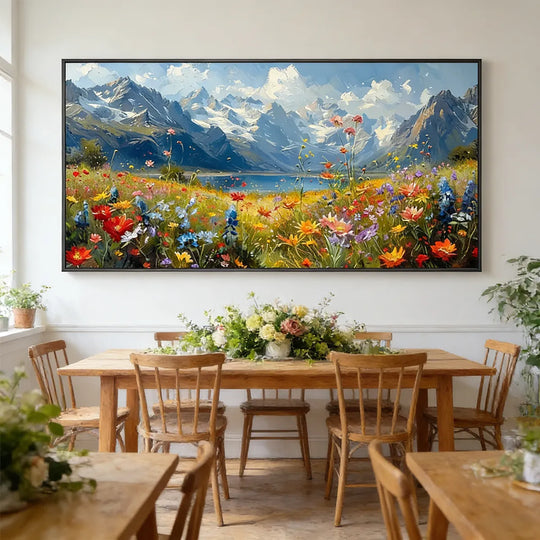
No — and please don't. Art is meant to be lived with. The goal is smart placement, not a vault. Pick colors and finishes that suit your light, too. A luminous white-and-gold textured abstract shrugs off bright rooms beautifully, while very saturated pinks and reds are happier on a wall that stays out of the direct beam. Browse the 3D textured collection or the wider abstract range and you'll see how much finish changes the way a piece reads in daylight.
What Rosemary Art does on our end
Every canvas is 100% hand-painted and signed, finished with a protective varnish, and it arrives framed and ready to hang. Before anything ships, we send you a photo of your actual piece for approval — so it leaves the studio only once you're happy, and it never sits waiting past 24 hours. Delivery is free, insured, and takes about 4–8 days. If it's not right in your space, you have 30 days to return it. And because sun exposure varies wall to wall, our free size and color customization means we can tweak a palette to suit a bright room before you ever hang it.
Frequently asked questions
Do oil paintings fade faster than prints? No. Pigmented oil paint under varnish generally outlasts an inkjet print, which can fade noticeably in strong light. There's more on that in our hand-painted vs. prints guide.
Can I hang a painting near a window at all? Yes, as long as direct sun doesn't land on it for long stretches. Sheer curtains or UV film make almost any window spot safe.
Will LED gallery lights damage the art? No. LEDs emit very little UV and stay cool, which makes them the safest way to light a canvas.
My room only gets morning sun — is that safer? Generally yes. Morning light is gentler than the intense late-afternoon sun, but the same rule applies: avoid a long, direct daily beam on the surface.
Light is part of what makes a hand-painted surface come alive. Treat it with a little care and it'll keep doing that for the rest of your life. Ready to find a piece for your brightest room? Start with new arrivals.