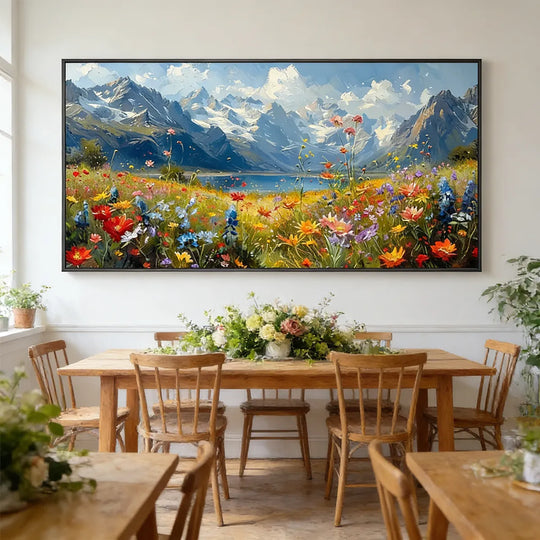
Can You Put Real Art in a Kitchen? A Practical Guide to Kitchen Wall Art
Yes, you can hang real hand-painted art in a kitchen. Keep it a few feet clear of the stove and the sink splash zone, lean toward warm or food-friendly colors, and let an oil or acrylic canvas carry a light protective varnish so grease and steam wipe off with a soft cloth. The kitchen is where people actually spend their evenings, and a blank wall over the coffee station or the breakfast nook is a missed chance. So let's make it work properly.

Is a kitchen too humid or greasy for a real painting?
Most kitchens are fine. The trouble spots are narrow: the wall directly behind the cooktop, where airborne oil settles, and the strip right beside the sink that catches spray. Everywhere else, a modern kitchen with a range hood and normal ventilation is no harder on a canvas than a living room. People imagine steam clouds ruining everything, but a sealed oil or acrylic surface shrugs off day-to-day cooking. The real enemy isn't moisture, it's a thin film of grease building up over years, and that's easy to prevent with placement and a wipe now and then.
Where should kitchen art actually go?
Hang it where you eat and gather, not where you fry. The best kitchen walls are the breakfast nook, the end of a run of cabinets, the space above a bench or banquette, a coffee or bar station, and any open wall you see from the table. Aim to keep the canvas at least three feet from the stove and out of direct sink spray. If your only open wall is close to the cooking zone, hang smaller and plan to wipe it more often. In an open-plan kitchen that flows into the living room, match the art to the larger space so the two rooms feel like one idea.
What colors and subjects work in a kitchen?
Warm, appetizing colors earn their place here. Think ripe orange, olive and sage green, honey, terracotta, deep red, buttery cream. Subjects that suit a kitchen have a long history for a reason. The still life, food and flowers and vessels on a table, was practically invented for rooms about eating, and the The Met traces that tradition back to the Dutch Golden Age. A loose palette-knife floral, a warm abstract, or a soft landscape all read beautifully across from a dinner table. Browse our floral wall art and warmer abstract paintings for the kind of pieces that hold a kitchen together.
What size for a kitchen wall?
Kitchens tend to have chopped-up walls, so measure your actual open space, not the whole wall. Over a nook table or bench, use the same rule as a sofa: the art should span about two-thirds the width of the furniture below. On a short blank stretch between cabinets and a doorway, one medium canvas around 24 by 36 inches usually does more than a cluster of tiny frames fighting for room. If your only spot is oddly narrow or tall, that's a good case for a custom size, which we paint at no extra charge.
How do you keep it clean?
Dust it every few weeks with a dry, soft cloth, the same as any painting. If a little cooking film builds up, a barely-damp cloth on a varnished surface lifts it. Never spray kitchen cleaner straight onto art, and don't scrub. We go deeper on this in our canvas care guide. Every Rosemary Art piece arrives 100% hand-painted, signed, and framed, and if you want extra insurance for a busy kitchen, just ask and we'll varnish it a touch heavier before we send your approval photo. Delivery is free, insured, and 4 to 8 days, with 30-day returns if the spot doesn't work out. See the full range in all paintings.
Frequently asked questions
Will cooking smells or heat damage the painting? Everyday cooking, no. Just keep the canvas off the wall directly behind the burners, where heat and oil concentrate.
Is canvas better than a print for a kitchen? A sealed hand-painted canvas is more forgiving than an unglazed paper print, which can cockle in humidity. A real painting with a light varnish wipes clean; paper usually can't.
Can I hang art on a tiled or backsplash wall? Stick to the drywall areas above the backsplash. Tile near the sink and stove is the splash zone you want to skip.
What about a small galley kitchen? One well-placed small canvas at the end of the galley, where you see it walking in, gives you the payoff without crowding the counters.