Scroll through any modern home design feed and you will see the same things again and again: clean walls, soft neutral tones, oversized art, organic texture, and a room that feels calm but not empty.
It looks modern. It feels fresh. But here is the truth: this look is not new.
Much of today’s modern wall art comes from older art movements. Abstract Expressionism gave us emotion. Minimalism gave us restraint. De Stijl gave us structure. Wabi-Sabi gave us softness and imperfection. Textured art brought the surface back to life.
That is why a good painting does more than fill a blank wall. It carries a design language. Once you understand that language, choosing art for your home becomes much easier.
Abstract Expressionism: When Art Became Emotion
Abstract Expressionism changed the way people looked at painting. Instead of showing a clear object, landscape, or person, the painting became a place for feeling.
Large brushstrokes, loose movement, bold color fields, and visible marks all became part of the message. The painting did not need to explain itself. It only needed to create a response.
This is why abstract oil paintings still work so well in modern interiors.
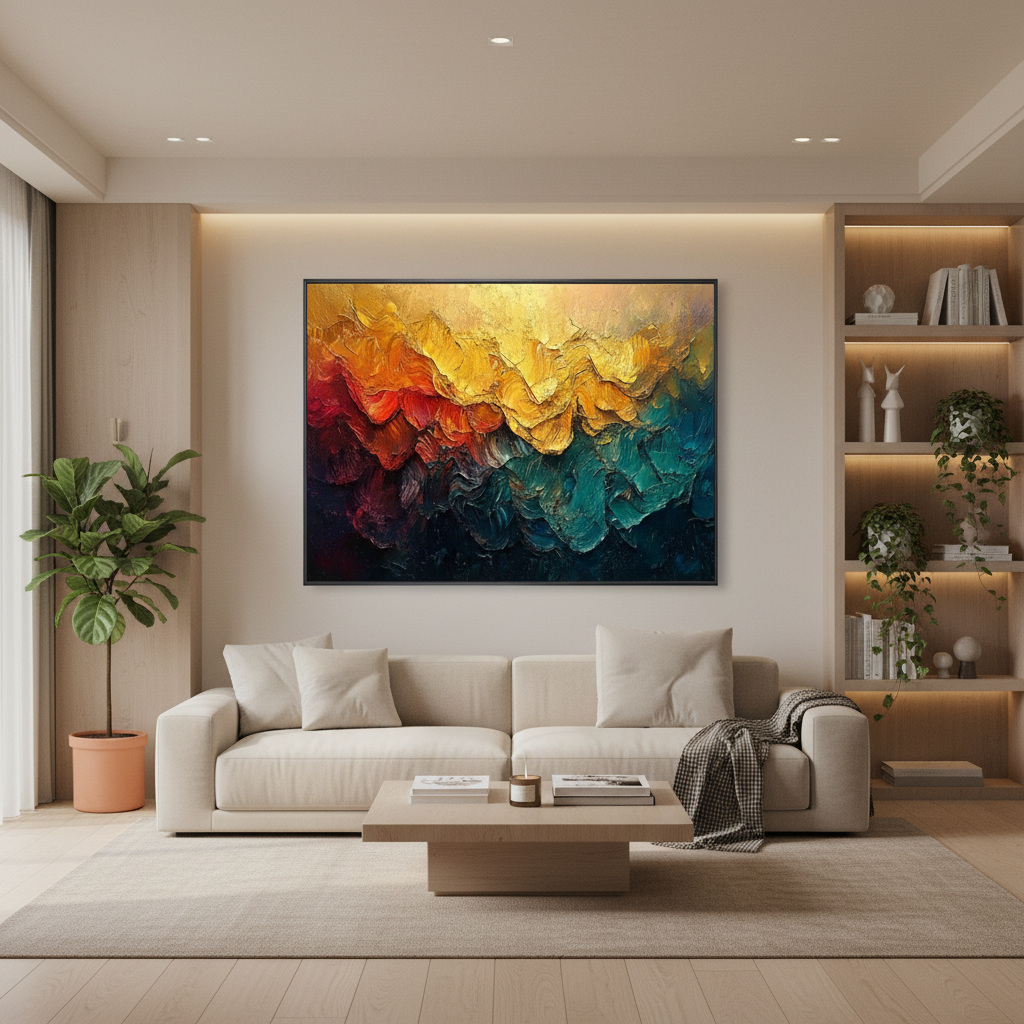
A neutral living room can look clean, but it can also feel cold. One expressive abstract painting can fix that. A strong brushstroke adds movement. A deep color area adds mood. A textured surface makes the wall feel alive instead of flat.
This style works especially well when your furniture is simple. If the sofa, rug, and coffee table are quiet, the artwork can become the emotional center of the room.
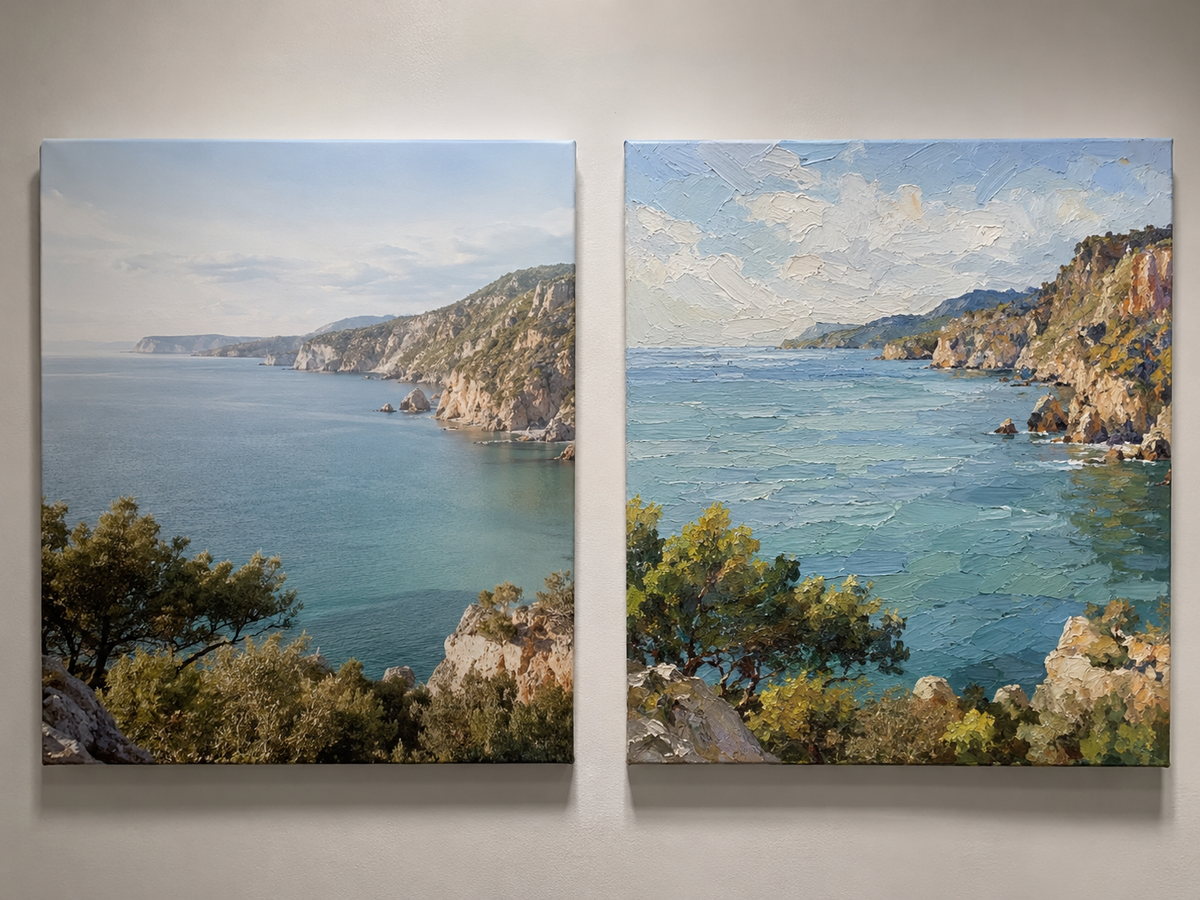
For Rosemary Art, this is where hand-painted abstract oil paintings have a real advantage. A print can copy the image, but it cannot copy the pressure of the brush, the layered paint, or the small changes made by the artist’s hand.
Best for: living rooms, offices, entryways, and large blank walls.
Choose this style if: your space feels too plain and needs energy.
Minimalism: The Power of Knowing When to Stop
Minimalism is often misunderstood. It does not mean boring. It means controlled.
A minimalist painting uses fewer elements, but every element matters. One line, one shape, one quiet color shift, or one area of negative space can carry the whole piece.
That is why minimalist wall art works so well in bedrooms, hallways, dining rooms, and calm living spaces. It does not fight with the room. It gives the room breathing space.
Modern interiors often already have many details: wood grain, fabric texture, lighting, shelves, plants, metal frames, and stone surfaces. If the artwork is too busy, the room can feel crowded fast.
A minimalist oil painting solves that problem. It adds intention without noise.
Look for soft white, beige, black, gray, clay, warm brown, or muted earth tones. These colors are easy to live with. They also pair well with modern furniture, natural wood, boucle fabric, linen curtains, and stone tabletops.
Best for: bedrooms, quiet corners, hallways, dining rooms, and Japandi-style homes.
Choose this style if: you want the room to feel calm, edited, and expensive without looking overdesigned.
De Stijl and Geometric Order: Why Clean Lines Feel So Modern
Some modern rooms feel peaceful because of softness. Others feel modern because of order.
That order often comes from geometric art movements such as De Stijl. Think of straight lines, clear blocks, balanced space, and strong composition. Even when the artwork is not directly inspired by famous geometric painters, the influence is still there.
This is why structured abstract paintings work well in modern homes. They create balance.
If a room has curved furniture, soft fabric, and organic decor, a geometric painting can add discipline. If a room already has strong architecture, a structured artwork can make the space feel more complete.
You do not always need bright primary colors. A geometric painting in black, white, beige, terracotta, or deep green can feel more suitable for today’s interiors. The key is not decoration. The key is proportion.
A good geometric abstract painting should feel steady. It should hold the wall together.
Best for: modern apartments, offices, dining rooms, and spaces with clean architecture.
Choose this style if: your room needs structure, balance, or a stronger focal point.
Wabi-Sabi: Beauty That Does Not Try Too Hard
Wabi-Sabi has become popular in modern interiors because people are tired of spaces that look too perfect.
A Wabi-Sabi room feels calm, natural, and slightly imperfect. It values texture, quiet color, organic shape, and handmade character. Nothing looks overly polished. Nothing screams for attention.
This is exactly why Wabi-Sabi art works so well on modern walls.
A hand-painted Wabi-Sabi oil painting may use soft beige, off-white, sand, clay, gray, brown, or black. The surface may show uneven texture, slow brushwork, or raised details. These are not flaws. They are the point.
In a bedroom, this kind of artwork can make the space feel restful. In a living room, it adds warmth. In a hotel, spa, or designer project, it helps create a quiet luxury mood without relying on loud color or shiny materials.
This is also where handmade artwork matters most. Wabi-Sabi should not feel machine-perfect. It should feel touched, layered, and human.
Best for: bedrooms, meditation rooms, neutral living rooms, spas, hotels, and organic modern homes.
Choose this style if: you want warmth, softness, and a more natural feeling.
Textured Oil Painting: The Modern Wall Needs Depth
Flat walls are everywhere. White walls. Beige walls. Gray walls. Smooth walls.
That is exactly why textured oil paintings have become so useful in modern interiors. Texture gives the eye something to follow. It catches light. It creates shadow. It changes slightly when you move across the room.
A textured painting can stay neutral but still feel rich.
This is important. Many customers think they need stronger color to make a wall interesting. Not always. Sometimes what the room really needs is surface.
A white textured painting can look calm from far away, then reveal detail up close. A beige impasto painting can blend with the room while adding depth. A 3D textured ocean or floral painting can create movement without making the room feel busy.
For large wall art, texture is especially powerful. Big blank walls often look empty because they lack visual weight. A large hand-painted textured canvas gives the wall presence.
Best for: large living room walls, hotel lobbies, stair walls, dining rooms, and statement spaces.
Choose this style if: your wall looks empty even after furniture and decor are in place.
How to Choose the Right Modern Wall Art Style
You do not need to know every art movement to choose the right painting. Use the room as your guide.
| If your room feels... | Choose this style |
|---|---|
| Too plain or lifeless | Abstract Expressionism |
| Too busy or visually heavy | Minimalist wall art |
| Unbalanced or loose | Geometric abstract art |
| Too cold or perfect | Wabi-Sabi art |
| Too flat or empty | Textured oil painting |
The mistake many people make is choosing art only by color. Color matters, but it is not enough.
You also need to think about mood, surface, size, and proportion.
A small painting on a large wall will look weak. A busy painting in a busy room will create stress. A flat print in a highly textured room may look cheap. A hand-painted oil painting, especially with real brushwork or texture, usually gives the room more depth and character.
Why Hand-Painted Art Still Feels Different
The modern look is often clean, but it should not feel lifeless.
That is why hand-painted wall art still matters. The artist’s hand brings small variations that a print cannot offer: uneven paint, soft edges, visible layers, texture, and movement.
These details make the painting feel present.
For Rosemary Art, every oil painting is created by hand. That means each piece can have slight natural differences. For modern interiors, this is not a problem. It is what keeps the space from feeling too staged.
You can also choose custom size, color, style, and frame options to make the artwork fit your room more precisely. This matters for large walls, designer projects, hotel spaces, and homes with very specific color palettes.
Final Thought: Modern Art Is Not Just a Trend
The modern wall art look is not just about what is popular on social media.
It comes from decades of art, design, and changing ideas about beauty. Abstract Expressionism taught us that art can feel emotional. Minimalism taught us the value of restraint. De Stijl showed the strength of structure. Wabi-Sabi reminded us that imperfection can be beautiful. Textured art brought touch and depth back into the room.
So when you choose modern wall art, you are not just choosing something to match a sofa.
You are choosing how the room should feel.
Calm. Bold. Warm. Balanced. Human.
That is the real power of a well-chosen hand-painted oil painting.
FAQ
What type of wall art is best for a modern home?
Abstract, minimalist, Wabi-Sabi, geometric, and textured oil paintings all work well in modern homes. The best choice depends on the room’s mood, color palette, wall size, and furniture style.
Is textured wall art still modern?
Yes. Textured wall art is one of the strongest choices for modern interiors because it adds depth without needing loud colors. It works especially well on large blank walls.
What is the difference between abstract art and minimalist art?
Abstract art often focuses on emotion, movement, and color. Minimalist art removes unnecessary details and focuses on balance, space, and restraint.
Why does Wabi-Sabi art look good in modern interiors?
Wabi-Sabi art brings softness, natural texture, and handmade imperfection into clean modern spaces. It prevents a room from feeling too cold or too perfect.
Should modern wall art match the furniture?
It does not need to match exactly. It should connect with the room through tone, mood, scale, or material. A good painting should feel related to the room, not copied from the furniture color.