What Is Japandi Decor? The Calm Middle Ground Between Japanese and Scandinavian Design
Japandi is an interior style that blends Japanese wabi-sabi with Scandinavian minimalism — warm neutral colors, natural materials, clean lines, and a few honest, hand-made pieces instead of a lot of stuff. Think of it as the calm middle ground: the coziness Scandinavians call hygge meeting the Japanese love of quiet imperfection. The result is a room that feels finished but never fussy.
The name is a straight mash-up of "Japan" and "Scandi," and the two traditions fit together almost suspiciously well. Both prize craft over clutter. Both use natural light, wood, linen, and stone. Both would rather own one beautiful object than ten forgettable ones. Scandinavian design has spent a century refining warm minimalism — you can read the long version on Scandinavian design — and wabi-sabi brings the soul.

Sand, chalk, oatmeal, clay — a Japandi palette lives in the neutrals, with texture doing the work that bright color would do elsewhere.
What colors and materials make a room Japandi?
Start with a neutral base: warm white, greige, oatmeal, soft clay, muted charcoal for contrast. Add natural materials — light and dark woods together, linen, ceramic, paper, stone. Keep surfaces mostly clear. The discipline is the point. A Japandi room breathes because you left space in it.
Where a lot of people go wrong: they make it flat and cold. The fix is texture. Rough linen, a hand-thrown mug, a woven runner, a painting with actual ridges you can see across the room. Texture is how a neutral space stays warm instead of tipping into a beige box.
What kind of wall art fits Japandi?
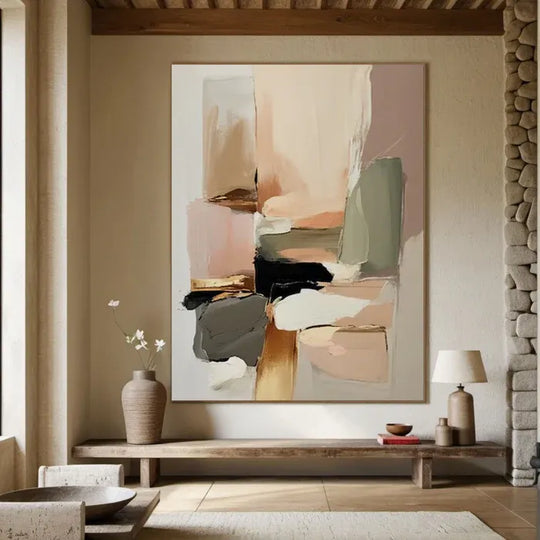
Quiet, hand-made, and textured. This is the one spot where Japandi asks for something with a human hand in it. A machine print of a beige rectangle misses the whole idea — wabi-sabi is about the mark of the maker, the small irregularity that proves a person was there. A hand-painted textured abstract in a natural palette does exactly that. Watch how the surface builds up in layers:
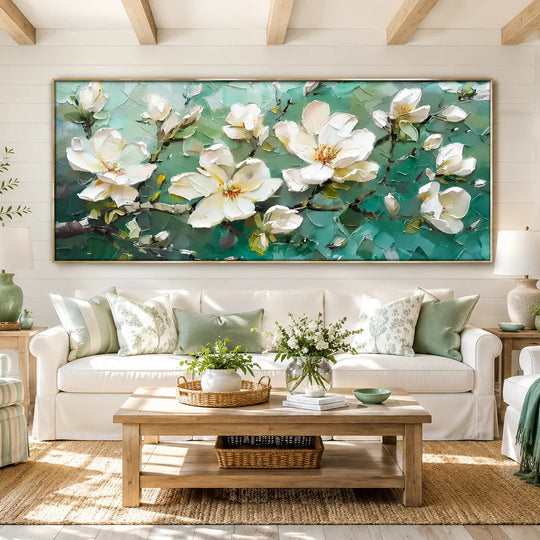
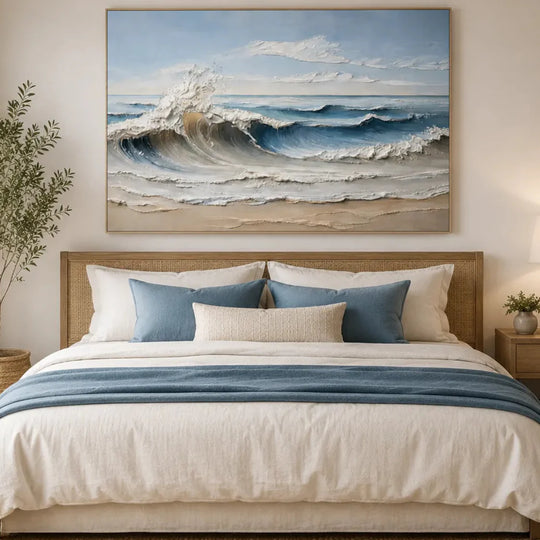
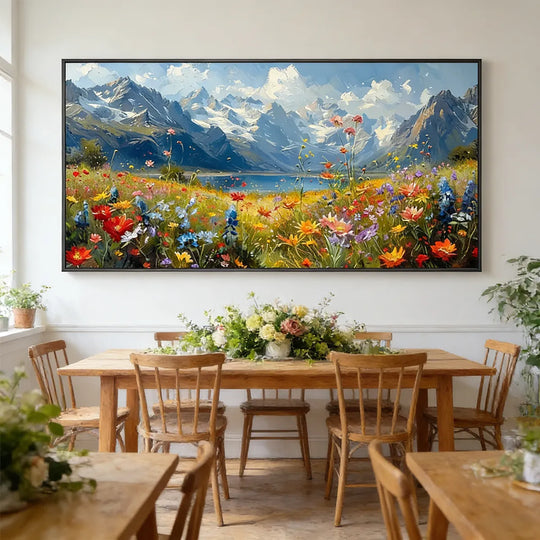
That raised, plaster-like surface isn't a gimmick. It's the reason textured canvas has become one of the biggest home trends of 2026 — a direct reaction to a feed full of flat, AI-generated images. People want to hang something a screen can't fake. Our wabi-sabi collection and abstract art were built for exactly this look.
How is Japandi different from plain minimalism?
Minimalism can feel like a showroom — correct, but a little empty. Japandi keeps the restraint and adds warmth and imperfection. A slightly wonky ceramic bowl, a painting with a visible knife stroke, wood that shows its grain. Those "flaws" are the design. If minimalism is a clean room, Japandi is a clean room that someone clearly loves. For the philosophy underneath it, our guide to wabi-sabi wall art goes deeper.
How do I start without redoing my whole home?
You don't need to gut anything. Pick one wall and one hand-made piece. A single textured canvas in a warm neutral will pull a room toward Japandi faster than a cart full of decor. Add a linen cushion, clear a surface, let some light in. That's usually enough to feel the shift.
Because every Rosemary Art painting is 100% hand-painted, signed, and frame-included, it already carries the maker's-mark quality Japandi is built on. And with free size and color customization, we can match a canvas to your exact wall and palette — warmer sand, cooler greige, whatever your room is asking for. You approve a photo before it ships, so what you picture is what arrives.
Frequently asked questions
Is Japandi the same as wabi-sabi?
No. Wabi-sabi is the Japanese half — beauty in imperfection and age. Japandi combines that with Scandinavian minimalism's clean lines and cozy function. Wabi-sabi is an ingredient; Japandi is the recipe.
What are the best Japandi colors?
Warm neutrals: white, greige, oatmeal, sand, clay, and muted charcoal for depth. Let texture and natural materials add interest rather than bright color.
Does Japandi work in a small apartment?
Very well. Its restraint and light palette make small rooms feel calmer and larger. One textured neutral painting can anchor the whole space.
Can you customize a painting to match my Japandi palette?
Yes. We offer free size and color customization and send a photo for your approval before shipping, so the piece fits your exact wall and tones.
Browse hand-painted, texture-rich pieces made for calm interiors in our new arrivals.