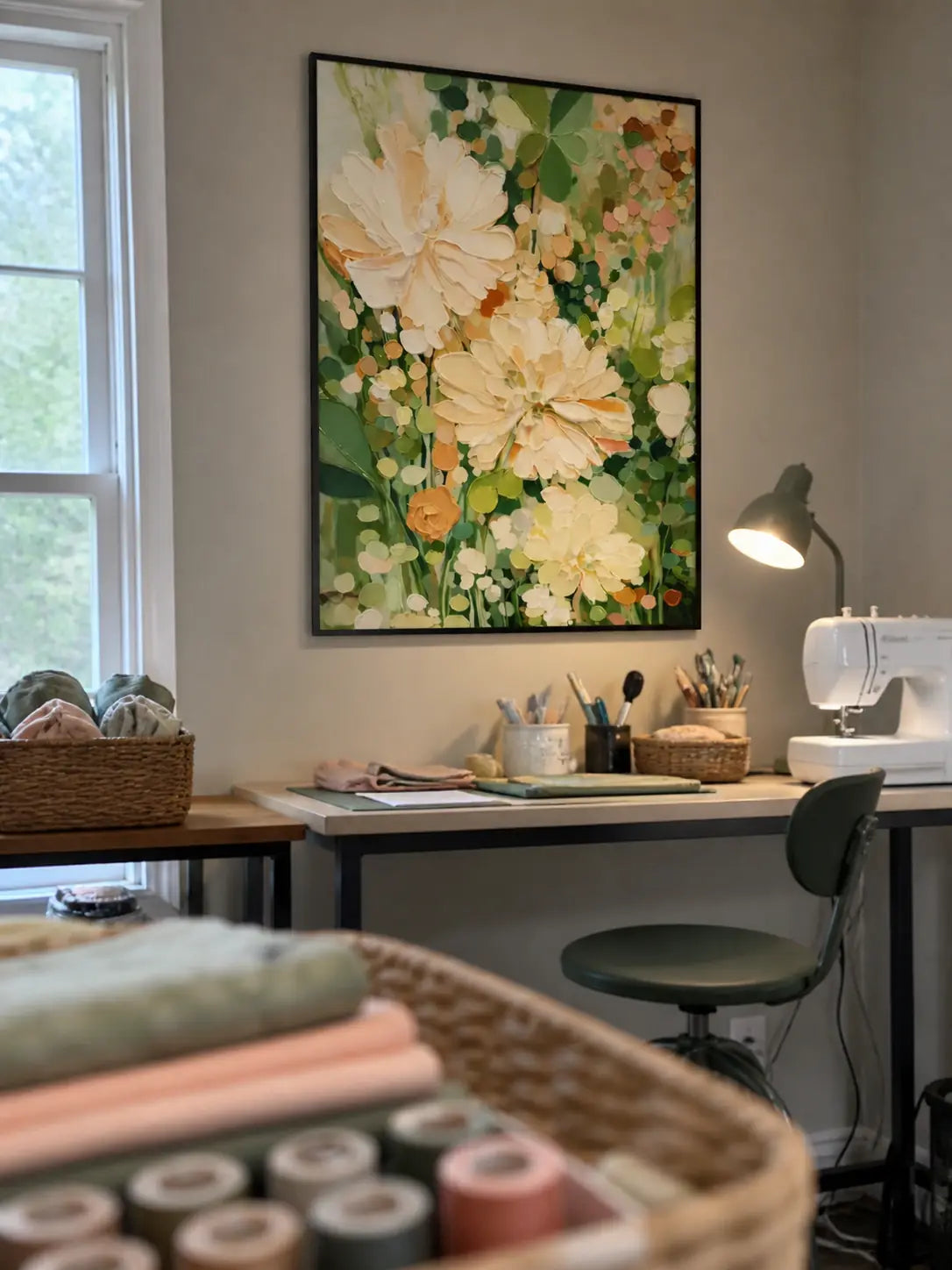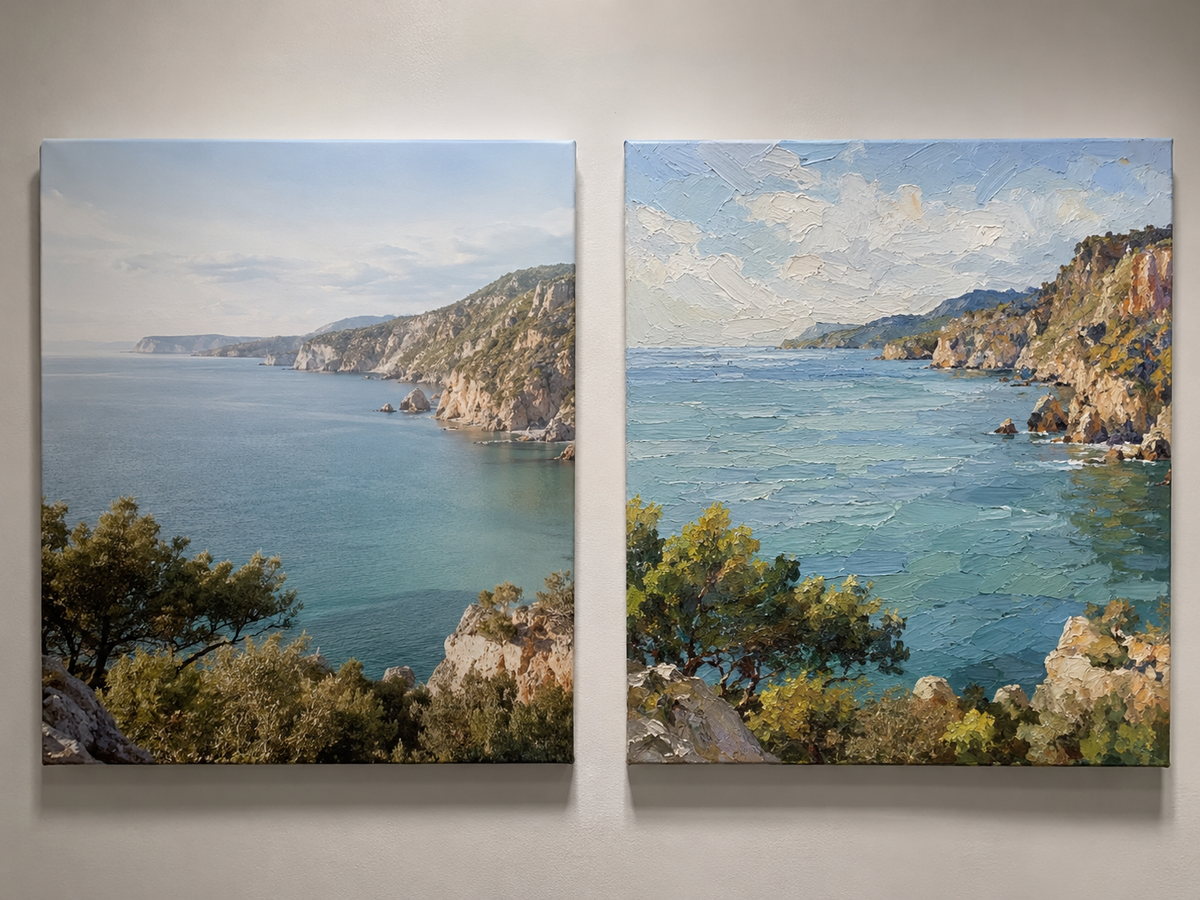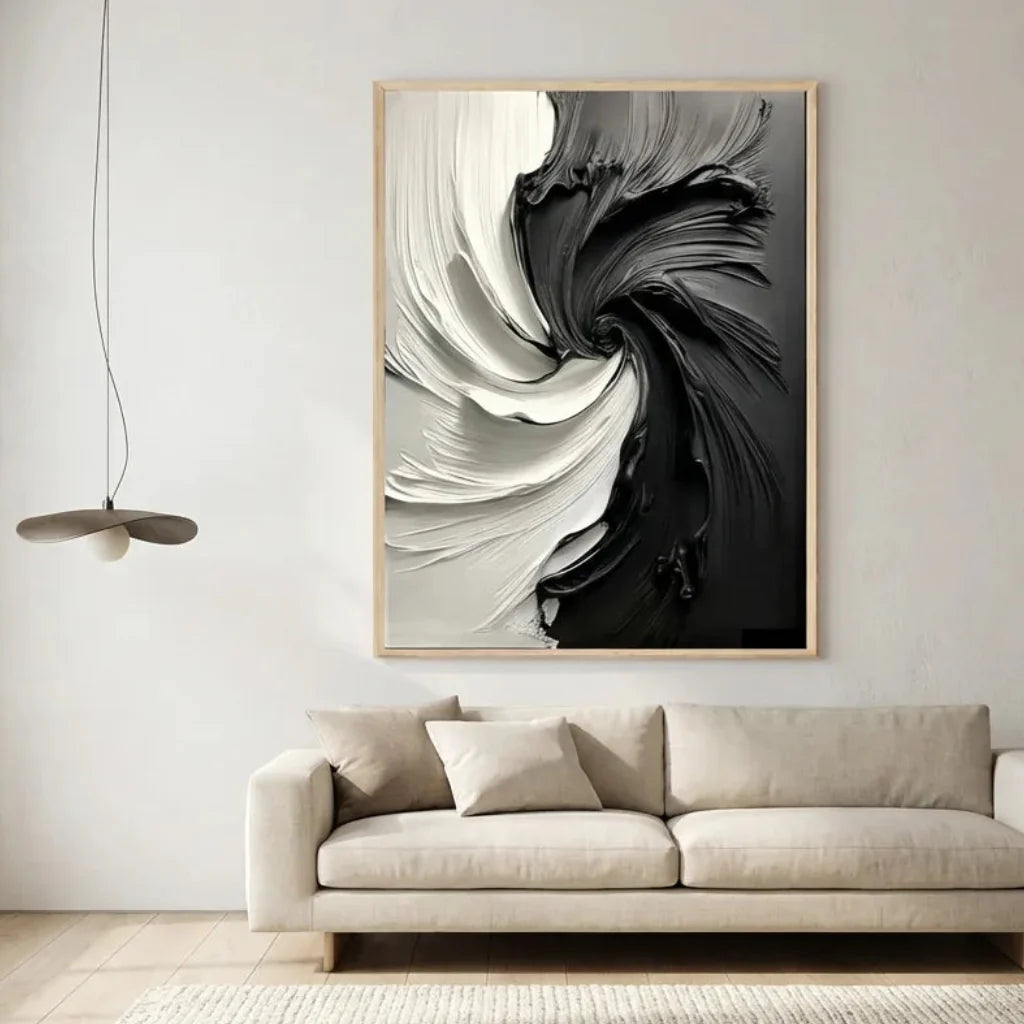
3D textured canvas paintings are no longer niche decor pieces. They are becoming a dominant visual element in modern interior design because they add physical depth, material presence, and a sense of luxury that flat prints cannot achieve.
The shift is not aesthetic only—it is driven by how people want their spaces to feel: more tactile, more immersive, and less digital.
What Makes 3D Textured Canvas Paintings Different?
How do 3D textured paintings differ from flat wall art?
Unlike printed or flat paintings, 3D textured canvas paintings use layers of paint, palette knife techniques, or mixed materials to create physical relief on the surface.
Key differences:
- Physical depth: light and shadow change depending on viewing angle
- Tactile surface: visible brush and knife strokes
- Material richness: thicker paint layers, sometimes mixed media
- Visual movement: artwork shifts subtly under natural light
This makes them closer to sculptural objects than traditional paintings.
Why does texture matter in interior design?
Texture changes how a space is perceived. Interior designers often use texture to avoid “flatness” in modern minimalist homes.
Benefits of texture in wall art:
- Breaks visual monotony in neutral spaces
- Adds warmth to modern minimal interiors
- Enhances natural lighting effects
- Creates focal points without extra furniture
For reference on design principles, see:
- https://www.archdaily.com (architecture and interior design reference)
- https://www.dezeen.com (contemporary design analysis)
Why Are 3D Textured Canvas Paintings Trending Now?
Why are modern homeowners choosing textured art over prints?
The demand shift is driven by three structural changes in consumer behavior:
-
Minimalist interiors need stronger focal points
White walls and neutral furniture require visual anchors. -
Luxury perception is tied to material authenticity
Handcrafted texture signals “real craftsmanship,” not mass production. -
Social media aesthetics favor depth and light interaction
Textured paintings perform better in photos and video content.
Is this trend linked to luxury interior design?
Yes. High-end residential and hospitality design increasingly uses textured wall art as a “soft luxury signal.”
Typical applications:
- Boutique hotels
- Luxury villas
- High-end apartments
- Interior staging for real estate
This aligns with broader interior trends seen in publications like:
- https://www.wallpaper.com (luxury design trends)
- https://www.architecturaldigest.com (interior styling authority)
How 3D Textured Canvas Paintings Improve Interior Spaces
What visual problems do they solve?
Many modern interiors suffer from:
- Flat walls with no visual hierarchy
- Overly sterile minimalist design
- Lack of emotional warmth
- Weak focal points in large spaces
3D textured paintings solve these by introducing controlled visual complexity.
Where should you place textured wall art?
Placement is critical. Poor placement reduces impact.
Recommended areas:
- Above sofa (living room focal point)
- Bedroom headboard wall
- Dining room feature wall
- Entry hallway statement piece
Simple placement logic:
| Space | Recommended Style | Effect |
|---|---|---|
| Living room | Large abstract texture | Strong focal balance |
| Bedroom | Soft neutral texture | Calm atmosphere |
| Dining room | Warm color textures | Social warmth |
| Hallway | Vertical composition | Visual extension |
How to Choose the Right 3D Textured Canvas Painting
What factors should you evaluate before buying?
Key decision factors:
- Wall size proportion (art should occupy ~60–75% of focal wall width)
- Color harmony with furniture
- Texture intensity (subtle vs heavy relief)
- Lighting conditions (natural vs artificial light)
- Room function (calm vs energetic space)
What styles work best in modern interiors?
Common high-performing styles:
- Abstract minimal texture
- Neutral beige/gray palette
- Ocean-inspired layered textures
- Wabi-sabi organic surfaces
- Geometric relief compositions
You can explore related collections here:
Modern 3D Textured Paintings | Hand-Painted Relief Wall Art – Rosemary Art
Are 3D Textured Paintings a Long-Term Design Investment?
Do they hold long-term aesthetic value?
Yes, because they are not trend-dependent in the same way as color-based decor.
Reasons:
- Texture remains relevant across design cycles
- Neutral palettes adapt to furniture changes
- Handmade quality increases perceived value
- Works across multiple interior styles
Unlike digital prints, textured paintings age with character rather than becoming outdated.
Practical Styling Tips for Interior Designers
How to integrate textured paintings without overloading a space?
Rules used by interior designers:
- Limit to 1–2 focal textured pieces per room
- Keep surrounding decor minimal
- Use directional lighting to enhance relief
- Avoid competing textures on adjacent walls
Should lighting be considered during installation?
Yes. Lighting is critical for 3D textured art.
Best options:
- Wall washers (soft grazing light)
- Warm LED directional spots
- Natural side lighting
Bad lighting flattens the entire effect.
FAQ: 3D Textured Canvas Paintings
Are 3D textured canvas paintings hand-made?
Yes, most high-quality versions are hand-painted using palette knife or layered acrylic/oil techniques.
Do textured paintings require special maintenance?
No complex maintenance is needed. Avoid moisture and clean with a dry soft cloth.
Can textured wall art fit minimalist interiors?
Yes. Neutral-toned textured paintings are commonly used in minimalist and Scandinavian design.
Are they suitable for large wall spaces?
Yes, they are especially effective for large blank walls where visual depth is needed.
Do they fade over time?
High-quality oil or acrylic textured paintings are stable under normal indoor conditions.