
Choosing original art can feel exciting at first. Then it gets confusing.
You see one painting you like. Then another. One has the right colors, but the wrong size. One feels dramatic, but maybe too loud. One looks perfect online, but you wonder if it will actually work above your sofa, bed, console table, or dining wall.
That is why choosing art should never start with only one question: “Do I like it?”
That matters, of course. But for interior designers and homeowners, the better question is:
Will this artwork make the room feel more complete?
Original art is not just decoration. It affects mood, proportion, texture, and the way people experience a space. A well-chosen hand-painted oil painting can warm up a clean room, calm down a busy one, or turn an empty wall into the natural focal point of the home.
Here is how to choose original art with more confidence.
1. Start With the Feeling of the Room
Before you choose color or size, decide what the room should feel like.
A living room may need warmth and presence. A bedroom may need softness. A dining room may need something refined but not distracting. A hallway or entryway may need a strong first impression.
This step matters because the same painting can feel different in different rooms.
A bold abstract painting may look powerful in a living room but too active in a bedroom. A quiet neutral textured painting may feel elegant above a bed but too soft for a large open-plan wall.
Ask yourself:
- Should the room feel calm or expressive?
- Should the art stand out or blend in?
- Is the wall already busy, or does it need visual weight?
- Will people see this artwork every day or only when they enter the space?
For calm spaces, explore soft neutral pieces, Wabi-Sabi art, or minimalist oil paintings. For stronger spaces, choose abstract art, colorful wall art, or large textured paintings.
Recommended internal link: Wabi-Sabi Art Collection
2. Know Your Interior Style, But Do Not Let It Trap You
Many people try to match art too closely to the room. That is a common mistake.
If the sofa is beige, the wall is beige, the rug is beige, and the painting is also beige, the room may look safe but flat. Art should connect with the space, not disappear into it.
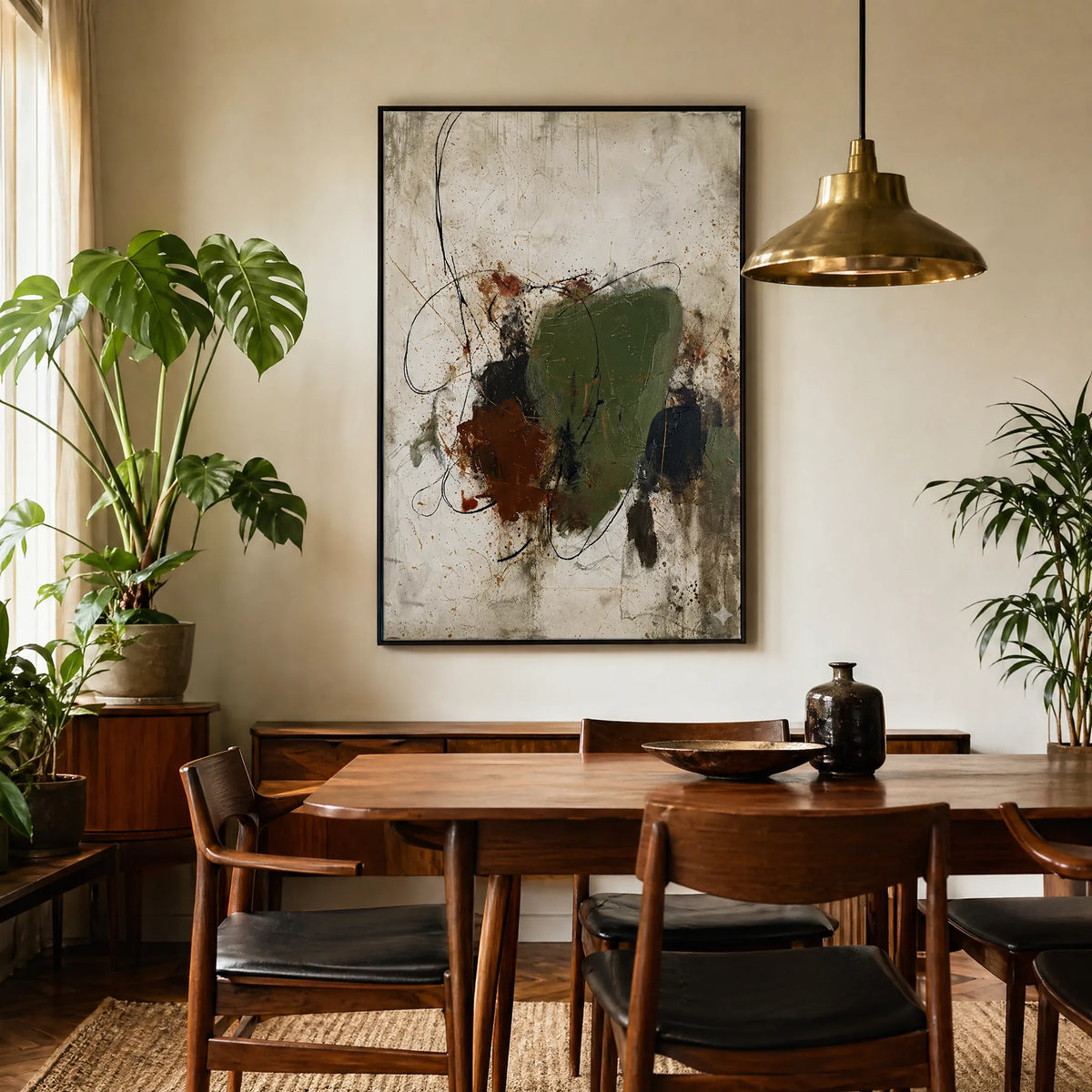
For a modern home, abstract oil paintings usually work well because they add movement without needing a literal subject. For organic modern or Japandi interiors, Wabi-Sabi and textured paintings create a softer, more natural feeling. For coastal interiors, ocean wall art can bring calm movement. For luxury interiors, oversized hand-painted art can make the room feel more intentional.
The goal is not perfect matching. The goal is balance.
A good painting may repeat one or two tones from the room, then introduce contrast through texture, shape, or depth.
Recommended internal link: Abstract Art Collection
3. Choose the Right Size and Scale
Size is where many people get it wrong.
A painting that is too small can make a large wall feel empty. A piece that is too large can overwhelm the furniture below it. The artwork should feel connected to the room’s architecture and furniture.
For art above a sofa, bed, or console, a useful rule is to choose artwork that is around 60% to 75% of the furniture width. It does not need to be exact, but the proportion should feel natural.
Simple size guide:
| Space | Suggested Art Type |
|---|---|
| Small wall or narrow corner | Vertical artwork |
| Above a console table | Medium horizontal or square painting |
| Above a queen bed | Horizontal painting or set of 2 |
| Above a large sofa | Oversized abstract or panoramic artwork |
| Open living room wall | Large textured statement painting |
| Dining room wall | Calm abstract, floral, or organic textured art |
If you are unsure, do not guess. Measure the wall width, furniture width, and ceiling height first. Better yet, use a room mockup before ordering.
At Rosemary Art, many hand-painted oil paintings can be made in custom sizes, which is useful for designers working with exact wall dimensions.
Recommended internal link: Living Room Art
4. Think Beyond Color
Color matters, but it should not be the only reason you choose a painting.
A room can have the “right” color palette and still feel boring. Why? Because it lacks depth, contrast, and texture.
When choosing original wall art, look at four things:
- Color: Does it connect with the room?
- Shape: Does it soften or strengthen the space?
- Texture: Does it add surface interest?
- Mood: Does it make the room feel better?
For example, a white textured oil painting may have very little color, but it can still be visually rich because the raised paint catches light. A black and white abstract painting may look simple, but it can add structure to a soft neutral room. A floral impasto painting may bring life to a dining room without feeling too traditional.
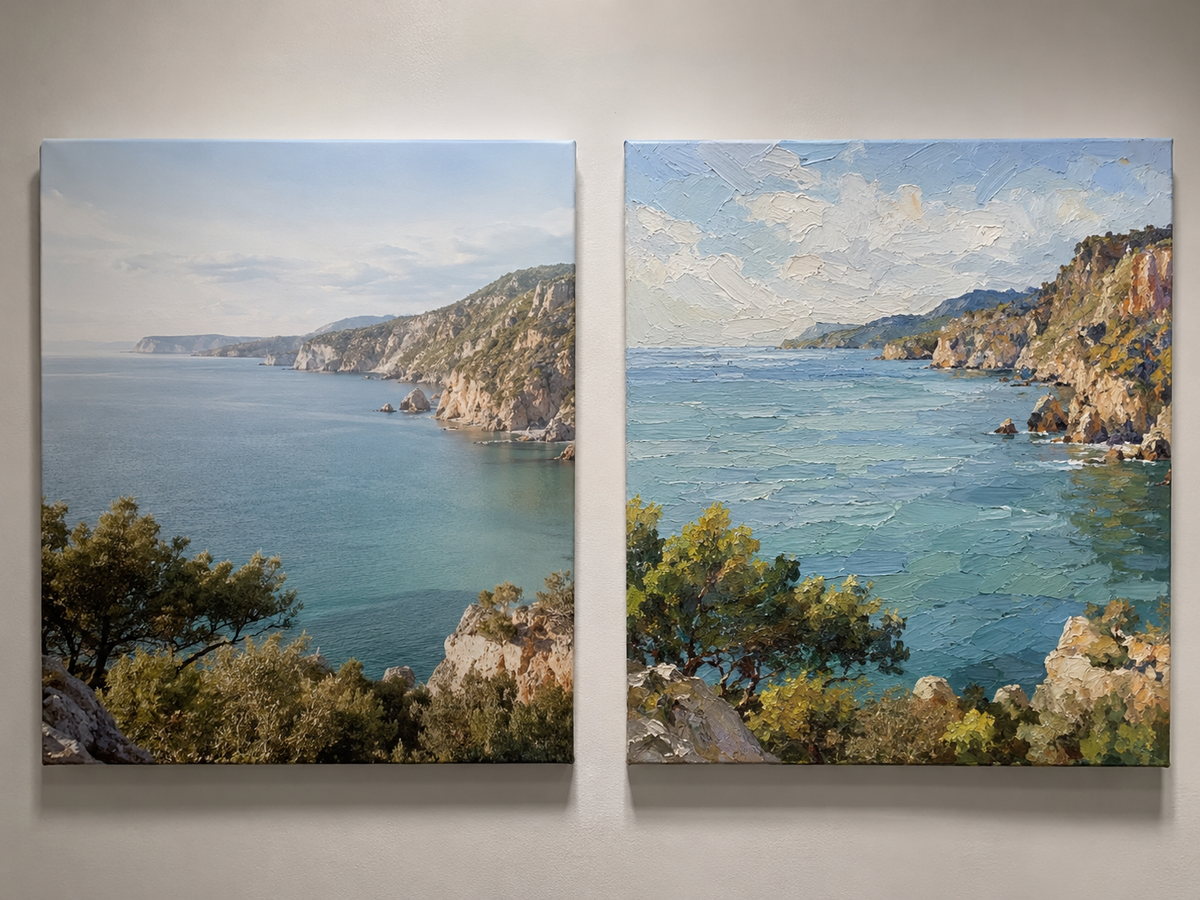
This is where hand-painted art performs better than flat printed wall decor. Real paint, visible brushwork, and layered texture create a physical presence that changes with light.
Recommended internal link: 3D Textured Painting Collection
5. Find the Natural Focal Point
Every room needs a visual anchor.
In a living room, that may be the wall above the sofa. In a bedroom, it is often the wall above the headboard. In an entryway, it may be the first wall people see when they walk in. In a dining room, it may be the wall facing the table.
Do not place original art where it will be hidden behind furniture, squeezed between shelves, or competing with too many objects.
A good focal wall should have enough breathing space around the artwork. This helps the painting feel important, not accidental.
For larger paintings, lighting also matters. Natural light, wall washers, picture lights, or soft ceiling lights can reveal brushwork and texture. This is especially important for textured oil paintings, because their surface changes when light moves across the room.
For general hanging guidance, Architectural Digest recommends planning the layout before making holes and often using eye-level placement as a starting point.
Suggested external link: Architectural Digest Guide to Hanging Art
6. Set a Budget Before You Fall in Love
Original hand-painted art costs more than mass-produced prints. That is normal.
You are not only paying for an image. You are paying for materials, canvas, paint, artist time, technique, customization, framing, packaging, and delivery.
But this does not mean you should buy blindly.
Before shopping, decide:
- Which room matters most?
- Do you need one statement piece or several smaller works?
- Is custom size necessary?
- Do you need a frame?
- Is this for personal use, a client project, hotel, office, or commercial space?
For interior designers, the budget should also include lead time, revisions, shipping, installation planning, and client approval. For homeowners, the most important thing is to buy a piece you can live with for years, not just something that looks trendy today.
Recommended internal link: All Hand-Painted Oil Paintings
7. Use Texture When the Room Feels Too Flat
A common problem in modern interiors is that everything looks clean but slightly lifeless.
Smooth sofa. Smooth wall. Smooth cabinet. Smooth floor. Smooth lighting.
This is where textured oil painting helps.
Texture gives the wall depth. It creates small shadows. It slows the eye down. It makes the room feel less like a showroom and more like a lived-in space.
Impasto painting, for example, uses thick paint to create visible raised texture. This can make an artwork feel more sculptural and more personal.
Suggested external link: Tate Art Term: Impasto
For a modern home, textured art works especially well in:
- Neutral living rooms
- Large blank walls
- Bedrooms with soft fabrics
- Hotel rooms
- Spa-style interiors
- Dining spaces
- Entryways
Recommended internal link: Why Real Texture Still Matters in Modern Homes
8. Let the Artwork Reflect the People Who Live There
This is the part people often forget.
A beautiful room can still feel cold if nothing in it feels personal. Original art helps solve that problem.
The right painting should say something about your taste, your pace of life, your memory, or the atmosphere you want to create. It does not need to explain everything. It just needs to feel right every time you see it.
For homeowners, that may mean choosing a peaceful landscape, a textured floral painting, or a bold abstract work that brings energy into the room.
For interior designers, it means choosing art that supports the client’s lifestyle, not just the mood board.
A good piece of original art should not feel like an accessory added at the end. It should feel like part of the room’s identity.
Final Thoughts
Choosing original art is not about finding the most expensive piece or the most colorful painting.
It is about choosing artwork that fits the room, supports the mood, respects the scale, and brings something human into the space.
Start with feeling. Measure carefully. Avoid matching too much. Think about texture. Choose a focal point. Set a realistic budget. And most importantly, choose art that still feels meaningful after the trend has passed.
A well-chosen hand-painted oil painting does more than fill a wall.
It makes the room feel finished.
FAQ
What is the best original art for a living room?
Large abstract paintings, textured oil paintings, and panoramic wall art work well in living rooms because they create a strong focal point and add visual weight to large walls.
Should wall art match the furniture?
It should connect with the room, but it does not need to match exactly. A painting can repeat one or two colors from the furniture while adding contrast through texture, shape, or mood.
Is hand-painted art better than printed wall art?
For spaces where texture, depth, and uniqueness matter, hand-painted art usually feels richer than printed wall art. Prints can copy an image, but they cannot fully reproduce real brushwork, raised paint, or handmade variation.
How do I choose the right art size?
Measure the furniture and wall first. For artwork above a sofa, bed, or console, choose a piece around 60% to 75% of the furniture width as a starting point.
What art style is best for modern interiors?
Abstract art, minimalist art, Wabi-Sabi art, textured oil paintings, and large neutral wall art all work well in modern interiors. The best choice depends on the room’s mood and scale.