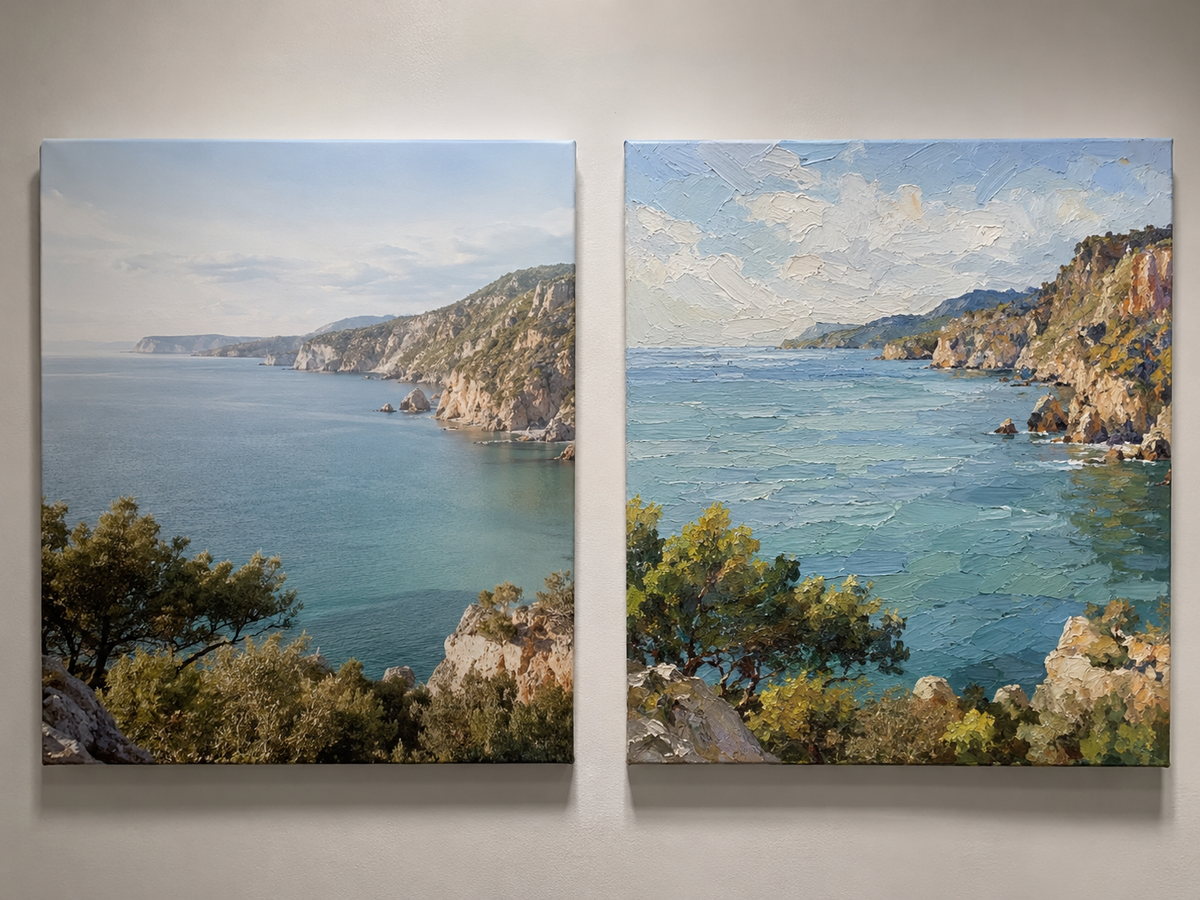
A flat print can fill an empty wall.
A hand painted textured artwork can change how the room feels.
That difference is not only about color or subject. It comes from the surface itself — the raised paint, the knife marks, the uneven edges, and the small imperfections that show a human hand was involved.
In a time when almost anything can be printed, enlarged, copied, and delivered quickly, real texture has become more meaningful. It slows the eye down. It gives the wall depth. It makes a room feel less staged and more personal.
This is why hand painted textured wall art, especially impasto oil painting and palette knife painting, continues to hold a strong place in modern interiors.

What Is Hand Painted Textured Wall Art?
Hand painted textured wall art refers to artwork created with real paint, not printed texture. The surface is built by hand using brushes, palette knives, or other tools. In many pieces, the paint is applied thickly so the marks rise from the canvas.
This technique is often called impasto.
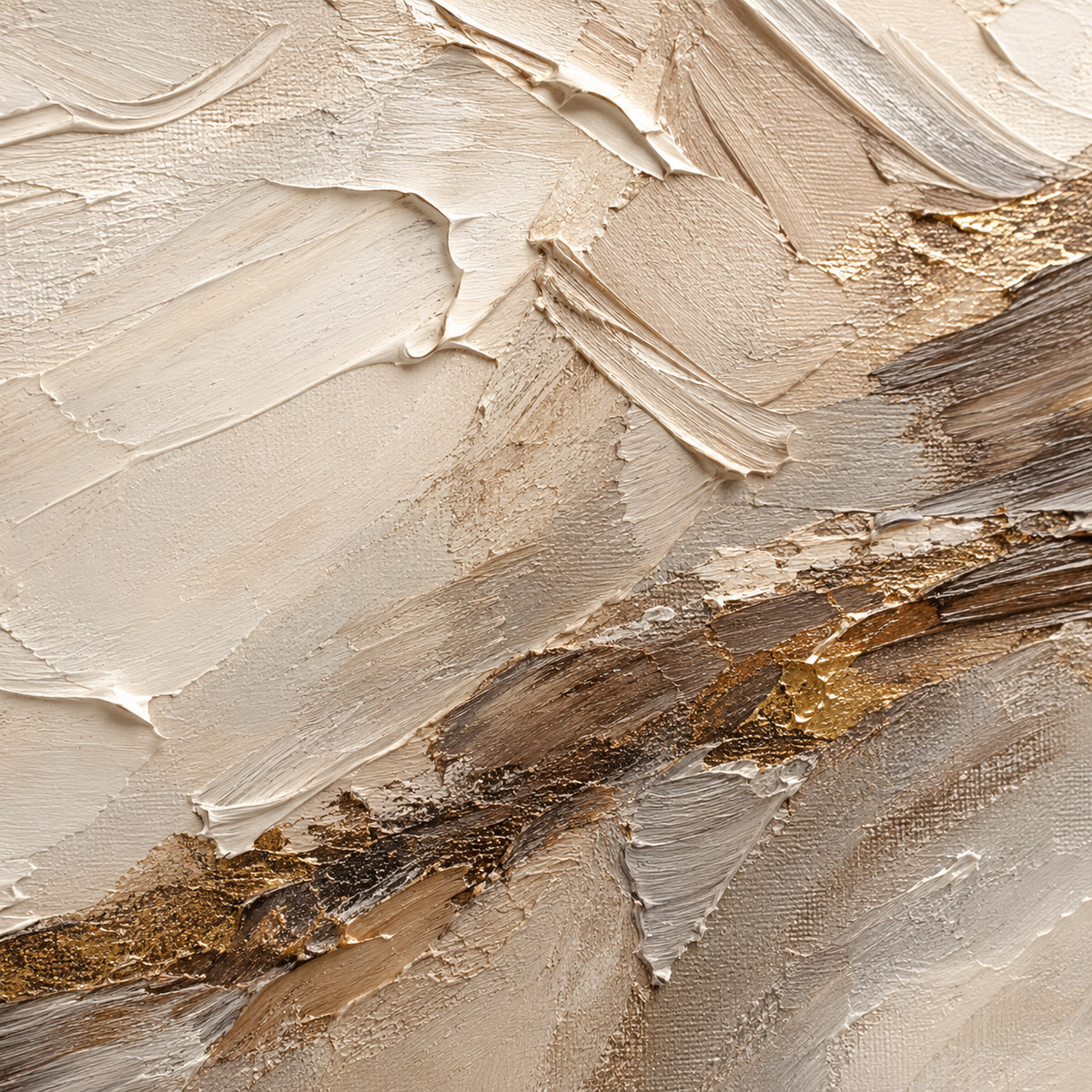
With impasto, the paint is not trying to disappear into a smooth surface. It stays visible. You can see the direction of the hand. You can notice where the artist pressed harder, where the knife dragged through wet paint, and where one layer sits on top of another.
That physical depth is the main difference between a textured oil painting and a printed reproduction. A print can imitate the image of texture, but it cannot create the same shadows, ridges, and movement when light touches the surface.
Why Texture Feels Different from a Flat Print
Most wall art is viewed from a distance first. You walk into a room and notice the shape, color, and scale.
But textured art keeps revealing more as you move closer.
From across the room, a large textured painting may feel calm and architectural. Up close, you begin to see the layered paint, scraped edges, and small gestures that make the piece feel alive.
This is the quiet strength of real texture. It does not need to shout. It gives the room something to hold onto.
A flat print often looks the same all day. A textured painting changes with the light. Morning light may soften the surface. Evening light may create stronger shadows across the ridges. If there is a picture light or side lighting, the paint can look almost sculptural.
That is why textured wall art works so well in interiors with simple furniture, neutral colors, and clean walls. It adds depth without adding clutter.
The Role of the Palette Knife
Many textured oil paintings are created with a palette knife.
A brush can blend, soften, and sweep. A palette knife does something different. It can press paint into the canvas, pull it across the surface, scrape it back, or leave a sharp edge where the paint breaks.
These marks are difficult to fake convincingly because they depend on pressure, timing, and the thickness of the paint. One movement can leave a smooth plane. Another can create a rough ridge. A slight change in angle can completely change the mark.
This is why palette knife painting often feels direct and confident. The artist cannot control every small result. The surface keeps traces of the process.
For buyers, this matters because it creates uniqueness. Even if an artist paints a similar composition twice, the knife marks will never be exactly the same. The final artwork becomes one individual object, not just one image repeated across many homes.
Why Large Textured Wall Art Works So Well
Large textured wall art has a stronger presence than small decor pieces because texture needs room to breathe.
On a large wall, a small painting can look decorative but weak. It may be beautiful on its own, but the wall still feels unfinished. A larger textured artwork can anchor the room. It gives the sofa wall, dining wall, bedroom wall, or entryway a clear focal point.
This is especially true for:
-
Living rooms with neutral sofas
-
Bedrooms with upholstered headboards
-
Dining rooms with simple furniture
-
Entryways that need one strong statement
-
Offices, hotels, and commercial interiors
-
Open-plan spaces with large empty walls
A large textured oil painting does not have to be bright or dramatic. In many modern homes, the most effective pieces are quiet: warm white, beige, taupe, soft gray, muted brown, black and cream, or earthy neutrals.
The texture carries the interest. The color does not need to do all the work.
Texture as a Long-Term Design Choice
Trends move quickly. One year it is bold color. The next year it is minimal beige. Then comes organic modern, Japandi, wabi-sabi, quiet luxury, or something else.
Textured art lasts better because it is not only tied to one trend. It is connected to material, light, and craftsmanship.
A hand painted textured piece can sit naturally in many interior styles:
-
Modern minimalist
-
Wabi-sabi
-
Organic modern
-
Contemporary luxury
-
Transitional interiors
-
Coastal neutral homes
-
Boutique hotel spaces
-
High-end office interiors
The key is choosing the right texture, color, and size.
For a calm bedroom, soft texture and pale tones usually work better. For a lobby or large living room, stronger texture and a larger scale may be needed. For a dining room, warmer tones can make the space feel more intimate.
Good textured art should not feel like a trend accessory. It should feel like part of the architecture of the room.
When Textured Wall Art Is a Good Gift
A hand painted artwork can also be a meaningful gift, but only when chosen carefully.
It works best for moments that deserve something lasting:
-
Housewarming gifts
-
Wedding anniversaries
-
New office openings
-
Hotel or restaurant projects
-
Retirement gifts
-
Interior design project reveals
-
Family homes that need a personal focal point
The reason is simple: a handmade painting feels more personal than a standard decorative object. It suggests time, thought, and permanence.
But this is also where people make mistakes. Art is personal. A heavily colored or highly expressive piece may not suit the recipient’s home. If the gift is important, choose something with a flexible palette or request a custom piece based on the space.
A neutral textured painting is often safer than a very specific subject. It can blend into more interiors while still feeling special.
Where Textured Art Can Go Wrong
Texture is powerful, but it is not always the right answer.
A painting with too much raised paint can feel heavy in a small room. A dark textured piece can make a narrow hallway feel closed in. A very rough surface may clash with an interior that depends on smooth, polished finishes.
Common mistakes include:
Choosing the wrong size.
A small textured painting on a large wall often feels lost.
Ignoring lighting.
Texture needs light. Without side light or natural light, the surface may look flatter than expected.
Using too many textured pieces in one room.
If every wall has heavy texture, the room can feel visually noisy.
Placing oil paintings in humid areas.
Bathrooms, damp walls, and poorly ventilated spaces are not ideal for original oil paintings.
Expecting texture to solve the whole room.
A painting can create a focal point, but it cannot fix bad furniture scale, poor lighting, or a confused color palette.
The best textured wall art is used with restraint. One strong piece often does more than three average pieces.
How to Choose the Right Textured Painting
Start with the wall, not the artwork.
Measure the wall width and the furniture below it. If the painting will hang above a sofa, bed, console, or dining bench, it should relate to that furniture.
As a general guide, artwork above a sofa or bed should be around two-thirds to three-quarters of the furniture width. It does not need to be exact, but it should feel balanced.
Then consider the room’s mood.
For a calm room, choose soft texture and quiet colors.
For a statement wall, choose stronger contrast or heavier movement.
For a luxury interior, look for controlled texture rather than messy thickness.
For a wabi-sabi room, irregular surfaces and earthy tones usually work well.
Also think about viewing distance. A very detailed textured painting needs enough space for people to step back and see the whole composition. If the room is narrow, a simpler composition may work better.
How to Tell If a Painting Is Truly Hand Painted
Many prints today are photographed and printed so well that they can look textured online. This is why buyers should check carefully before purchasing.
A real hand painted textured artwork usually has signs that cannot be perfectly repeated.
Look for actual raised paint.
View the painting from the side. Real texture should create physical shadows.
Check the edges.
On many hand painted canvases, you may see paint wrapping slightly around the sides or small irregularities near the frame.
Look at the surface closely.
Printed texture often looks consistent and flat. Real paint has changes in pressure, thickness, and direction.
Ask for close-up photos or videos.
A short video under moving light can reveal whether the surface is truly raised.
Ask about the process.
For custom handmade paintings, the seller should be able to explain the materials, painting time, frame options, and whether progress photos or videos are available.
A serious artwork should not rely only on a beautiful room mockup. The buyer should be able to see the real surface.
How to Care for Hand Painted Textured Wall Art
Textured paintings need gentle care.
Do not wipe the surface with a wet cloth. Water and cleaning products can damage oil paint and may leave marks in the textured areas.
For light dust, use a soft, dry brush or a clean microfiber duster. Move slowly and avoid pressing into the ridges. If the painting has very heavy texture, dust can settle in small grooves, so regular gentle cleaning is better than waiting until the surface looks dirty.
Keep the painting away from constant direct sunlight, high humidity, and strong heat sources. Avoid placing it above fireplaces that produce heat or smoke. Also avoid bathrooms unless the space is large, dry, and well ventilated.
If the piece is valuable or heavily textured, professional cleaning is safer than aggressive home cleaning.
Why Custom Size Matters
One of the biggest advantages of hand painted art is flexibility.
A standard print comes in fixed sizes. A hand painted piece can often be made to suit the actual wall. This matters because most homes do not have perfect walls or perfect furniture proportions.
A custom size can help when:
-
The wall is very wide
-
The sofa is longer than standard
-
The ceiling is unusually high
-
The room needs a horizontal piece instead of a vertical one
-
A designer needs a specific color palette
-
A hotel or office project requires several coordinated artworks
Custom does not mean random. A good custom painting should still respect proportion, color balance, and the feeling of the room.
The goal is not to make the biggest possible artwork. The goal is to make the right artwork for the space.
Final Thoughts
Hand painted textured wall art matters because it brings back something physical.
It is not just an image on a wall. It has weight, surface, movement, and evidence of the artist’s hand. In a modern home filled with smooth screens, printed surfaces, and mass-produced objects, that kind of texture feels grounding.
A good textured oil painting does not need to explain itself too much. It should hold the wall, work with the room, and reward a closer look.
Choose the right size. Look for real raised paint. Pay attention to lighting. Avoid overdecorating around it.
When the piece is right, it does more than decorate. It gives the room a center.
Frequently Asked Questions
What is hand painted textured wall art?
Hand painted textured wall art is artwork created with real paint and visible surface texture. The texture may come from brushwork, palette knife marks, layered oil paint, or mixed media techniques.
Is textured wall art better than a print?
It depends on what you need. A print is affordable and easy to reproduce. A hand painted textured artwork has real surface depth, individual brush or knife marks, and a more personal handmade quality.
What is impasto wall art?
Impasto wall art uses thick layers of paint to create visible texture. The paint stands above the surface, so brushstrokes or palette knife marks can be seen clearly.
Where should I place large textured wall art?
Large textured wall art works well above sofas, beds, dining furniture, consoles, fireplaces, and entryway walls. It is best placed where there is enough space to view the full composition.
Can I customize the size and color of a textured painting?
Yes. Many hand painted oil paintings can be customized by size, color palette, frame style, and composition. This is useful when the wall or furniture requires a specific proportion.
How do I clean a textured oil painting?
Use a soft, dry brush or gentle microfiber duster. Do not use water, chemical cleaners, or rough cloths. For valuable pieces or heavy texture, professional cleaning is safer.
Does textured art work in minimalist interiors?
Yes, but it should usually be used as one strong focal point. In minimalist interiors, textured art works best when the color palette is controlled and the surrounding decor is simple.
How can I tell if textured art is real or printed?
Look from the side under light. Real texture should cast small shadows and have raised paint. Printed texture usually looks flat even if the image shows brush marks.