Wabi-Sabi art is inspired by a Japanese aesthetic that finds beauty in imperfection, simplicity and the natural passage of time.
Instead of perfect symmetry, polished surfaces and bright decoration, Wabi-Sabi artwork often uses muted colors, organic shapes, visible texture and subtle handmade variation.
It has become especially popular in minimalist, Japandi and organic modern interiors because it makes neutral spaces feel warmer, calmer and more personal.
What Does Wabi-Sabi Mean?
The term Wabi-Sabi cannot be translated perfectly into one English phrase.
“Wabi” is associated with simplicity, restraint and modest beauty. “Sabi” refers to the character that develops through age, wear and time.
Together, Wabi-Sabi values:
- Imperfection
- Impermanence
- Incompleteness
- Natural materials
- Handmade variation
- Simplicity
However, Wabi-Sabi does not mean poor workmanship.
A well-made Wabi-Sabi painting uses irregularity and texture intentionally. The artwork may be asymmetrical, but it should still feel balanced and carefully considered.
Where Did Wabi-Sabi Come From?
Wabi-Sabi is rooted in traditional Japanese aesthetics and was influenced by Zen thought and Japanese tea culture.
During the development of the tea ceremony, simple handmade bowls and natural materials became more valued than highly polished decorative objects.
Uneven edges, aged surfaces and signs of use were appreciated because they showed the history and individuality of each object.
This idea later influenced architecture, ceramics, furniture, painting and modern interior design.
Main Characteristics of Wabi-Sabi Art
| Characteristic | How It Appears in Art |
|---|---|
| Imperfection | Uneven lines, irregular edges and asymmetrical forms |
| Natural colors | Beige, cream, clay, taupe, grey, charcoal and muted green |
| Organic shapes | Forms inspired by stone, sand, mountains, water and weathered surfaces |
| Visible texture | Raised paint, plaster, palette-knife marks and rough finishes |
| Negative space | Simple compositions with room for each shape and texture to stand out |
| Handmade variation | Small differences in color, movement and surface depth |
Natural and Muted Colors
Wabi-Sabi art is often associated with warm white, beige and sand, but it is not limited to light neutral colors.
It can also include:
- Clay brown
- Stone grey
- Charcoal
- Muted black
- Olive green
- Rust
- Faded blue
The colors are usually restrained and inspired by natural materials.
Texture and Material Depth
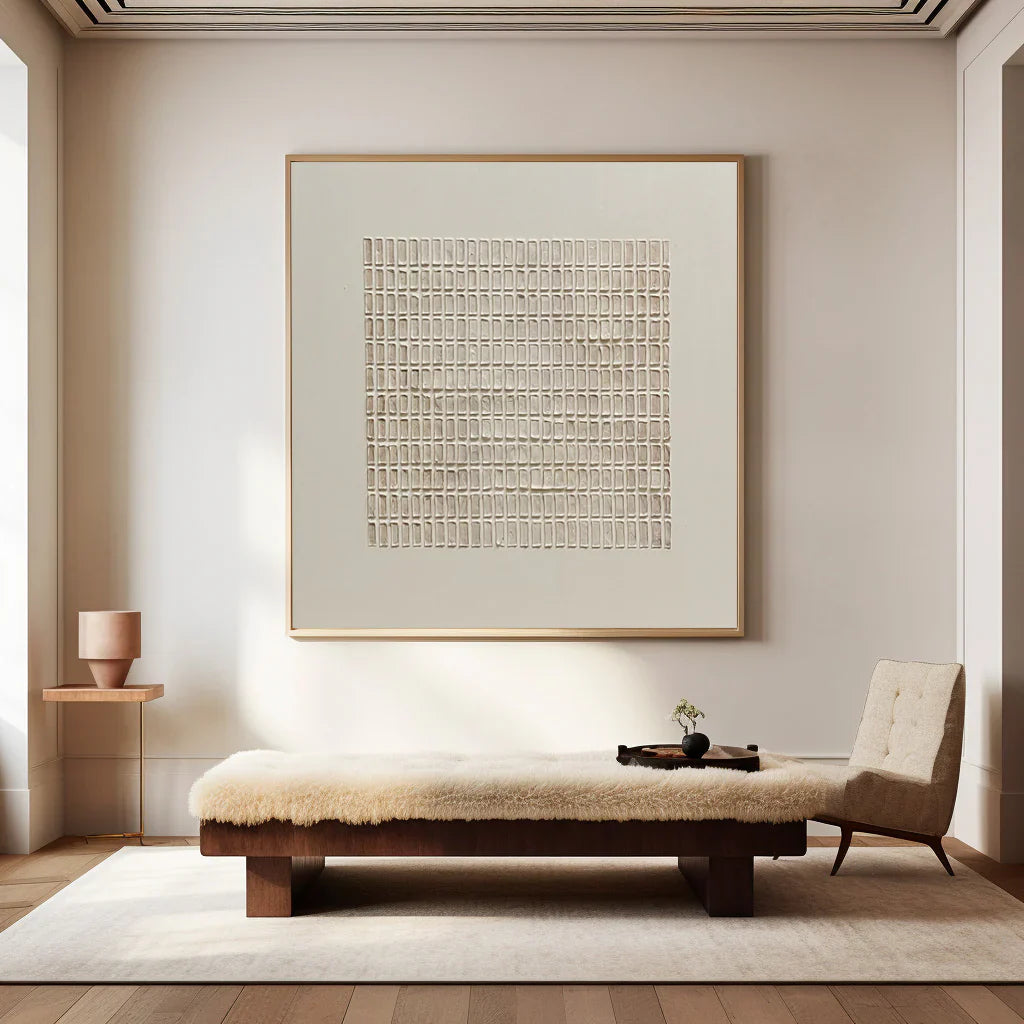
Texture is one of the most important features of modern Wabi-Sabi wall art.
Thick paint, plaster and palette-knife marks create real depth. As light changes during the day, shadows move across the surface.
This allows a neutral painting to remain visually interesting without using strong colors.
Explore our hand-painted Wabi-Sabi wall art for artwork featuring organic forms, layered surfaces and warm neutral colors.
For stronger relief and more visible shadows, see our 3D textured paintings.
Why Is Wabi-Sabi Art So Popular?
It Makes Modern Interiors Feel More Human
Many modern rooms contain smooth surfaces, straight lines and mass-produced furniture.
Wabi-Sabi art introduces visible brushstrokes, irregular shapes and handmade details. This prevents the room from feeling too perfect or similar to a showroom.
It Creates Calm Without Looking Empty
Minimalist rooms can sometimes feel cold when every surface is white, smooth and precise.
Wabi-Sabi adds warmth through texture, earthy colors and organic shapes while keeping the space simple.
It Adds Depth to Neutral Rooms
Beige, cream and white interiors are easy to coordinate, but they can look flat.
Textured Wabi-Sabi artwork creates depth through light and shadow rather than bright color. This makes it especially suitable for neutral living rooms, bedrooms and hotel interiors.
It Feels Authentic
A hand-painted artwork is not completely identical to another piece.
Small differences in brush movement, color blending and texture show the artist’s process. These variations are part of the artwork rather than flaws.
It Works with Many Interior Styles
Wabi-Sabi wall art works well with:
- Minimalist interiors
- Japandi homes
- Organic modern spaces
- Contemporary luxury interiors
- Warm neutral rooms
- Natural-style hotels
It can be paired with linen, wood, stone, ceramics, concrete and soft modern furniture.
Wabi-Sabi vs Minimalism vs Japandi
These three styles are related, but they are not the same.
| Style | Main Focus | Common Features | Overall Feeling |
| Wabi-Sabi | Imperfection and natural aging | Rough texture, asymmetry, earthy colors | Organic and soulful |
| Minimalism | Reduction and visual order | Clean lines, limited objects, simple forms | Precise and restrained |
| Japandi | Japanese simplicity and Scandinavian comfort | Light wood, linen, functional furniture | Calm and balanced |
Minimalism asks what can be removed.
Japandi combines simplicity with comfort and function.
Wabi-Sabi focuses on the beauty of irregularity, handmade variation and time.
These approaches can be used together, but they should not be treated as identical.
How to Decorate with Wabi-Sabi Art
| Room | Recommended Artwork | Styling Advice |
| Living room | Large horizontal painting | Place above the sofa and combine with linen, wood or stone |
| Bedroom | Soft neutral horizontal art or diptych | Use low-contrast colors to maintain a restful atmosphere |
| Dining room | Textured art in clay, grey or charcoal | Use side lighting to highlight the raised surface |
| Entryway | Vertical painting | Pair with a simple console and one or two ceramic objects |
| Hotel room | Coordinated neutral artwork | Match the size, frame and color palette across multiple rooms |
Avoid placing too many small decorations around a heavily textured painting. Negative space helps the artwork feel more refined.
How to Choose Wabi-Sabi Wall Art
| Factor | What to Check |
| Size | Measure the wall and furniture before ordering |
| Listed dimensions | Confirm whether the size includes the frame |
| Orientation | Choose horizontal, vertical, square or multi-panel formats |
| Texture | Check whether the surface is hand-textured or only printed |
| Color | Match the artwork with the room’s wall, furniture and flooring |
| Frame | Consider natural wood, walnut, matte black or a floating frame |
| Customization | Ask whether size, color, composition and frame can be adjusted |
For artwork made according to your wall dimensions and interior palette, you can order a custom Wabi-Sabi artwork.
Hand-Painted Wabi-Sabi Art vs Printed Art
| Hand-Painted Art | Printed Art |
| Real raised texture | Flat image of texture |
| Natural handmade variation | Consistent repeated design |
| Changing highlights and shadows | Limited surface depth |
| Strong close-up detail | More suitable for distant viewing |
| Higher individual value | Lower production cost |
| Suitable for statement walls | Suitable for budget or large-volume projects |
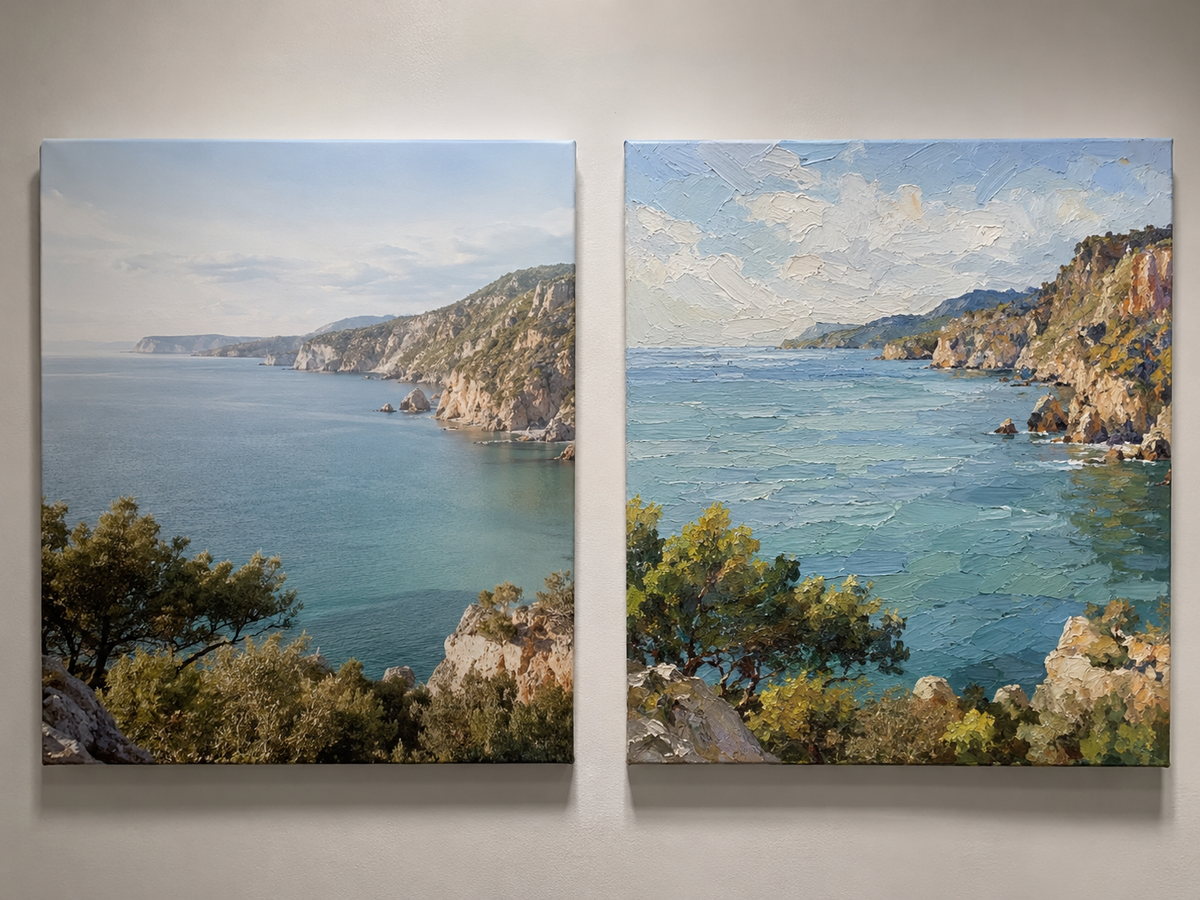
Hand-painted artwork is often better for spaces where the surface will be viewed closely.
Printed artwork may be more practical for large commercial orders or projects with strict budgets.
The correct choice depends on the room, quantity, viewing distance and project requirements.
You can also explore our modern abstract art collection for neutral and organic compositions in a wider range of colors.
Is Wabi-Sabi Art Just a Trend?
Wabi-Sabi is currently popular in interior design, but its principles are much older than current decorating trends.
Specific products, such as beige plaster paintings, may become more or less popular over time. However, the wider interest in natural materials, handmade objects, simplicity and imperfection is unlikely to disappear.
A strong Wabi-Sabi interior should not simply copy a trend. It should combine the artwork with the owner’s existing furniture, materials and personal style.
Frequently Asked Questions
What does Wabi-Sabi mean in art?
Wabi-Sabi in art means appreciating imperfection, simplicity, natural variation and the passage of time. It often appears through uneven forms, muted colors and visible handmade texture.
Why is Wabi-Sabi art so popular?
It is popular because it creates warmth and calm in modern interiors. Its organic forms and textured surfaces make neutral rooms feel more personal and less manufactured.
Is Wabi-Sabi the same as minimalism?
No. Minimalism focuses on reducing objects and creating order. Wabi-Sabi focuses on imperfection, natural aging and handmade variation.
Is Wabi-Sabi the same as Japandi?
No. Japandi is an interior style combining Japanese and Scandinavian design. Wabi-Sabi is a broader aesthetic philosophy that can be used within a Japandi interior.
Is Wabi-Sabi art always beige?
No. It can also use grey, charcoal, clay, brown, muted green, black and faded blue. The colors are normally natural and low in saturation.
What materials are used in Wabi-Sabi wall art?
Common materials include canvas, acrylic paint, oil paint, plaster, texture paste, sand-based mediums and wood.
Is hand-painted Wabi-Sabi art better than a print?
Hand-painted art offers real texture, natural variation and stronger close-up detail. Printed art is usually more affordable and easier to reproduce in large quantities.
Final Thoughts
Wabi-Sabi art offers an alternative to highly polished and perfectly coordinated interiors.
Its natural colors, irregular forms and visible textures introduce warmth without making a room feel visually busy.
The best Wabi-Sabi artwork is not simply beige or rough. It should balance texture, craftsmanship, proportion and simplicity.
Before choosing a piece, consider the artwork’s size, surface depth, frame and relationship with the surrounding furniture.
Explore our Wabi-Sabi art collection to find hand-painted textured artwork for living rooms, bedrooms, hotels and custom interior projects.