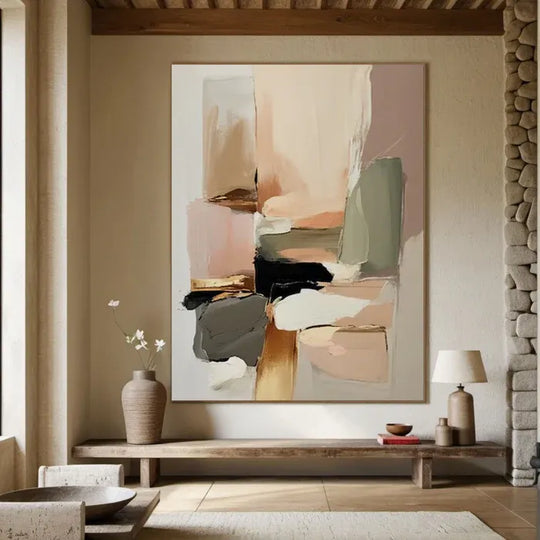
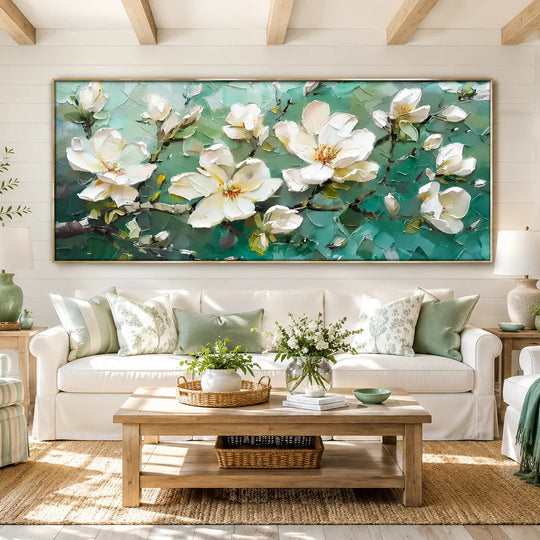
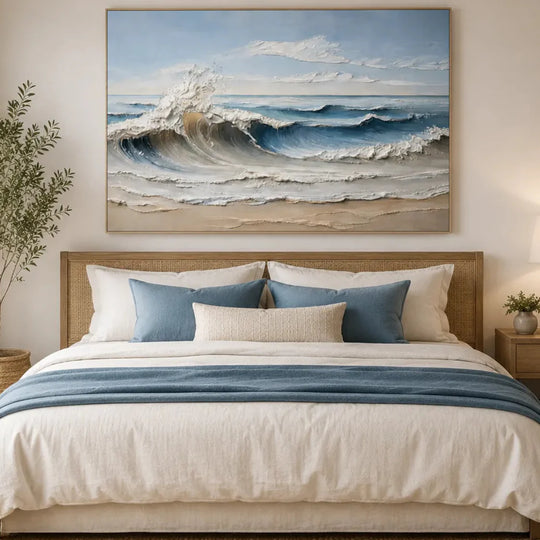
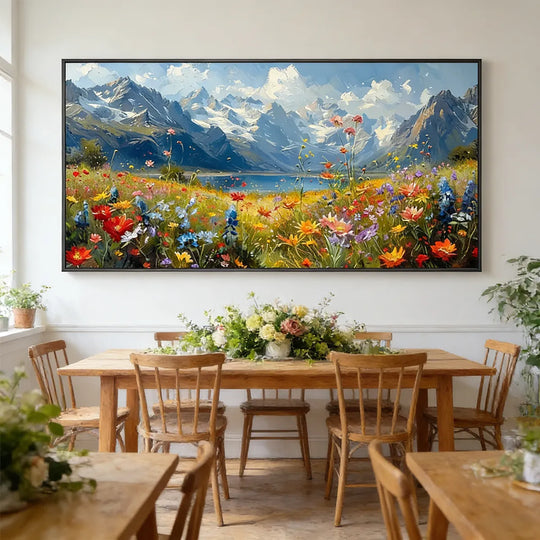
Abstract Art Paintings: How to Choose the Right Piece for Your Space
Abstract Art Paintings: How to Choose the Right Piece for Your Space
Abstract art paintings can change a room without changing the room itself. A blank wall above a sofa suddenly feels intentional. A quiet hotel lobby gains a focal point. A dining room that once felt flat starts to feel layered, warm, and personal.
But here’s the thing: abstract art can also go wrong quickly.
Choose a canvas that is too small, and it looks lost. Choose colors that fight with the furniture, and the whole space feels uneasy. Choose a flat print when the room needs depth, and the wall still feels unfinished.
That is why choosing abstract art paintings is not only about liking an image. It is about scale, texture, color, material, and the feeling you want people to have when they walk into the room.
Whether you are decorating a home, planning artwork for a hotel project, or helping a client finish a luxury interior, this guide will help you choose abstract art with more confidence.
Why Abstract Art Paintings Work So Well in Modern Interiors
Abstract art does not tell the viewer exactly what to see. That is its strength.
A landscape painting may point to a mountain, a sea, or a garden. A portrait gives you a face. Abstract art is more open. It works through color, movement, shape, balance, and texture. This makes it easier to pair with different design styles — modern, organic, minimalist, coastal, wabi-sabi, transitional, or even classic interiors.
For a living room, abstract art paintings can soften hard furniture lines. For a bedroom, they can create calm without looking too empty. For a hotel lobby, they can help build atmosphere before a guest even reaches the reception desk.
This is also why abstract art is useful for designers. It supports the room instead of taking over every conversation.
A good abstract painting should not feel like random decoration. It should feel connected to the room — even if the subject is not literal.
If you are looking for hand-painted pieces rather than mass-produced prints, you can browse Rosemary Art’s <u>abstract art collection</u> for textured wall art, large canvas formats, and modern abstract styles.
Start With the Wall, Not the Painting
Most people choose artwork backwards. They fall in love with a painting first, then try to force it into a space.
That can work, but it is risky.
A better approach is to study the wall first. Ask simple questions:
- Is this a wide wall or a tall narrow wall?
- Will the painting hang above a sofa, bed, console, fireplace, or reception desk?
- Is the furniture low and horizontal, or tall and architectural?
- Does the room already have strong colors?
- Is the lighting warm, cool, direct, or soft?
For abstract art paintings for living room spaces, the sofa wall is usually the most important area. A common visual rule is to choose artwork that covers around two-thirds to three-quarters of the furniture width. It does not need to be exact, but the painting should feel connected to the sofa, not floating alone.
For bedrooms, the wall above the bed often needs a calmer piece. Large abstract art paintings can work beautifully here, but the color and movement should feel restful rather than aggressive.
For entryways and corridors, vertical abstract paintings can create height. For dining rooms, a wider canvas often feels more balanced because it follows the shape of the table.
The wall gives you the first clue. The painting comes after.
How to Choose the Right Size for Abstract Art Paintings
Size is one of the biggest reasons artwork fails in a room.
A small painting on a large wall can make the space feel cheaper than it really is. It creates hesitation. The viewer can sense that something is missing, even if they cannot explain why.
Large abstract art paintings, on the other hand, can make a room feel designed. They create a clear focal point. They also reduce visual clutter because one strong piece often looks better than several small pieces fighting for attention.
Here is a simple guide:
| Space | Recommended Artwork Direction | Why It Works |
|---|---|---|
| Above sofa | Wide horizontal canvas | Matches the furniture line |
| Above bed | Large horizontal or soft vertical pair | Creates calm balance |
| Dining room | Wide or panoramic painting | Follows the table shape |
| Entryway | Vertical abstract painting | Adds height and presence |
| Hotel lobby | Oversized statement piece | Builds visual identity |
| Office or meeting room | Clean abstract composition | Feels polished but not distracting |
Do not choose size only by wall measurements. Think about viewing distance too.
A painting viewed from across a large living room can be bolder and larger. A painting in a hallway, where people stand close to it, needs better texture detail and a more refined surface.
This is where hand-painted abstract art has a real advantage. Brushwork, raised paint, and surface movement give people something to see up close.
Color Should Support the Room’s Mood
Color is not just decoration. It changes how a room feels.
Neutral abstract art paintings in beige, cream, white, taupe, gray, or soft brown can make a space feel calm and expensive. These colors work especially well in organic modern homes, wabi-sabi interiors, minimalist rooms, and quiet luxury spaces.
Bold abstract paintings — with black, red, deep blue, gold, green, or orange — create more energy. They work well when the room needs contrast or when the furniture is very simple.
The mistake is choosing color only because it looks beautiful online.
Ask instead: what is the room missing?
If the room feels cold, add warmth through sand, clay, ochre, beige, or soft gold tones.
If the room feels too plain, add contrast through black, charcoal, navy, or deep green.
If the room feels busy, choose a quieter abstract painting with fewer colors.
If the room feels heavy, choose lighter tones and more open space in the composition.
For abstract art paintings ideas, look at your existing materials: wood, marble, linen, leather, metal, stone, and rugs. These surfaces already tell you what color family belongs in the room.
A painting should not copy every color in the space. That can look too forced. It should echo two or three tones, then add one fresh note.
Texture Is What Makes Hand-Painted Abstract Art Feel Different
A printed canvas can show an image. A hand-painted canvas has a surface.
That difference matters.
Hand painted abstract art paintings carry brushstrokes, raised layers, small irregular marks, and changes in sheen. These details catch light during the day. In the evening, wall lamps or soft ceiling lights can reveal texture from the side.
This is especially important for large blank walls. A flat image may fill the space, but a textured painting adds depth. It makes the wall feel finished.
Texture can also change the emotional tone of a room:
- Smooth brushwork feels clean and quiet.
- Thick impasto feels bold and expressive.
- Plaster-like texture feels organic and architectural.
- Soft layered oil paint feels warm and elegant.
- Strong palette knife marks feel modern and sculptural.
For luxury homes, textured oil paintings often look more natural than glossy wall décor. For hotels, they create a more memorable guest experience because people can sense the handmade quality, even from a distance.
That said, texture should match the space. A calm bedroom may not need aggressive raised strokes. A large lobby may need stronger surface movement so the painting does not disappear under commercial lighting.
When Custom Abstract Art Paintings Make More Sense
Ready-made artwork is useful when the size, color, and style already fit your space. But custom abstract art paintings are often better when the room has strict design requirements.
Custom work may be worth considering when:
- The wall size is unusual.
- The room has a very specific color palette.
- You need several paintings for one project.
- A designer needs artwork to match furniture, fabric, or stone samples.
- A hotel or commercial space needs a consistent visual style.
- You want the painting framed in a specific way.
Custom does not mean making the art complicated. Often, it means making the painting more suitable: slightly warmer beige, a wider canvas, less black, more texture, a different frame, or a softer composition.
For homeowners, this can help the artwork feel made for the room. For interior designers, it can reduce the risk of a piece clashing with the final installation. For hotel project buyers, it can help keep multiple spaces visually connected without making every wall look identical.
If you need a specific size, color direction, or project artwork plan, you can contact Rosemary Art through <u>custom wall art support</u>.
Choosing Abstract Art Paintings for a Living Room
The living room is usually where artwork gets the most attention.
For abstract art paintings for living room spaces, start with the main seating area. The painting should help anchor the furniture group. If the sofa is beige or cream, you can choose a warm neutral painting for a soft look, or a darker abstract piece for contrast.
If the room already has strong decor — patterned rugs, colorful cushions, dramatic lighting — keep the artwork simpler. If the room is minimal, the painting can carry more texture or movement.
Think about the role of the painting:
Do you want it to calm the space?
Choose soft neutrals, gentle movement, and matte texture.
Do you want it to become the focal point?
Choose stronger contrast, larger scale, or bolder brushwork.
Do you want it to feel high-end but not loud?
Choose a large textured canvas with a limited palette.
A good living room painting should feel visible but not exhausting. You will see it every day, so it needs staying power.
Choosing Abstract Art Paintings for Hotel Lobbies and Commercial Spaces
Abstract art paintings for hotel lobby spaces need a different kind of thinking.
A hotel lobby is not only a room. It is a first impression. Guests walk in and quickly form a feeling about the property: calm, refined, creative, warm, luxurious, coastal, urban, or boutique.
Artwork helps shape that feeling.
For hotel lobbies, size matters more than people expect. A painting that looks large in a home may look small in a commercial lobby. High ceilings, wide walls, and open seating areas need stronger scale.
Durability and finish also matter. Framing, canvas tension, packaging, and installation method should be considered early, especially for large wall art.
For designers and project buyers, it is useful to plan artwork by zone:
| Area | Artwork Goal |
|---|---|
| Lobby entrance | Create a strong first impression |
| Reception wall | Support brand tone without distracting |
| Lounge area | Make the space feel comfortable |
| Hallway | Add rhythm and movement |
| Meeting room | Keep the mood professional |
| Guest room | Add warmth without visual noise |
For hotel projects, avoid choosing every painting separately with no connection. A better approach is to build a visual family: similar color mood, related textures, and varied compositions.
That creates unity without making the space feel copied.
Frame Choice Can Change the Whole Feeling
A frame is not an afterthought.
For abstract oil paintings, the right frame can make the work feel more finished and more architectural. A floating frame is often a strong choice because it leaves a small gap between the canvas and the frame, giving the artwork a clean gallery-style edge.
Black frames add contrast and structure. Natural wood frames feel warm and organic. Gold or champagne frames can work in elegant interiors, but they should be used carefully. Too much shine can make the room feel less refined.
For large abstract art paintings, framing should also be practical. Bigger pieces need stable structure, clean corners, and secure hanging hardware. This is especially important for hotels, villas, offices, and commercial spaces where safety and presentation both matter.
The frame should support the artwork, not compete with it.
How to Know If an Abstract Painting Has Long-Term Value in Your Space
A painting does not need to be expensive to be meaningful, but it should have lasting visual value.
Before buying, ask yourself:
Will I still enjoy this color palette after the trend changes?
Does the size truly fit the wall?
Does the texture add something real to the room?
Does it feel personal, or just decorative?
Can it work if I change the sofa, rug, or lighting later?
The strongest abstract art paintings usually have balance. They are interesting enough to look at closely, but calm enough to live with.
For homes, that means the artwork should support daily life. For designers, it should support the room concept. For hotels, it should support the guest experience.
That is the difference between filling a wall and finishing a space.
Final Thoughts
Abstract art paintings are powerful because they leave room for feeling. They do not explain everything. They let color, shape, texture, and scale do the work.
The right piece can make a living room feel complete, a bedroom feel calmer, or a hotel lobby feel more considered. But the choice should not be random. Start with the wall. Study the room. Choose the right size. Respect the color palette. Pay attention to texture. And when the space has specific needs, consider custom abstract art.
A well-chosen painting does more than decorate a wall. It gives the space a point of view.
3. FAQ
1. What size abstract art paintings should I choose for a living room?
For abstract art paintings for living room walls, choose a canvas that feels connected to the main furniture. Above a sofa, artwork around two-thirds to three-quarters of the sofa width usually looks balanced. Larger rooms can handle oversized paintings with stronger texture.
2. Are hand painted abstract art paintings better than prints?
Hand painted abstract art paintings offer real brushwork, surface texture, and small natural variations. Prints can be decorative, but they do not have the same depth, paint layers, or handmade feeling as an original oil painting.
3. What colors work best for large abstract art paintings?
Large abstract art paintings often work best in colors that support the room. Neutral spaces may suit beige, cream, taupe, gray, or soft brown. Modern rooms may benefit from black, navy, green, gold, or earthy tones for contrast.
4. Can I order custom abstract art paintings for a specific wall size?
Yes. Custom abstract art paintings are useful when you need a special size, color palette, texture level, or frame style. They are especially helpful for large walls, designer projects, hotel spaces, and rooms with strict interior design requirements.
5. How do I choose abstract art paintings for a hotel lobby?
For abstract art paintings for hotel lobby spaces, focus on scale, visibility, color mood, and durability. Large textured paintings usually work well because they create a strong first impression while adding depth to open commercial interiors.
Continue exploring: Browse our Abstract Art collection, see this week's new arrivals, or shop our best sellers — every piece 100% hand-painted, frame included.