The best wall art for a staircase is tall and vertical, hung to follow the diagonal line of the steps instead of sitting in a flat, level row. A stairwell hands you height that most rooms never do, so a slim vertical painting — or a set of pieces climbing beside the handrail — reads as deliberate rather than accidental. Get that line right and everything else falls into place.
I've hung paintings in a lot of narrow, badly lit corners, and staircases are my favorite of the bunch to solve. The stair wall is usually the first thing you see from the front door and the last blank surface anyone thinks to decorate. That's backwards. So here's how I actually approach it.
Why does the staircase wall get ignored?
Mostly because you can't stand back and study it the way you can a living-room wall. You're either climbing or heading down, the surface sits at an odd angle to your eye, and the light is often dim. All of that feels like a hassle. But it's also why a single confident piece wins here — nothing else on that wall is competing for attention, so one strong painting carries the whole run of stairs.
What size and shape work on a stairwell wall?
Go vertical. Stair walls give you more height than width, and a tall canvas mirrors the rise of the steps. A narrow staircase suits one slim, elongated piece that doesn't crowd the passage. A wide, two-story wall can take an oversized landscape or two large canvases stacked with a hand's width between them. Horizontal art tends to look cramped and boxed-in on a staircase, so save your wide pieces for the sofa wall.

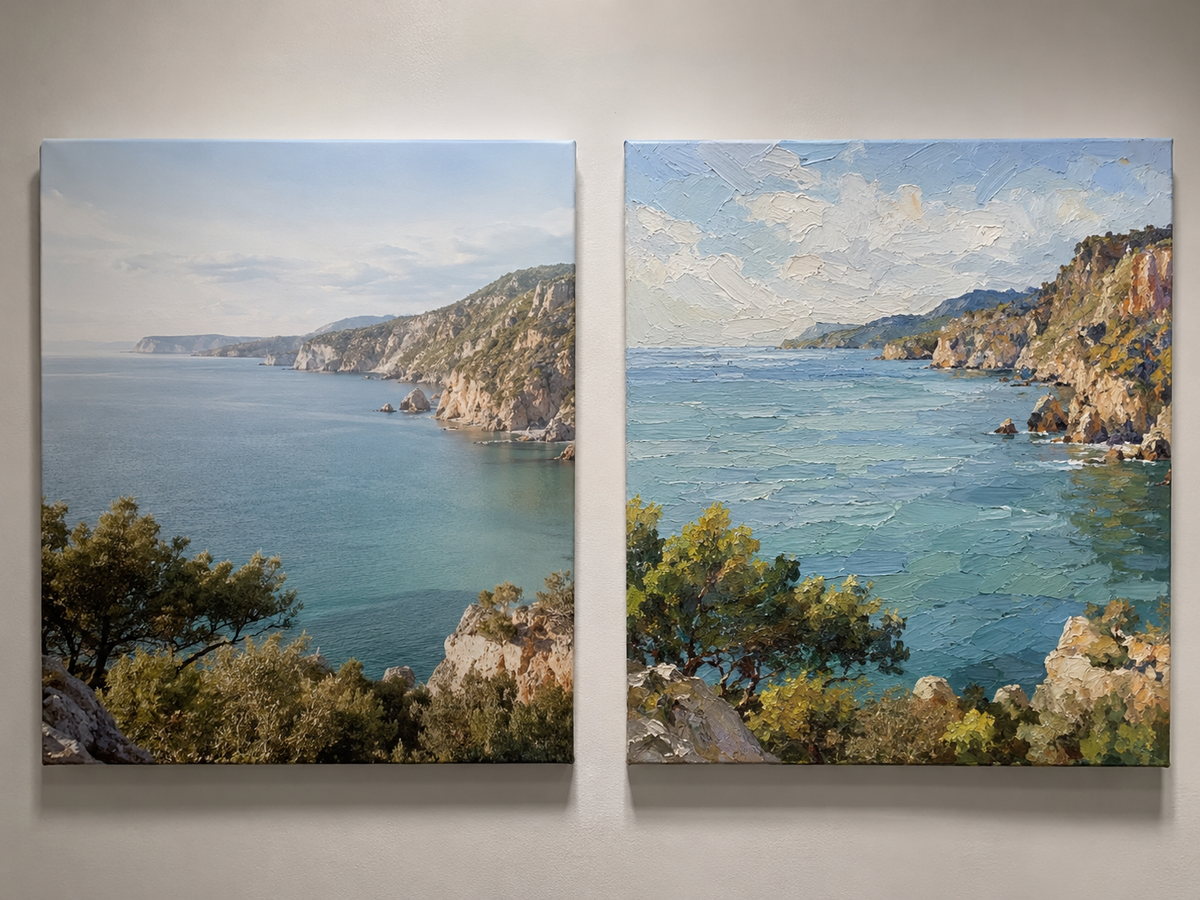
A tall, luminous landscape like this one is exactly the shape a stairwell wants — it carries the eye upward with the steps. Shot on the easel in our studio, mid-process.
How do you hang art on a slanted staircase wall?
Follow the diagonal, not the floor. Picture an invisible line running parallel to the handrail and let the centers of your pieces sit along it, each one stepping up as the stairs do. A reliable rule: hang each piece so its center lands about 60 inches above the step tread directly beneath it. If you're hanging several, keep the gaps consistent — 2 to 4 inches — so the group has rhythm without feeling crowded. This staggered, stepped approach has a long history; it's a cousin of the old salon-style hang galleries used to fit many works on one wall.
One big painting, or a climbing set?
Both work, and it comes down to the wall. A single oversized canvas is the calmer, more modern choice and the easiest to get right — one nail, one decision. A climbing set of two or three smaller pieces feels more collected and personal, and it's forgiving on a long run of stairs where one painting would float. If you like the set route, matched sizes keep it tidy; you can see how pairs read together in our sets of two. Not sure which fits your wall? Send us the measurements and we'll size a piece to it for free.

A quiet vertical minimalist landscape — the kind of piece that climbs a stair wall without shouting.
What about the dim light and glare?
Stairwells are usually darker than the rooms they connect, and whatever light there is tends to rake across the wall at a low angle. That angle is cruel to glossy framed prints — it turns them into mirrors. It's kind, though, to real texture. A hand-painted canvas has actual relief, so raking light catches the ridges and reveals the brushwork instead of a reflection. If your stair wall gets harsh side light, lean toward textured hand-painted pieces over flat prints. For more on picking a finish that survives real-world light, our guide on whether paintings fade in sunlight is worth a read.
A few honest caveats
Measure the handrail height before you commit — you don't want a low-hung piece your hand brushes on the way up. And if the staircase turns, treat each straight run as its own small wall rather than forcing one arrangement around the corner. It almost never looks right dragged around a bend.
Every piece we make is 100% hand-painted and signed, and it ships framed and ready to hang. Because a stair wall is often an odd size, our free size and color customization matters here more than usual — we'll match the proportion to your exact wall. You approve a real photo of the finished painting before it leaves the studio, so it ships within 24 hours of your yes and arrives by free insured delivery in about 4 to 8 days. If it's not right on the wall, you have 30 days to return it. Browse landscape paintings or the new arrivals to start.
FAQ
How high should I hang art over stairs?
Center each piece about 60 inches above the step directly below it, and let the centers follow the diagonal of the handrail rather than a level line.
Should staircase art be portrait or landscape orientation?
Portrait (vertical) almost always. Stair walls are taller than they are wide, and vertical pieces move the eye up with the steps.
Can I hang one large painting instead of a gallery set?
Yes, and it's the simplest choice. A single oversized canvas reads clean and modern; a climbing set is better only if the wall is long and one piece would look lost.
What kind of art hides fingerprints and dim lighting best?
Textured hand-painted canvas. Real relief works with low, angled stairwell light instead of bouncing glare like glossy prints do.