How to Light Your Wall Art So It Actually Looks Good
The simplest way to light a painting well is to aim a warm 2700 to 3000K light at it from about a 30-degree angle, keep that light bright enough to lift the art above the room's general glow, and stay off direct sunlight, which fades pigments over years. Most people spend real money on art and then let it sit in a flat, shadowless wash. Fix the light and the same painting looks twice as expensive. Here's how.

Why does lighting change how a painting looks?
Paint is physical. Brushmarks, ridges, and layers all catch light and cast tiny shadows, and those shadows are half of what makes a hand-painted canvas feel alive. Flat, even light erases them and the art goes dull. Directional light does the opposite: it grazes the surface, pulls out texture, and makes color read the way the painter intended. This is why a painting can look flat in the shop and stunning at home, or the reverse. The art didn't change. The light did.
What angle and brightness should you use?
Aim for roughly a 30-degree angle between the light and the wall. Steeper than that and the fixture throws glare back at you; shallower and it rakes so hard it exaggerates every bump and casts long shadows off the frame. Thirty degrees is the museum default for a reason. For brightness, the art should sit noticeably brighter than the wall around it, but not spotlit like an interrogation. A good target is two to three times the surrounding light. If your painting has glossy varnish, nudge the angle a little to kill hot reflections.
What kind of light works best?
You've got three solid options, and warmth matters more than the fixture. Keep the bulb in the 2700 to 3000K range so whites stay soft and reds don't go muddy. Cooler, bluer light makes warm paintings look sickly. Color temperature is the single setting people get wrong most often.
- Picture lights mounted on the frame or wall give a classic, gallery look and are ideal for a single hero piece.
- Track or recessed spots with adjustable heads let you aim that 30-degree angle precisely and suit a gallery wall or a whole room of art.
- A nearby lamp or wall sconce won't light the art directly, but a warm one raises the whole scene and stops the painting from floating in a dark void.
Choose bulbs with a high color-rendering index, ideally 90 or above, so the pigments look true.
Should you worry about sunlight and fading?
A little indirect daylight is lovely. Hours of direct sun on the canvas, day after day, is not, because ultraviolet light slowly breaks down pigment and can yellow varnish. Hang valuable art on a wall the sun doesn't hit head-on, or filter harsh windows with a sheer. Quality oils are more stable than cheap dyes, but no pigment is immune to years of direct sun. We wrote a whole piece on this in do paintings fade in sunlight if you want the detail.
What about textured paintings?
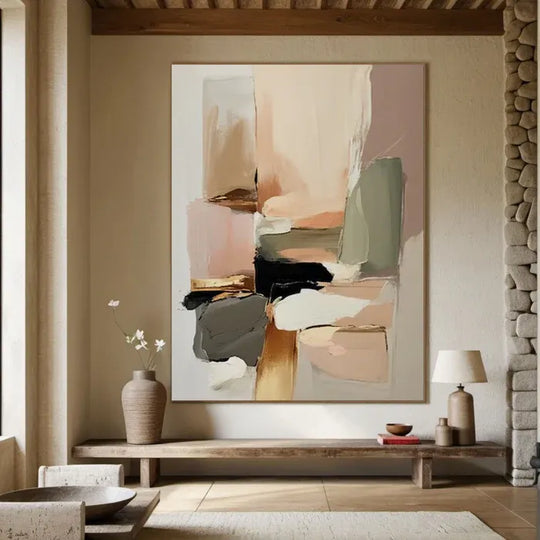
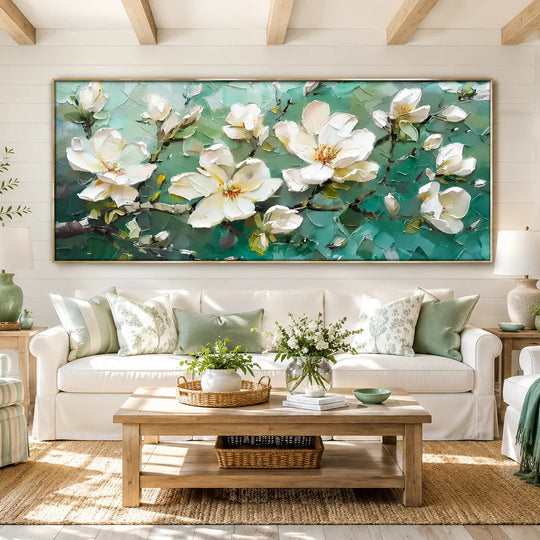
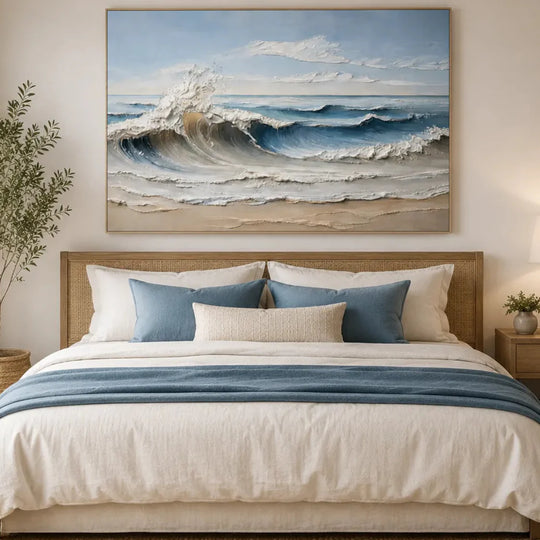
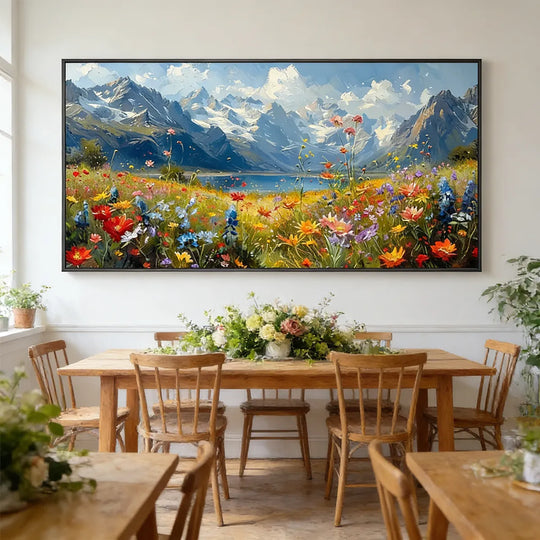
Textured and 3D pieces reward good lighting more than anything else, because their whole appeal is the play of shadow across raised paint. Light them from one clear direction, never dead-on, and the surface comes to life morning to night. Flat frontal light flattens the very thing you paid for. If you love that dimensional look, our 3D textured paintings and heavier abstract work are built to be raked with light. Every canvas is 100% hand-painted, signed, and framed, and we send a finished photo for your approval before it ships, so delivery is never a surprise: free, insured, and 4 to 8 days, with 30-day returns. Custom sizes and colors are free if you want a piece scaled to a specific lit wall. Browse all paintings to find yours.
Frequently asked questions
How far from the wall should a picture light sit? For most canvases up to about 40 inches tall, mounting the light so it clears the frame by a few inches and tips down at roughly 30 degrees covers the surface evenly. Taller pieces may want two lights.
Are LED picture lights safe for paintings? Yes, and they're the better choice. LEDs run cool and emit little to no UV, unlike old halogens that baked the frame.
What color temperature is best? 2700 to 3000K for warm, homey art. Save cooler 3500K light for stark black-and-white or icy blue pieces.
Can I just use the room's ceiling lights? They'll do in a pinch, but overhead light usually falls straight down and skips the art. One aimed fixture beats ten flat ones.