Why Empty Walls Feel Unfinished—and How Wabi Sabi Wall Art Brings Balance

A room can have the right sofa, the right rug, the right lighting, and still feel incomplete.
Very often, the problem is not the furniture. It is the wall.
Empty walls can make a space feel flat, cold, or unfinished because they leave no visual anchor for the room. Without artwork, texture, or a natural focal point, the eye has nowhere to rest. The space may look clean, but it can also feel impersonal.
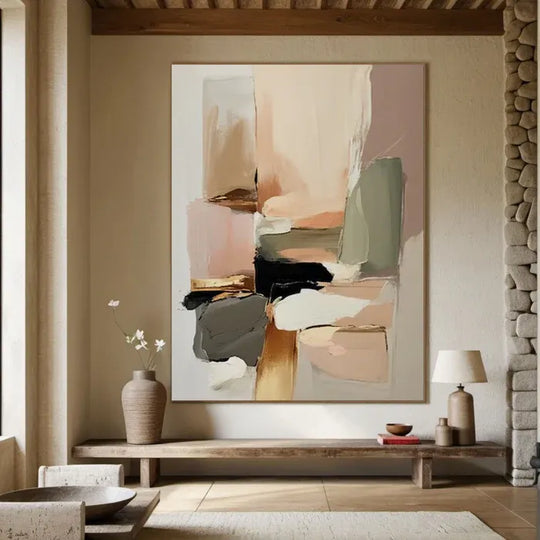
This is where wabi sabi wall art becomes especially useful. Instead of filling a blank wall with loud colors or overly polished decoration, Wabi Sabi art brings quiet texture, natural movement, and a sense of calm imperfection. It helps a room feel finished without making it feel overdecorated.
For homes that lean toward organic modern, Japandi, minimalist, neutral, or quiet luxury interiors, Wabi Sabi wall art can be one of the most effective ways to complete an empty wall with warmth and balance.
Why Empty Walls Make a Room Feel Unfinished
An empty wall is not always a problem. In some interiors, negative space is intentional. But there is a difference between a wall that feels calm and a wall that feels forgotten.
A blank wall often makes a room feel unfinished for three reasons.
First, it removes the focal point. Most rooms need one strong visual anchor, especially above a sofa, bed, console table, fireplace, or dining area. Without that anchor, the furniture can feel disconnected from the architecture.
Second, an empty wall can make the room feel visually flat. Even if the furniture has beautiful shapes, a large bare wall may create too much empty surface. The space lacks depth, shadow, and contrast.
Third, blank walls often make a room feel less personal. Art gives a home emotional weight. It suggests intention. It tells the eye that the space was designed, not simply furnished.
This is why wall art matters. The goal is not to fill every wall. The goal is to choose the right piece that makes the room feel complete.
What Makes Wabi Sabi Wall Art Different

Wabi Sabi is rooted in the beauty of imperfection, simplicity, age, nature, and quiet balance. In interior design, it often appears through organic shapes, earthy colors, handmade textures, and materials that feel calm rather than artificial.
That is why wabi sabi wall art works so well for empty walls. It does not try to dominate the room. It softens it.
Unlike glossy prints or overly decorative artwork, Wabi Sabi art often uses subtle movement, uneven textures, neutral tones, and imperfect forms. These details create a natural sense of depth. The artwork feels handmade, tactile, and grounded.
If your room already has linen, wood, stone, plaster, ceramics, warm lighting, or neutral upholstery, Wabi Sabi wall decor can connect those materials visually. It becomes the missing layer between the furniture and the architecture.
For a calm, organic look, you can explore Rosemary Art’s wabi sabi wall art collection, which is designed around soft textures, natural forms, and neutral tones.
How Texture Adds Depth to a Blank Wall
One of the biggest reasons empty walls feel unfinished is the lack of depth.
Flat walls need contrast. That contrast does not always have to come from bright color. In many modern homes, texture is more powerful than color.
Textured Wabi Sabi wall art adds dimension through raised brushstrokes, layered paint, irregular surfaces, and soft shadows. As daylight changes throughout the day, the texture catches light differently. This makes the wall feel alive, even when the color palette is quiet.
This is especially important in neutral interiors. Beige, ivory, cream, sand, taupe, gray, and clay tones can look beautiful, but they can also look dull if everything is too smooth. A textured canvas breaks that flatness.
For example, a large hand-painted Wabi Sabi canvas above a beige sofa can add visual weight without disrupting the peaceful mood of the room. A textured neutral painting in a bedroom can make the space feel warmer and more finished without adding visual noise.
This is the real strength of textured wabi sabi wall art: it creates presence without shouting.
Why Neutral Wabi Sabi Wall Art Works in Modern Homes
Many homeowners hesitate to decorate an empty wall because they are afraid of choosing art that feels too bold, too trendy, or too difficult to match.
Neutral Wabi Sabi wall art solves that problem.
Because the palette is usually soft and earthy, it works with many interior styles:
| Interior Style | Best Wabi Sabi Art Direction |
|---|---|
| Organic Modern | Large neutral textured canvas with soft movement |
| Japandi | Minimal composition, warm beige, ivory, or clay tones |
| Minimalist | Simple abstract form with subtle texture |
| Quiet Luxury | Oversized handmade artwork with refined neutral colors |
| Modern Farmhouse | Earthy texture, stone-like surface, soft natural tones |
| Contemporary | Clean composition with sculptural depth |
The key is restraint. Wabi Sabi art does not need complicated detail to feel valuable. Its beauty comes from proportion, texture, and atmosphere.
This makes it ideal for living rooms, bedrooms, dining rooms, entryways, and hotel-style interiors where the goal is not decoration for decoration’s sake, but a more finished and considered space.
Choosing the Right Size for Wabi Sabi Wall Art
Even the right artwork can feel wrong if the size is off.
For a wall above a sofa, bed, or console table, the artwork should usually feel connected to the furniture below it. If the piece is too small, the wall will still feel empty. If it is too large, it may overpower the room.
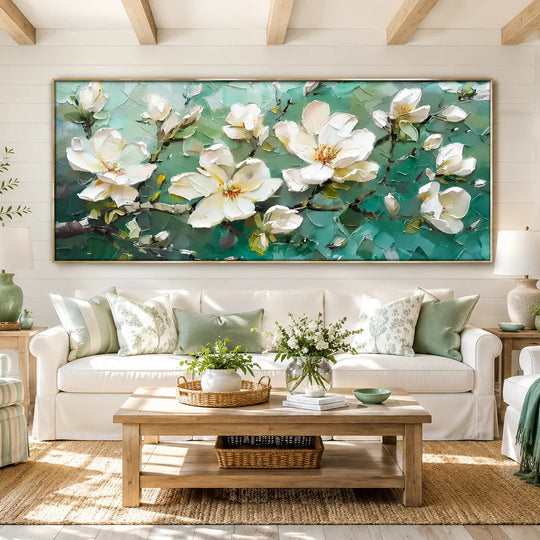
A simple rule is to choose artwork that is roughly two-thirds to three-quarters the width of the furniture below it. For wide walls, panoramic or oversized artwork often works better than several small pieces.
Here is a simple guide:
| Wall Area | Recommended Art Type |
|---|---|
| Above sofa | Large horizontal Wabi Sabi wall art |
| Above bed | Oversized neutral textured canvas |
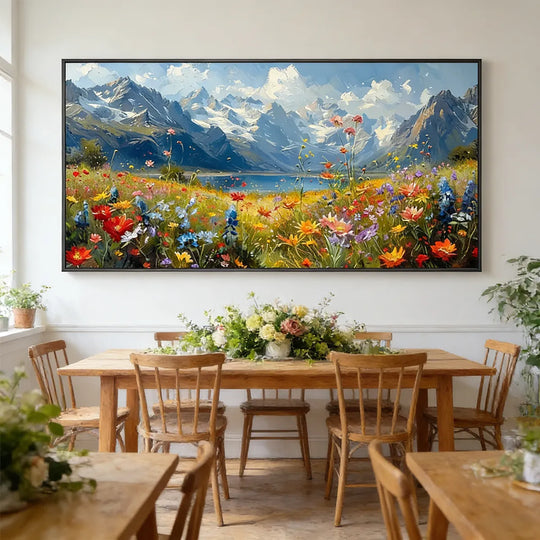
| Dining room wall | Wide organic textured painting |
| Entryway | Vertical or medium-sized statement piece |
| Long hallway | Series of soft neutral artworks |
| Large open wall | Panoramic or custom-size artwork |
If your wall is very wide, a standard canvas may not be enough. A panoramic piece can help stretch the visual line across the wall and make the whole room feel more balanced. For large horizontal spaces, Rosemary Art’s panoramic wall art collection can be a useful direction.
How to Choose Colors That Feel Calm, Not Empty
Many people think a blank wall needs color. Sometimes it does. But in a Wabi Sabi interior, color should usually feel natural, not forced.
Good color directions include:
-
Warm ivory
-
Soft beige
-
Sand
-
Clay
-
Taupe
-
Stone gray
-
Warm white
-
Charcoal accents
-
Muted brown
-
Soft black lines
The safest approach is to repeat tones that already exist in the room. If your sofa is beige, choose art with ivory, sand, or warm gray. If your room has black accents, a Wabi Sabi painting with subtle charcoal lines can connect the artwork to the rest of the space.
The goal is not perfect matching. In fact, Wabi Sabi works best when the colors feel slightly organic and imperfect. A small variation in tone can make the space feel more natural.
When to Choose Custom Wabi Sabi Wall Art
Some walls are difficult.
Maybe the wall is unusually wide. Maybe the ceiling is high. Maybe the sofa color is hard to match. Maybe the room needs a specific size, frame, or color palette.
In those cases, custom Wabi Sabi wall art may be better than choosing a standard piece.
Custom artwork is especially useful when:
-
You need a specific size for a large blank wall
-
You want the colors to match your interior palette
-
You need artwork for a hotel, villa, office, or design project
-
You want a pair or set of paintings for visual balance
-
You need a specific frame color or finish
-
You want heavier or lighter texture
A custom piece allows the artwork to fit the room instead of forcing the room to fit the artwork. For unusual spaces, you can explore custom hand-painted wall art made around your preferred size, color, texture, and style.
Wabi Sabi Wall Art for Living Rooms
The living room is usually the most important place to solve the empty wall problem.
A bare wall above the sofa can make the whole room feel unfinished, even when the furniture is beautiful. This is because the sofa naturally creates a horizontal line, and the wall above it needs visual balance.
For living rooms, large Wabi Sabi wall art works especially well when the canvas is wide enough to relate to the sofa. Soft texture can add depth, while neutral colors keep the room calm.
Best choices for living rooms include:
-
Large neutral Wabi Sabi wall art
-
Textured canvas wall art above the sofa
-
Organic abstract wall decor
-
Wide horizontal artwork
-
Hand-painted neutral wall art with soft movement
Avoid choosing a piece that is too small. A small painting on a large wall often makes the wall feel even emptier.
Wabi Sabi Wall Art for Bedrooms
In a bedroom, the goal is different. The artwork should not feel too busy or visually aggressive.
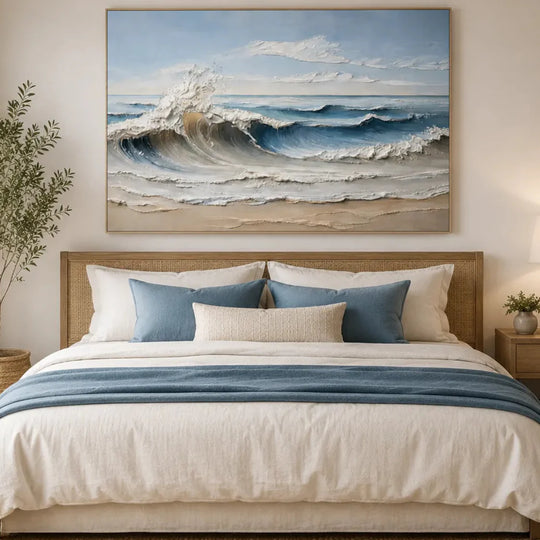
Wabi Sabi wall art is a strong choice for bedrooms because it creates a calm focal point. Above the bed, a neutral textured canvas can make the room feel softer, warmer, and more complete.
Good bedroom choices include:
-
Soft ivory or beige Wabi Sabi paintings
-
Minimal textured artwork
-
Organic line art with quiet movement
-
Large horizontal canvas above the headboard
-
Warm neutral wall decor
For bedrooms, avoid overly sharp contrast unless the room already has strong black or dark wood accents. Softer colors usually create a more restful atmosphere.
A Finished Room Does Not Need More Things
One mistake people make with empty walls is assuming they need more decoration.
More shelves. More frames. More objects. More color.
But a room does not always need more things. It often needs one better focal point.
This is why Wabi Sabi wall art is effective. It completes the wall through texture, scale, and atmosphere instead of clutter. It gives the room a sense of intention while still leaving space to breathe.
A finished room does not have to feel perfect. In fact, the Wabi Sabi approach is the opposite of perfection. It allows the home to feel natural, lived-in, calm, and human.
Final Thoughts: Let the Wall Feel Intentional
Empty walls can make a room feel unfinished because they leave the space without depth, balance, or emotional focus. But the solution is not always bold color or excessive decoration.
Sometimes, the better answer is quieter.
Wabi sabi wall art brings texture, warmth, and natural imperfection to blank walls. It helps modern interiors feel complete without feeling crowded. For living rooms, bedrooms, dining rooms, entryways, and calm luxury spaces, it offers a balanced way to turn an empty wall into an intentional part of the room.
If your space feels almost finished but still missing something, start with the wall. A hand-painted Wabi Sabi piece may be the detail that brings the whole room together.
Explore Rosemary Art’s hand-painted wabi sabi wall art to find textured, organic artwork designed for calm and meaningful interiors.
FAQ
What is wabi sabi wall art?
Wabi Sabi wall art is artwork inspired by natural imperfection, simplicity, organic texture, and quiet beauty. It often uses neutral colors, handmade surfaces, irregular forms, and soft movement to create a calm, grounded feeling.
Is wabi sabi wall art good for empty walls?
Yes. Wabi Sabi wall art is especially good for empty walls because it adds depth, texture, and visual balance without making the room feel overly decorated.
What colors work best for wabi sabi wall art?
The best colors are usually warm neutrals, such as ivory, beige, sand, taupe, clay, stone gray, warm white, and soft charcoal. These tones work well in organic modern, Japandi, minimalist, and quiet luxury interiors.
What size wabi sabi wall art should I choose?
For artwork above a sofa or bed, choose a piece that is roughly two-thirds to three-quarters the width of the furniture below it. For large or wide walls, oversized or panoramic Wabi Sabi wall art usually works better than small pieces.
Can wabi sabi wall art be customized?
Yes. Custom Wabi Sabi wall art is a good option when you need a specific size, color palette, texture level, or frame style for your room or design project.
Continue exploring: Browse our Wabi-Sabi Art collection, see this week's new arrivals, or shop our best sellers — every piece 100% hand-painted, frame included.