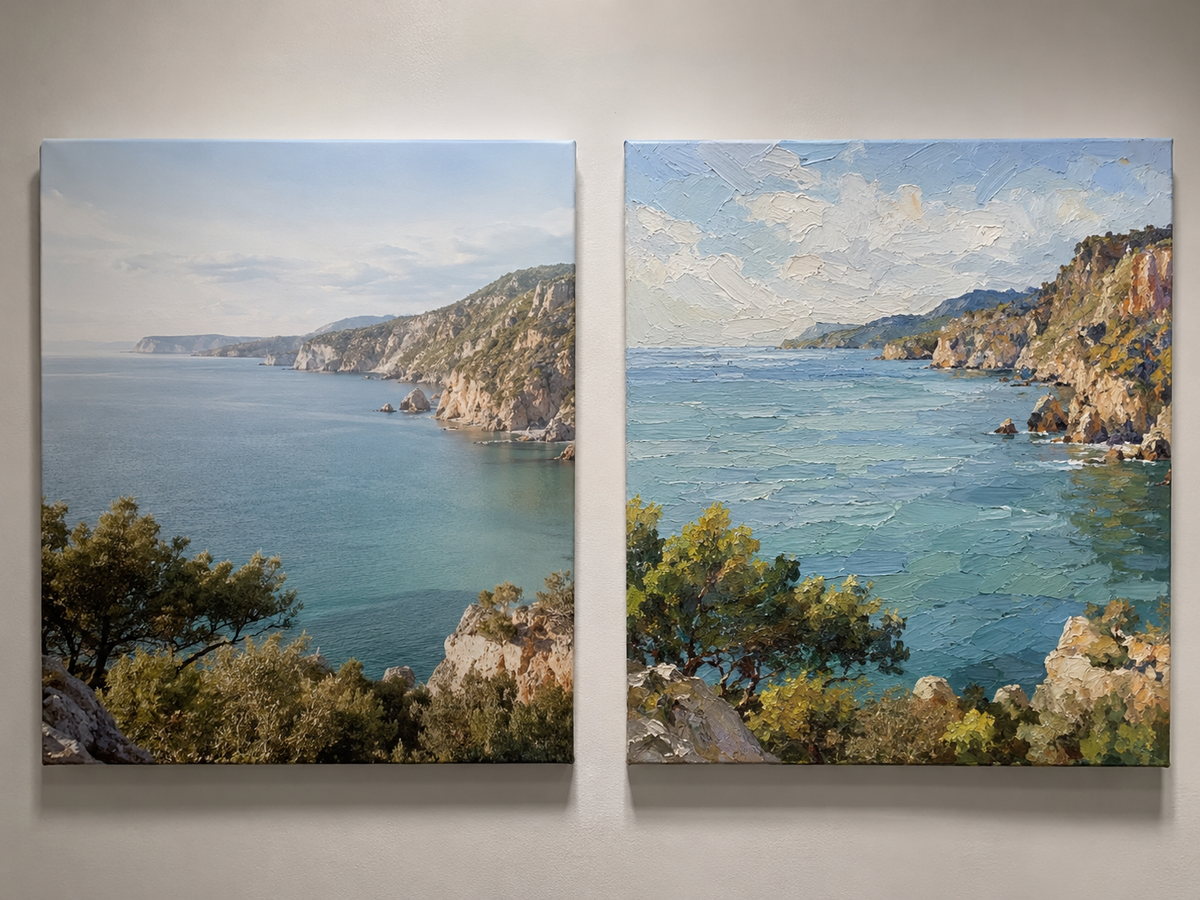
A painting may look perfect online but feel wrong once it is placed in your room. In many cases, the problem is not the color or artistic style. It is the orientation.
Choosing between horizontal and vertical wall art depends on the shape of the wall, the furniture below it, the ceiling height, and the amount of usable space around the artwork.
This guide explains how to choose the right wall art orientation without relying on rigid decorating rules.
 What Is the Difference?
Horizontal wall art is wider than it is tall. It is also called landscape-format artwork. This orientation naturally follows the width of sofas, beds, dining tables, consoles, and other long furniture.
Vertical wall art is taller than it is wide. It is often called portrait-format artwork. It works especially well on narrow walls, between windows, beside doors, or in rooms with high ceilings.
Neither orientation is automatically better. The right choice is the one that supports the proportions of your wall.
Start with the Usable Wall Space
Do not measure the entire wall and assume all of it can hold artwork.
First, identify the usable space between:
- Windows
- Doors
- Wall lights
- Shelves
- Tall furniture
- Architectural details
The shape of this open area often gives you the answer.
| Wall shape | Recommended orientation |
|---|---|
| Wide and low | Horizontal |
| Tall and narrow | Vertical |
| Nearly square | Square or either orientation |
| Very wide wall | Panoramic or multi-panel artwork |
| High ceiling with limited width | Vertical |
A horizontal painting on a narrow wall can feel compressed. A small vertical painting on a wide wall may look isolated.
When to Choose Horizontal Wall Art
Horizontal wall art is usually the better choice when the furniture or wall space below it is wider than it is tall.
It works well in the following locations:
- Above a sofa
- Above a bed
- Over a dining table
- Above a long console
- On a wide living-room wall
- In hotel rooms and reception areas
The horizontal format creates a sense of width and visual stability. It can make the artwork feel connected to the furniture below rather than floating separately on the wall.
For especially wide walls, explore panoramic wall art. Panoramic paintings are useful when a standard rectangular piece still feels too small above a long sofa or bed.
When to Choose Vertical Wall Art
Vertical artwork is more suitable when you want to use height rather than width.
Common locations include:
- Narrow entryway walls
- Hallway ends
- Spaces between windows
- Walls beside doors
- Stairway areas
- Tall walls with high ceilings
- Small reading corners
Vertical artwork can guide the eye upward and emphasize the height of a room. It is also useful when the available wall is too narrow for a horizontal painting.
You can browse Rosemary Art’s vertical wall art collection for hand-painted pieces designed for narrow and tall spaces.
Horizontal or Vertical Art Above a Sofa?
In most living rooms, horizontal wall art is the safer choice above a sofa because both have a similar direction.
The artwork should feel visually connected to the sofa without extending beyond it. A useful starting point is to choose artwork that measures approximately 60% to 75% of the sofa’s width.
For example, a sofa that is 90 inches wide may work well with artwork around 54 to 68 inches wide.
However, one horizontal painting is not the only option. Two vertical paintings placed side by side can create a similar overall width. This arrangement works especially well when you want a more structured or symmetrical appearance.
For more detailed measurements, see the large wall art size guide.
Which Orientation Works Best Above a Bed?
Horizontal wall art usually works best above a bed because it follows the width of the headboard.
A wide painting creates a calm, balanced composition and prevents the artwork from looking too small. It is particularly effective above queen- and king-size beds.
Vertical artwork can still work in a bedroom when:
- Two vertical paintings are used as a pair
- The ceiling is unusually high
- The headboard is narrow
- The artwork is placed beside the bed rather than above it
A pair of vertical paintings can create symmetry, while one narrow vertical painting above a large bed often lacks enough visual width.
Read the above-bed wall art guide for more bedroom-specific layout advice.
What Works Best in Hallways and Entryways?
Hallways and entryways often contain narrow sections of wall, making vertical art a practical choice.
One tall painting can create a clear focal point without making the passage feel crowded. At the end of a hallway, vertical artwork can also act as a visual destination.
For a long side wall, however, horizontal artwork or a gallery arrangement may be more suitable.
The entryway and hallway wall art guide explains how to decorate these transitional spaces without adding unnecessary clutter.
One Horizontal Painting or Two Vertical Paintings?
Both arrangements can occupy a similar amount of wall space, but they create different effects.
| Arrangement | Visual effect |
| One horizontal painting | Calm, continuous, simple |
| Two vertical paintings | Structured, symmetrical, formal |
| Three vertical paintings | Rhythmic and suitable for wider walls |
| Horizontal triptych | Expansive and contemporary |
| One large vertical painting | Dramatic and height-focused |
Choose one horizontal piece when you want a clean focal point. Choose two vertical paintings when the room has matching lamps, bedside tables, or other symmetrical features.
The gap between paired paintings should remain narrow enough for the pieces to read as one composition.
How Ceiling Height Changes the Decision
High ceilings do not automatically require vertical artwork.
A room with a wide sofa and high ceiling may still need a large horizontal painting. The artwork simply needs enough height and scale to avoid looking lost.
Vertical art is most useful when the wall itself is narrow and tall.
Do not choose a small vertical painting only because the ceiling is high. Scale matters as much as orientation.
Test the Orientation Before Buying
Before ordering artwork, use painter’s tape or paper templates to mark the proposed size on the wall.
Check the layout from several positions:
- Directly in front of the wall
- From the room entrance
- From the main seating area
- From an adjacent room
This simple test helps you see whether the artwork is too narrow, too tall, or too close to surrounding furniture.
Placement also affects the result. Review this guide on how high to hang wall art before installation.
When Custom-Sized Artwork Is Better
Standard sizes do not work for every wall.
Custom artwork may be the better choice when:
- The wall has an unusual width-to-height ratio
- The space above the furniture is limited
- You need an oversized panoramic painting
- You want to turn a vertical design into a horizontal format
- You need coordinated artwork for several rooms
Rosemary Art offers custom-size wall art, including adjustments to orientation, dimensions, color palette, texture, and framing.
A wall mock-up can also help confirm the proportions before production begins.
Final Decision Guide
Choose horizontal wall art when the wall or furniture is wide, especially above sofas, beds, and long consoles.
Choose vertical wall art when the available area is narrow, tall, or located between architectural features.
When neither option feels correct, test a square format, a pair of vertical paintings, or custom-sized artwork.
The goal is not to follow a rule. It is to create a clear relationship between the artwork, the wall, and the furniture around it.
Frequently Asked Questions
Does vertical wall art make a room look taller?
It can guide the eye upward and emphasize height, especially on a narrow wall. However, the painting must still be large enough for the space.
Does horizontal wall art make a room look wider?
A wide painting can strengthen the horizontal lines of a room and make the wall feel more expansive.
Should art above a sofa always be horizontal?
No. Horizontal artwork is usually the simplest choice, but two or three vertical pieces can also work when their combined width relates to the sofa.
What artwork is best for a narrow wall?
Vertical artwork is generally the best choice because it uses height without overcrowding the available width.
Can vertical artwork go above a bed?
Yes, but a pair of vertical paintings usually works better than one narrow piece above a wide bed.
What if I cannot find the correct orientation?
Consider custom artwork made to match the exact width, height, and proportions of your wall.