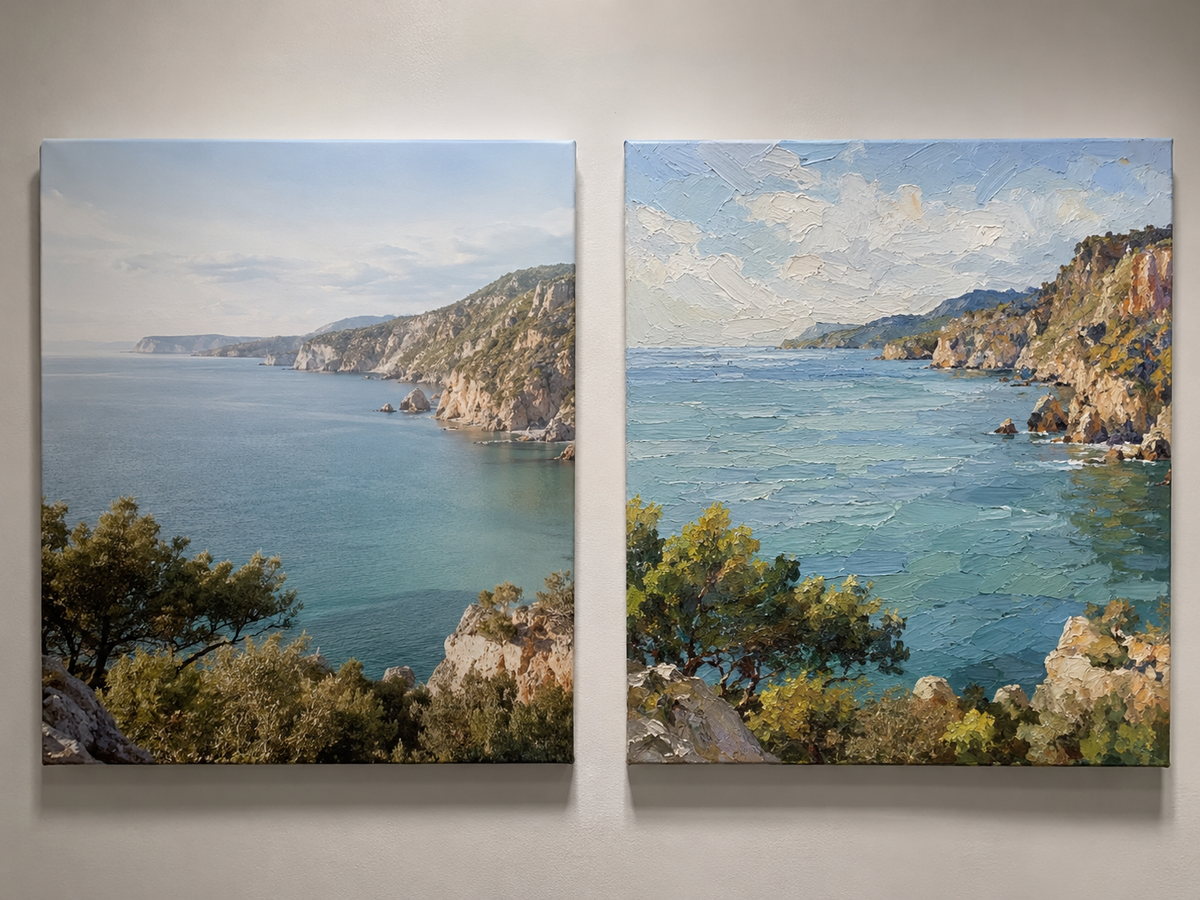

Wall art does more than fill an empty surface. The right artwork can influence how a room feels, connect different design elements, and create a focal point that gives the interior a clear identity.
Among the many types of wall décor available, oil paintings for home decor remain a strong choice for homeowners who want more than a flat decorative image. Real brushwork, layered color, and physical texture give a hand-painted oil painting a presence that changes with the light and becomes part of the room itself.
Whether your interior is modern, minimalist, traditional, coastal, or eclectic, an oil painting can introduce warmth, depth, and personality without requiring a complete redesign.
1. Oil Paintings Add Real Texture and Depth
One of the clearest differences between an oil painting and a printed image is the surface.
A print reproduces an image on a mostly flat surface. A hand-painted oil painting contains visible brushstrokes, layered pigments, and natural variations created by the artist. These details allow the artwork to interact with natural and artificial light throughout the day.
For interiors that need a stronger architectural or sculptural element, 3D textured paintings can add even more dimension. Raised surfaces, heavy impasto, and relief-like forms help the artwork stand out without adding extra furniture or decorative objects.
This is particularly effective in neutral interiors, where texture often matters more than strong color.
2. They Create a Natural Focal Point
Every well-designed room needs a visual anchor. Without one, furniture, lighting, rugs, and decorative objects may feel disconnected.
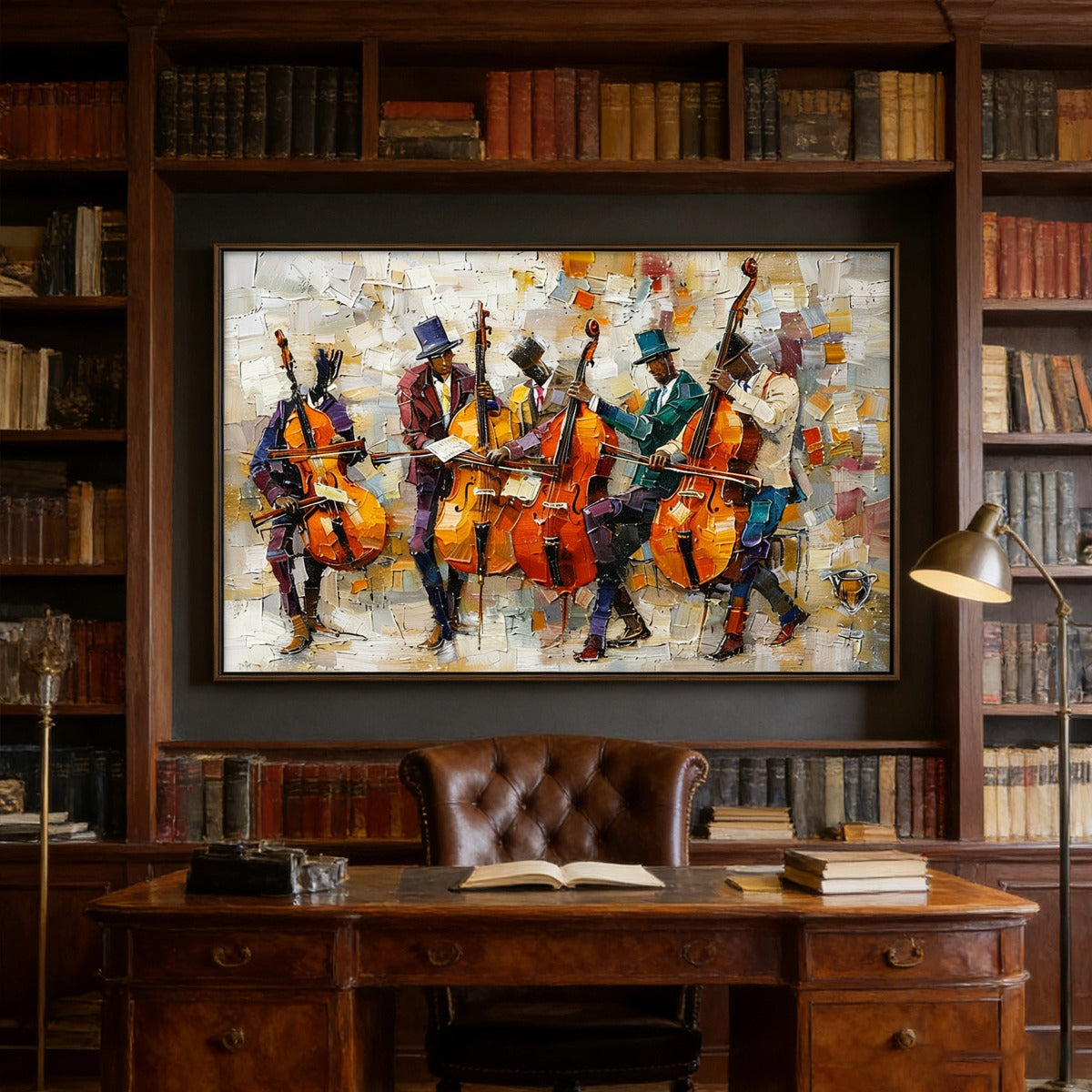
A large oil painting can immediately establish that anchor. Placed above a sofa, bed, console table, or dining area, it gives the eye a clear place to rest and helps organize the surrounding space.
The painting does not always have to be bright or dramatic. A subtle neutral composition can create just as much impact when its size, texture, and placement are carefully considered.
For contemporary spaces, abstract oil paintings are especially flexible. They can connect the colors already present in the room without forcing the interior into a specific theme.
3. Hand-Painted Art Gives a Room Individual Character
Mass-produced wall décor can make a room look complete, but it does not always make it feel personal.
Because every oil painting is painted by hand, small differences in brushwork, texture, and color naturally appear between pieces. These variations prevent the artwork from looking mechanically identical to thousands of other copies.
That does not mean every decorative oil painting is a one-of-a-kind original composition. However, the physical painting process still gives each finished piece its own character.
This is valuable in interiors that otherwise contain widely available furniture and accessories. One expressive artwork can make the entire room feel more considered and less like a showroom.
4. Oil Paintings Work With Different Interior Styles
Oil paintings are not limited to classical portraits, dark landscapes, or traditional interiors. The medium can support a wide range of visual styles.
| Interior style | Suitable oil painting |
|---|---|
| Modern | Large abstract compositions, geometric forms, restrained palettes |
| Minimalist | Neutral textured art, black-and-white paintings, simple organic shapes |
| Wabi-sabi or Japandi | Earthy colors, imperfect forms, plaster-like texture |
| Coastal | Soft blue seascapes, textured waves, sand and sage tones |
| Luxury contemporary | Oversized artwork, metallic accents, strong dimensional texture |
| Eclectic | Colorful abstracts, expressive florals, mixed visual influences |
The key is not to find a painting that copies every color in the room. Instead, choose artwork that relates to one or two existing elements while adding enough contrast to remain visible.
5. They Can Change the Mood of a Room
Color, composition, scale, and texture all influence the emotional atmosphere of an interior.
Soft blue, beige, sage, and cream tones can make a bedroom feel quieter and more restful. Deep green, charcoal, burgundy, or gold can create a more dramatic and intimate atmosphere. Energetic brushwork and contrasting colors can bring movement into a living room or creative workspace.
When selecting oil paintings for a living room, consider how the artwork will be viewed from different parts of the room. Living-room art normally needs enough scale and contrast to remain visible from a distance.
For bedroom wall art, softer transitions and less aggressive compositions are often easier to live with over time.
6. Oil Paintings Can Be Customized for the Interior
Finding an artwork you like is only part of the process. It must also fit the wall, furniture proportions, color palette, and orientation of the room.
Standard-size artwork can sometimes appear too small above a wide sofa or too large in a narrow hallway. The dominant colors may also look different once they are placed beside flooring, curtains, bedding, or upholstery.
A custom hand-painted artwork can solve these problems by adjusting elements such as:
-
Canvas dimensions and orientation
-
Main and secondary colors
-
Texture level
-
Composition details
-
Frame color and finish
-
Single-panel or multi-panel format
A room mock-up is particularly useful for large artwork. It allows you to evaluate scale and placement before the physical painting is produced.
Oil Painting vs. Canvas Print
Both options can decorate a wall, but they serve different priorities.
| Feature | Hand-painted oil painting | Canvas print |
|---|---|---|
| Surface | Visible brushwork and physical texture | Mostly flat printed surface |
| Variation | Natural differences between painted pieces | Consistent reproduction |
| Customization | Size, colors, texture, and details may be adjustable | Usually limited to available formats |
| Visual depth | Changes noticeably with surrounding light | More visually consistent |
| Price | Generally higher | Usually more affordable |
| Best suited for | Statement walls and long-term interiors | Fast, budget-conscious decorating |
A canvas print is a practical option when affordability and consistency are the main priorities. A hand-painted oil painting is more appropriate when you want real texture, a stronger focal point, or artwork tailored to the proportions of a specific room.
How to Choose the Right Oil Painting
Before purchasing, consider four practical factors.
Choose the Correct Size
Artwork that is too small is one of the most common interior-decorating mistakes. Above a sofa, bed, or console, the artwork should feel visually connected to the furniture rather than floating alone on the wall.
For more detailed placement and proportion guidance, read this guide on how to select wall art for every space.
Consider the Room’s Existing Colors
Do not try to match every color exactly. Select one or two tones from the room and look for artwork that repeats, softens, or contrasts with them.
For example, a beige room does not necessarily need another entirely beige object. A painting with cream, black, rust, olive, or muted blue can add controlled contrast.
Evaluate Orientation
Horizontal paintings usually work well above sofas, beds, and dining tables. Vertical artwork is better suited to narrow walls, corners, entryways, and spaces between windows. Square artwork can work well above consoles or as part of a balanced gallery-style arrangement.
Decide Whether You Need a Frame
A floating frame gives a canvas a more finished, architectural appearance while preserving a small visual gap around the artwork. Frameless canvas can feel lighter and more casual, but the final decision should relate to the furniture, finishes, and overall level of formality in the room.
Caring for an Oil Painting
Oil paintings do not require complicated maintenance, but they should be treated carefully.
Avoid placing the painting in constant direct sunlight or near strong heat and moisture. Remove surface dust gently with a clean, soft, dry cloth. Do not use household cleaning sprays, water, or abrasive materials on the painted surface.
For more detailed advice, see this guide on how to preserve and protect oil paintings.
Final Thoughts
Oil paintings remain relevant in interior design because they provide something that flat, mass-produced décor cannot fully reproduce: physical texture, visible brushwork, changing depth, and a stronger connection between the artwork and the surrounding space.
The best painting is not simply the one that looks attractive on its own. It should also suit the wall dimensions, furniture scale, lighting, color palette, and atmosphere you want to create.
Start by exploring best-selling hand-painted oil paintings, or consider a customized piece when standard dimensions and colors do not suit your space.
Frequently Asked Questions
Are oil paintings suitable for modern home decor?
Yes. Abstract, minimalist, textured, and neutral oil paintings can work particularly well in modern interiors. The result depends more on the painting’s colors, composition, scale, and frame than on the medium itself.
Are oil paintings better than canvas prints?
Neither option is automatically better for every buyer. Canvas prints are more affordable and consistent, while hand-painted oil paintings provide real brushwork, surface texture, natural variation, and greater customization potential.
What type of oil painting is best for a living room?
Large horizontal or panoramic paintings often work well above sofas. Abstract, landscape, floral, and textured paintings are all suitable when their scale and colors relate to the room.
How do I match an oil painting with my furniture?
Look for one or two colors that connect with your sofa, rug, curtains, wood finishes, or decorative objects. The painting should relate to the room without matching every element exactly.
Can an oil painting be customized?
Many hand-painted artworks can be customized in size, orientation, colors, texture, composition, and frame finish. Customization is useful for oversized walls, unusual room proportions, and coordinated interior-design projects.