One Big Painting or a Set of Two? How to Choose for Your Wall
One large painting is the better choice when you want a calm, settled focal point, and a set of two or three works better when your wall is wide, interrupted by a corner or doorway, or you want a little rhythm across the space. That's the short answer. The longer one depends on your wall, your furniture, and honestly, how much visual busyness you enjoy living with. I paint both formats every week, so here's how I'd think it through.

When should you buy one large painting?
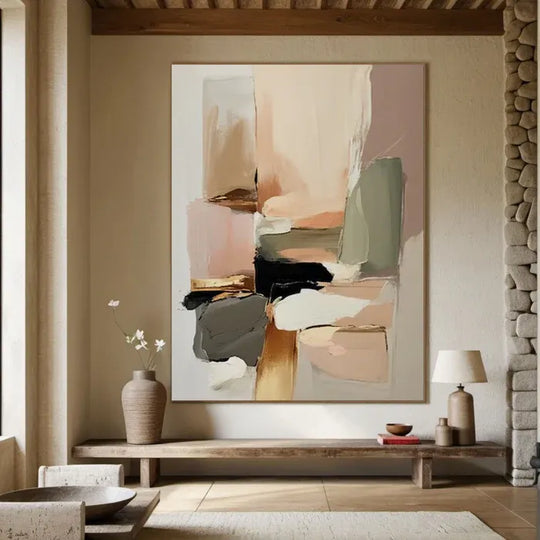
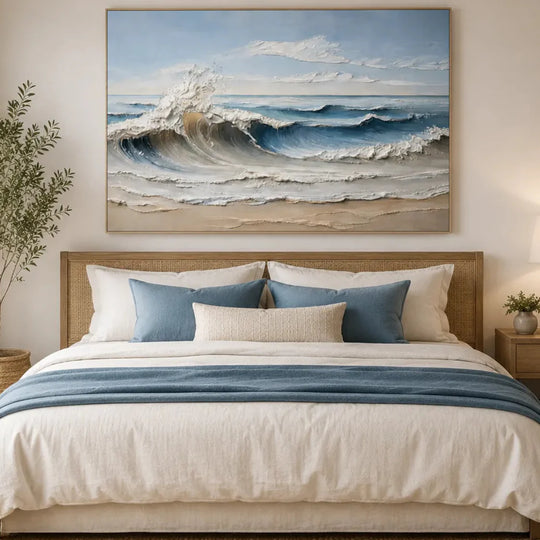
Pick one big piece when your wall is a clean, uninterrupted rectangle and you want the room to feel resolved. A single canvas gives the eye one place to land. Fewer edges, fewer gaps to get wrong, fewer decisions. And when the scale is right, a solo painting reads as intentional in a way a fussy arrangement rarely does.
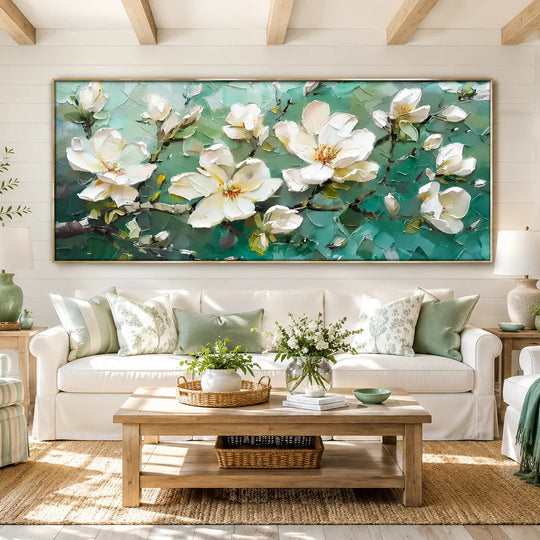
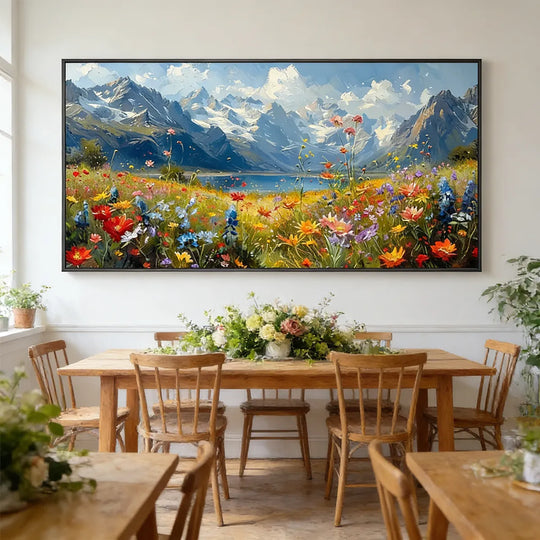
The rule I trust: your art should span about two-thirds the width of the furniture beneath it. Over a standard 96-inch sofa, that's roughly 60 to 75 percent of the sofa's width, which usually means one wide horizontal canvas. Anything the design world calls "large" starts around 30 by 40 inches and climbs from there. If your sofa wall is bare and you keep walking past it thinking it looks empty, a single big painting is almost always the fix. Our landscape paintings and wide abstracts are built for exactly this job.
When does a set of two or three work better?
Go with a set when the wall is genuinely wide, or when something breaks it up. A light switch, a thermostat, the turn of a corner, a doorway sitting off-center. Two or three panels let you work around those obstacles instead of fighting them. A set also adds a sense of movement, which suits a long hallway, a stairwell, or a dining wall where you want the eye to travel.
There's a practical upside too. Two or three smaller canvases are easier to carry, easier to hang level, and easier to nudge into place than one enormous piece. If you've ever tried to solo-hang a five-foot canvas, you know why people reach for a pair. You can see how we size these in our sets of 2.
What size should each option be?
For one painting, measure your furniture, take two-thirds of that width, and shop around that number. For a set, add the panels plus the gaps between them and treat that whole span as your "painting." I leave about 2 to 4 inches between panels in a set, tighter for small pieces, a touch wider for big ones. Whatever you choose, the bottom of the art should sit roughly 6 to 10 inches above the sofa back so the two feel connected rather than floating apart. We cover the vertical math in our guide to sizing art above a sofa.
Does a set have to match?
No, but it should agree with itself. The strongest sets share a palette and a mood even when the images differ. This is an old idea, not a new one. Painters have hung related panels together as diptychs and triptychs for centuries, and museums like the Tate still group them that way. The lesson holds for a living room: repeat one or two colors across the panels and the wall reads as one thought instead of three separate ones.
How do you test it before you buy?
Grab painter's tape and outline the size you're considering right on the wall. Step back. Live with it for a day. It's the cheapest, most honest way to see what feels balanced before you commit a cent. Tape one big rectangle, then tape two smaller ones with a gap, and you'll usually feel which the wall wants within a minute.
And because every Rosemary Art piece is 100% hand-painted, signed, and offered in free custom sizes, you're not stuck with a stock rectangle. If the tape says you need a 55-inch canvas or a pair at 24 by 36 each, we paint to that. We send a finished photo for your approval before anything ships, delivery is free, insured, and takes 4 to 8 days, and there's a 30-day return window if the room disagrees with your plan. Start browsing in all paintings once you've taped your wall.
Frequently asked questions
Is one large painting more expensive than a set? Not always. A big single canvas uses more material, but a multi-panel set means more stretching, wiring, and packing. Price tracks total square footage and detail more than panel count.
Can I mix a big piece with smaller ones later? Yes. Anchor the wall with one strong painting now, then build a loose gallery around it over time. Keep the palette related and it'll grow gracefully.
What if my wall is really wide but I love the look of one painting? Go big and center it, then let lamps, a plant, or a console fill the flanks. A single painting doesn't have to cover the whole wall to own it.
Two panels or three? Two reads calm and modern. Three adds a beat of rhythm and suits longer walls. Odd numbers tend to feel a little more relaxed, but there's no wrong answer here.