Wabi-Sabi Decor: The Timeless Trend Designers Keep Returning To
Interior trends come and go, but wabi-sabi decor continues to attract designers who value calm, authenticity, and natural beauty. Rather than creating spaces that look perfectly finished, wabi-sabi interiors celebrate texture, age, irregularity, and the quiet character of handmade objects.
In a world filled with fast-changing trends and mass-produced furniture, wabi-sabi offers a more personal and timeless approach to decorating.

What Is Wabi-Sabi Decor?
Wabi-sabi is a Japanese philosophy centered on the beauty of imperfection, simplicity, and natural change.
In interior design, this philosophy appears through earthy colors, organic shapes, natural materials, worn surfaces, handmade ceramics, textured fabrics, and objects that feel unique rather than identical.
A wabi-sabi home does not need to look old or unfinished. Instead, it should feel relaxed, honest, and thoughtfully arranged.
Why Designers Keep Returning to Wabi-Sabi
It Feels Authentic
Many modern interiors can feel overly polished or carefully staged. Wabi-sabi design creates a more natural atmosphere by allowing visible textures, subtle imperfections, and handmade details to remain part of the space.
A textured wall, an uneven ceramic vase, or a hand-painted artwork can give a room more character than a perfectly matched collection of decorations.
It Creates a Calmer Home
Wabi-sabi interiors often use soft, neutral colors such as beige, cream, warm gray, clay, brown, and muted green.
These shades reduce visual noise and help create a peaceful environment. For this reason, wabi-sabi decor works especially well in living rooms, bedrooms, reading areas, and other spaces designed for rest.
It Works With Natural Materials
Wood, stone, linen, clay, plaster, and cotton are commonly used in wabi-sabi interior design.
These materials age naturally and often become more beautiful over time. Small marks, changes in color, and signs of use are not always treated as flaws. Instead, they become part of the material’s story.
 It Is More Timeless Than Trend-Driven
Although wabi-sabi has become a popular interior design trend, its appeal does not depend on one particular season.
The focus on simplicity, craftsmanship, and meaningful objects gives the style lasting value. Designers can combine it with minimalist, organic modern, rustic, or Japandi interiors without completely changing the room.
How to Add Wabi-Sabi Decor to Your Home
You do not need to renovate your entire home to create a wabi-sabi atmosphere. A few intentional changes can make a noticeable difference.
Start with a warm neutral color palette. Choose furniture with simple forms and natural finishes. Mix smooth surfaces with rougher textures, such as linen cushions, plaster walls, handmade pottery, and unfinished wood.
Avoid filling every empty space. Wabi-sabi design values breathing room, so each object should have enough space to be noticed.
Most importantly, select decorative pieces that feel personal and handcrafted rather than overly perfect.
Use Wabi-Sabi Wall Art as a Focal Point
Wall art is one of the easiest ways to introduce wabi-sabi style into a room.
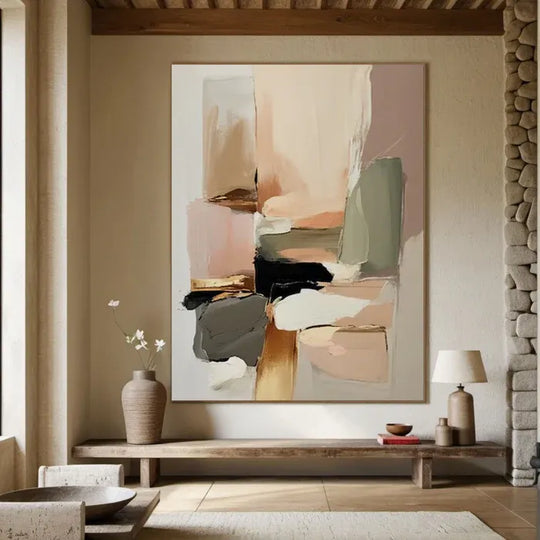
Hand-painted artwork with visible brushstrokes, organic shapes, earthy colors, and raised textures can add depth without making the space feel busy. Textured art also changes throughout the day as natural light creates different shadows across the surface.
For larger walls, a single oversized painting can create a stronger sense of calm than several small decorative pieces.
Explore our wabi-sabi art collection to discover hand-painted pieces designed with neutral tones, natural textures, and organic forms.
Wabi-Sabi vs. Japandi
Wabi-sabi and Japandi are often mentioned together, but they are not exactly the same.
Japandi combines Japanese simplicity with Scandinavian functionality. It usually features clean lines, organized layouts, and practical furniture.
Wabi-sabi is more irregular and expressive. It accepts rough textures, aged materials, uneven forms, and visible handmade details.
The two styles can work well together. Japandi can provide the clean structure of a room, while wabi-sabi artwork and accessories add warmth, depth, and individuality.
Is Wabi-Sabi Just a Trend?
Wabi-sabi may be described as a decor trend, but its philosophy is much older than modern interior design.
Its lasting appeal comes from the idea that a home does not need to be perfect to feel beautiful. A meaningful interior can be simple, textured, personal, and slightly imperfect.
This is why designers continue to return to wabi-sabi. It creates spaces that feel lived-in, calming, and connected to natural materials.
Final Thoughts
Wabi-sabi decor is not about making a home look unfinished. It is about choosing natural materials, thoughtful objects, handmade details, and textures that bring warmth and character into a space.
By focusing less on perfection and more on authenticity, you can create an interior that feels calmer, more personal, and more timeless.
Discover more handmade wabi-sabi wall art and find a piece that brings quiet texture and natural beauty into your home.