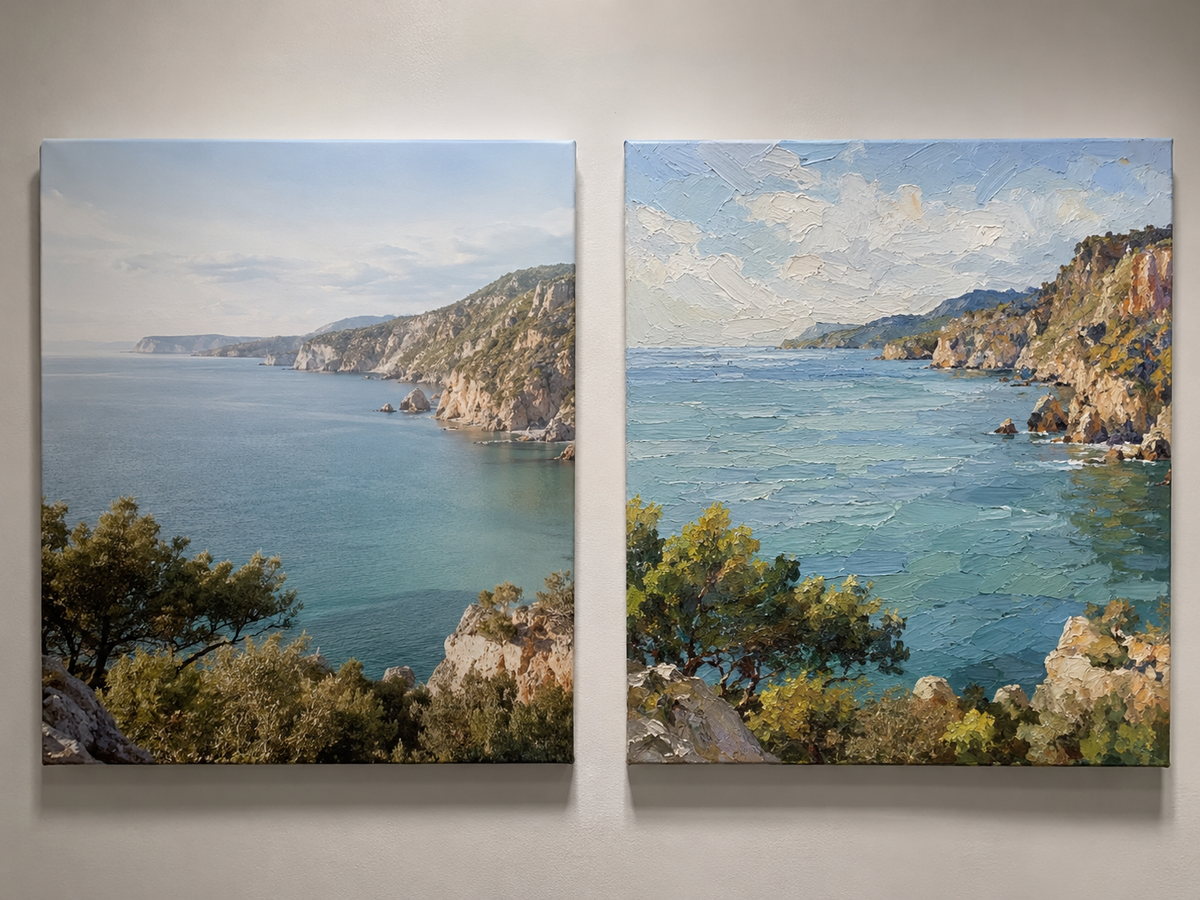
Buying a handmade painting online is different from ordering a standard household product. Customers may need a specific size, a different color palette, a matching frame, or adjustments based on the room where the artwork will be displayed.
These details cannot be handled effectively through a simple product selection alone. They require clear communication between the customer, the RosemaryArt customer service team, and the artist responsible for the painting.
At RosemaryArt, custom requests are handled through a step-by-step confirmation process. The goal is to clarify the customer’s requirements before production, reduce misunderstandings, and allow the customer to review the finished artwork before shipment.
What Is Considered a Custom Artwork Request?
A custom request does not always mean creating a completely new painting from the beginning. In many cases, customers already like an existing artwork but need it adjusted for their space.
Common custom painting requests include:
-
Changing the dimensions of an existing design
-
Adjusting the main colors
-
Creating a horizontal or vertical version
-
Reducing or increasing the level of texture
-
Changing small elements in the composition
-
Selecting a different frame color
-
Creating matching artwork for another wall
-
Reproducing a style based on a reference image
Customers can submit these details through the RosemaryArt custom artwork process.
Before production begins, the team confirms the main specifications in writing. This normally includes the size, orientation, color direction, texture, frame choice, shipping format, and any important design details.
How RosemaryArt Customer Service Handles a Custom Order
Every custom order is different, but the general process follows several important stages.
1. Understanding the Customer’s Space
Customers are encouraged to provide more than a preferred painting size.
A wall photo, wall dimensions, furniture width, ceiling height, and room style can help the team understand how the artwork will appear in the actual space.
For example, a customer may initially request a 40-inch painting because that size appears suitable on the product page. After reviewing the wall and sofa measurements, the team may find that the artwork would look too small.
In this situation, customer service may recommend a wider size or prepare a digital wall mock-up for comparison.
The purpose is not simply to sell a larger painting. It is to prevent incorrect proportions that could make the final installation feel visually unbalanced.
2. Confirming the Artwork Requirements
Once the general size and style have been discussed, the team organizes the request into clear production details.
This may include:
-
Final canvas dimensions
-
Framed or unframed delivery
-
Horizontal or vertical orientation
-
Preferred background color
-
Colors that should be reduced or avoided
-
Texture thickness
-
Frame style and color
-
Reference image or product link
Vague instructions such as “make it warmer” or “use less blue” can be interpreted differently by different people. Whenever possible, customers should provide visual references, room photos, or specific color examples.
Clear confirmation before painting begins reduces unnecessary revisions later.
3. Communicating the Request to the Artist
After the details are confirmed, the order is assigned to an artist whose painting experience matches the requested style.
The artist receives the agreed specifications rather than relying only on the original product image.
Because each artwork is painted by hand, there may be small differences in brushwork, texture, and natural details. These variations are part of the handmade process rather than printing defects.
However, the overall composition, color direction, proportions, and requested changes should still follow the confirmed order requirements.
4. Reviewing the Finished Artwork
After the painting is completed, RosemaryArt provides final photos or videos for approval.
This review allows the customer to check important elements such as:
-
Overall composition
-
Main color balance
-
Texture and brushwork
-
Artwork orientation
-
Frame appearance
-
General similarity to the approved design
If a reasonable adjustment is needed, the customer should explain it clearly and identify the exact area that needs attention.
For example, “Please make the upper-left section slightly warmer” is more useful than “The painting does not feel right.”
Once the requested adjustment has been completed, updated photos or videos can be provided for another review.
The artwork is prepared for shipment after final confirmation.
Real Custom Buying Scenarios
The following scenarios show how custom painting customer service works in common purchasing situations.
Scenario 1: The Customer Is Unsure About the Size
A customer likes a wide abstract painting but does not know which size will fit above a sofa.
Instead of recommending a size based only on the wall width, the team also considers the sofa width, available space on both sides, ceiling height, and the distance between the sofa and artwork.
A wall mock-up can then show how different sizes may appear before the order is confirmed.
This helps the customer avoid purchasing artwork that looks too narrow, too high, or disconnected from the furniture below it.
Scenario 2: The Artwork Needs Different Colors
A customer may like the composition of an existing painting but need it to coordinate with a beige, gray, blue, or neutral interior.
The customer service team first confirms which colors should remain and which colors should change.
The artist can then adjust the palette while preserving the general structure of the original artwork.
However, color requests need to be realistic. Screen settings, indoor lighting, daylight, and surrounding furniture can all affect how a color appears.
Providing a room photo or physical color reference makes the request more accurate than relying on a general description such as “light cream” or “warm white.”
Scenario 3: A Small Change Is Requested Before Shipping
After receiving the final approval photos, a customer may feel that one area is too dark or that a particular detail is too strong.
The team reviews whether the requested change can be completed without damaging the composition or texture.
Minor adjustments are usually easier to manage before the painting is framed and packed. This is one reason the approval stage is important.
The customer should review the photos carefully rather than approving immediately and requesting major changes after shipment.
Scenario 4: The Customer Needs Coordinated Artwork
Some customers need two or more paintings for the same room, hallway, hotel project, or commercial space.
The paintings do not need to be identical, but they should share enough visual elements to feel connected.
Customer service may help coordinate:
-
Related color palettes
-
Similar texture levels
-
Consistent frame finishes
-
Matching dimensions
-
Balanced horizontal and vertical formats
This makes the collection feel intentional rather than appearing like unrelated pieces selected separately.
What Happens if There Is a Problem?
If an issue occurs, the first step is to compare the received artwork with the confirmed order information.
Customers should provide clear photos or videos showing the problem. For shipping damage, images of the outer packaging, inner protection, frame, and artwork may be required.
Custom and made-to-order artwork is different from a standard in-stock product. The available solution depends on the type of issue, the approved production details, and the condition of the delivered artwork.
Customers should review the RosemaryArt return and refund policy before placing an order, especially when purchasing customized work.
Keeping the order confirmation, approval images, and written communication also makes it easier to review any disagreement accurately.
How to Submit a Clear Custom Painting Request
A useful custom request should include:
-
The wall width and height
-
A clear photo of the wall
-
The preferred artwork or reference image
-
The desired painting dimensions
-
Horizontal or vertical orientation
-
Preferred colors
-
Colors or details to avoid
-
Frame requirements
-
Delivery destination
-
Required completion date, when relevant
The more specific the information is, the easier it becomes to prepare an accurate recommendation.
Customers can contact RosemaryArt customer service to discuss wall size, design changes, framing, shipping, or other custom requirements.
Final Thoughts
RosemaryArt customer service is not limited to answering questions after an order is placed. It plays an important role throughout the custom artwork process.
The team helps clarify dimensions, organize design requirements, communicate with the artist, provide approval images, and handle reasonable adjustments before shipment.
However, successful customization also requires the customer to provide accurate measurements, clear references, and specific feedback.
A reliable custom order process is not based on vague promises that every handmade painting will be identical. It is based on written confirmation, visual review, realistic expectations, and clear communication before the artwork leaves the studio.