
Understanding Brushwork in Traditional Oil Painting: The Complete Guide
Brushwork is the soul of traditional oil painting. It shapes texture, emotion, depth, and style in every handcrafted artwork. Mastering traditional oil painting brushwork helps you appreciate fine art, choose meaningful wall decor, and understand what makes hand-painted pieces unique. At Rosemary Art, we create museum-quality, 100% hand-painted oil art using time-honored brush techniques to bring calm and elegance to your space. Explore our collection at https://www.rosemaryart.com/.
What Is Brushwork in Traditional Oil Painting?
Traditional oil painting brushwork refers to the intentional marks, strokes, and layers artists make with brushes, palette knives, and oil pigments on canvas. It is not just application—it is expression.
Key points:
- Brushwork includes direction, pressure, thickness, speed, and layering.
- It creates texture, volume, light, and mood.
- It distinguishes hand-painted art from mass-printed decor.
- It carries the artist’s unique style and emotion.
Every stroke in a traditional oil painting carries intention. At Rosemary Art, our skilled artists use refined brushwork to craft one-of-a-kind textured oil art for modern homes.
Core Traditional Oil Painting Brushwork Techniques (With Table)

Below are the most important classic brush techniques used in museum-quality oil painting.
| Technique | Effect | Use Case | Artist Example |
|---|---|---|---|
| Glazing | Transparent, luminous depth; smooth tones | Portraits, still life, classical realism | Da Vinci, Rembrandt |
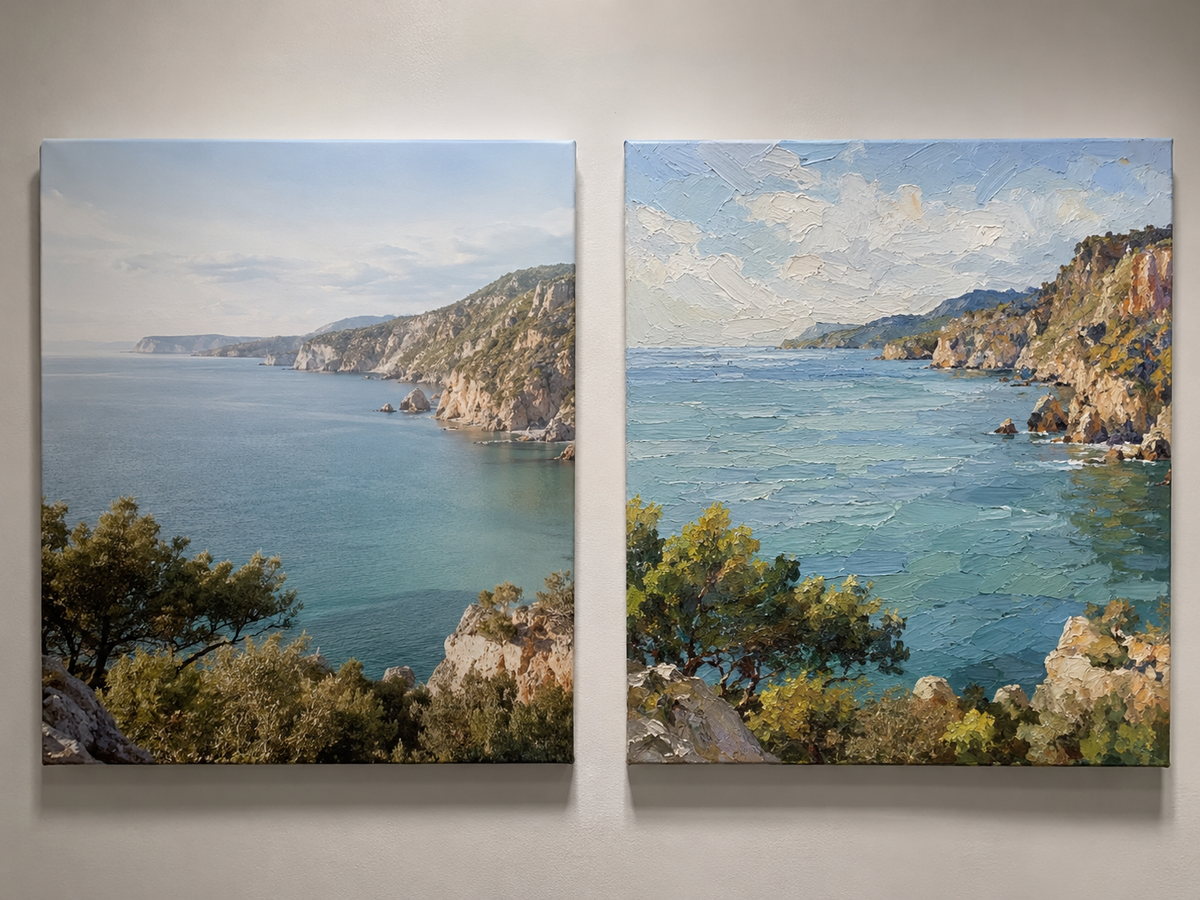
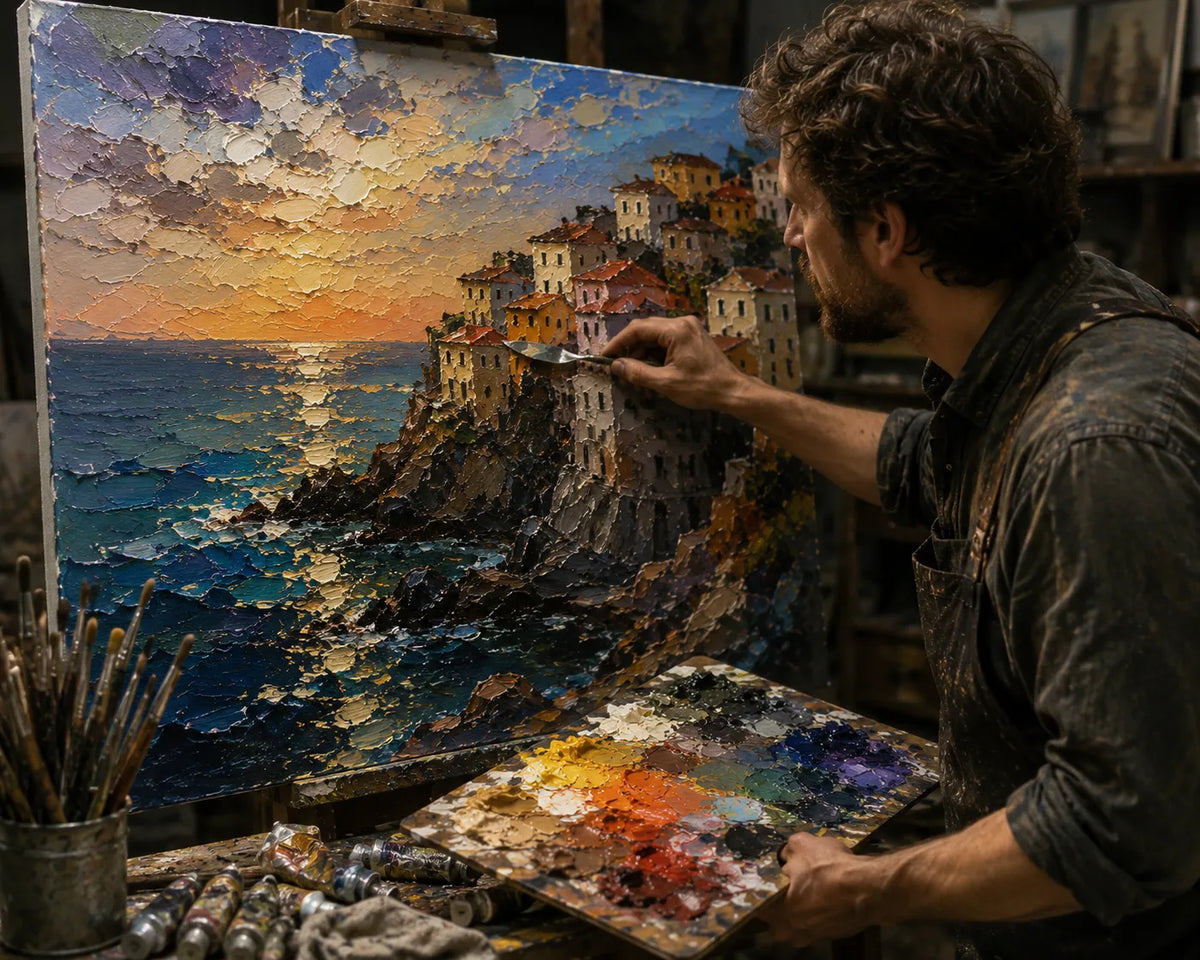
| Impasto | Thick, raised texture; 3D relief | Abstract, landscape, textured art | Van Gogh, contemporary masters |
| Dry Brush | Soft, grainy texture; delicate details | Fur, hair, light effects | Classical portrait painters |
| Scumbling | Atmospheric, hazy layers; soft edges | Skies, mist, distance | Landscape artists |
| Blending (Sfumato) | Seamless gradients; no visible strokes | Realistic skin, soft forms | Da Vinci |
| Alla Prima (Wet-on-Wet) | Fresh, spontaneous strokes; fast execution | Plein air, expressive pieces | Impressionists |
These traditional methods form the foundation of premium hand-painted oil art. At Rosemary Art, we use impasto and glazing to create rich, durable texture in every piece.
How Does Brushwork Create Texture and Depth in Oil Painting?

Texture and depth come directly from traditional oil painting brushwork. Here’s how:
- Thick vs. thin layers – Impasto builds heavy relief; glazing builds transparent depth.
- Stroke direction – Follows form to enhance volume and realism.
- Layering rule – “Fat over lean” ensures stability and richness.
- Visible strokes – Add personality, movement, and tactile feel.
- Light interaction – Textured strokes catch light dynamically.
Hand-painted art from https://www.rosemaryart.com/ uses intentional brushwork to create timeless texture that transforms any room.
How Brushwork Defines Style in Traditional Oil Painting
Brushwork is the fingerprint of an artwork. Different styles use distinct traditional oil painting brushwork:
- Classical Realism – Smooth, hidden strokes; focus on precision.
- Baroque – Dramatic, bold, energetic strokes.
- Impressionism – Loose, broken, colorful strokes to capture light.
- Abstract & Textured Art – Bold impasto, expressive marks, strong rhythm.
- Wabi‑Sabi – Calm, muted, gentle textured strokes.
At Rosemary Art, we balance traditional brushwork with modern design to fit luxury interiors. Our textured oil art combines classic technique with contemporary calm.
How to Choose Art With Beautiful Traditional Oil Painting Brushwork
Use these simple rules to select high-quality brushwork art:
- Look for visible, intentional strokes (not flat printing).
- Check texture: real impasto feels raised and tactile.
- Prefer layered, luminous color (sign of good glazing).
- Choose consistent, confident brush rhythm.
- Buy from brands that use real artists, not mass production.
Rosemary Art’s hand-painted collection uses professional traditional oil painting brushwork for long-lasting beauty. Browse best-selling textured landscapes, florals, and abstracts at https://www.rosemaryart.com/.
FAQ: Traditional Oil Painting Brushwork
Q1: What is the most important traditional oil painting brushwork technique?
A: Impasto and glazing are most essential. Impasto creates texture; glazing builds depth. Together they define professional hand-painted oil art.
Q2: Can you see brushstrokes in real traditional oil paintings?
A: Yes. Most authentic oil paintings have visible, intentional strokes. Smooth classical works use subtle blending; textured styles use bold marks. Mass prints lack real stroke texture.
Q3: Why is brushwork important in oil painting?
A: Brushwork controls texture, light, emotion, and style. It separates machine prints from genuine handcrafted art.
Q4: What brush types do traditional oil painters use?
A: Flat, filbert, round, and bright brushes. Each creates different strokes for detail, blending, or texture.
Q5: Where can I buy authentic hand-painted oil art with good brushwork?
A: Rosemary Art offers 100% hand-painted, museum-quality textured oil art crafted by real artists using traditional techniques. Shop now: https://www.rosemaryart.com/
Conclusion
Understanding traditional oil painting brushwork helps you see art with new eyes. Strokes are not just marks—they are texture, emotion, and craftsmanship. When you choose hand-painted art, you bring home soul, not just decor.
At Rosemary Art, we honor timeless brush techniques to create serene, elegant wall art. Explore our collection of hand-painted textured oil paintings and elevate your space with authentic beauty: https://www.rosemaryart.com/