Introduction: Look Up—Breaking the Horizontal Habit
When decorating a home, 90% of homeowners fall into the "horizontal trap"—focusing solely on the wide spaces above sofas or beds . However, at Rosemary Art, we have found that one of the most effective secrets in interior design is actually vertical .
Not every wall offers a panoramic canvas . Whether you are dealing with low ceilings or awkward corners, vertical (portrait-oriented) oil paintings are essential tools. They don't just fill space; they correct room proportions and turn overlooked areas into stunning focal points .
1. Visual Magic: The "High Ceiling" Effect
This isn't just decoration; it’s optical illusion. Just as pinstripes on a suit make a person look taller, tall and narrow artwork guides the human eye upward .
-
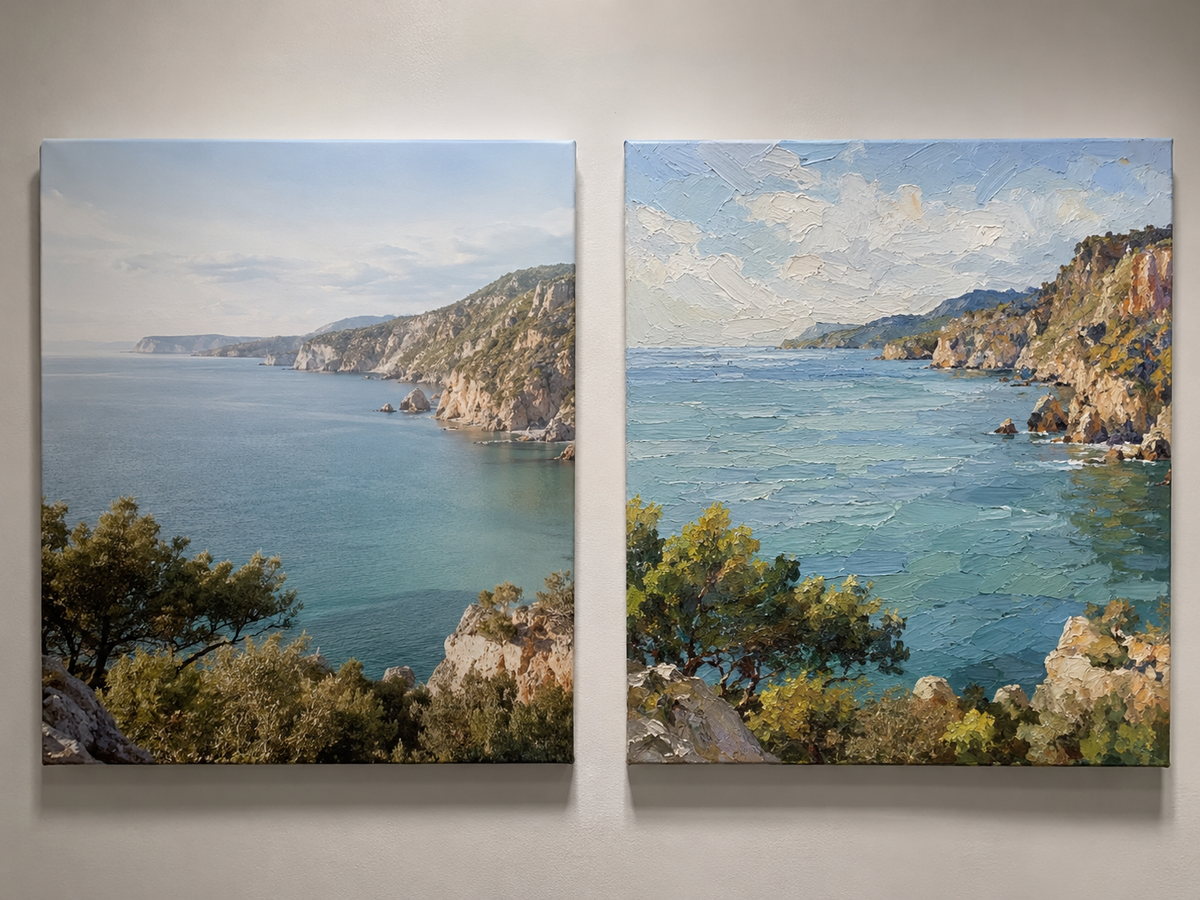
For Low Ceilings: If your room feels compact, avoid wide, heavy frames. Instead, choose a Vertical Landscape Oil Painting that features upward movement—like towering trees or climbing floral motifs. This vertical movement creates an immediate illusion of height, making the room feel airy and spacious .
-
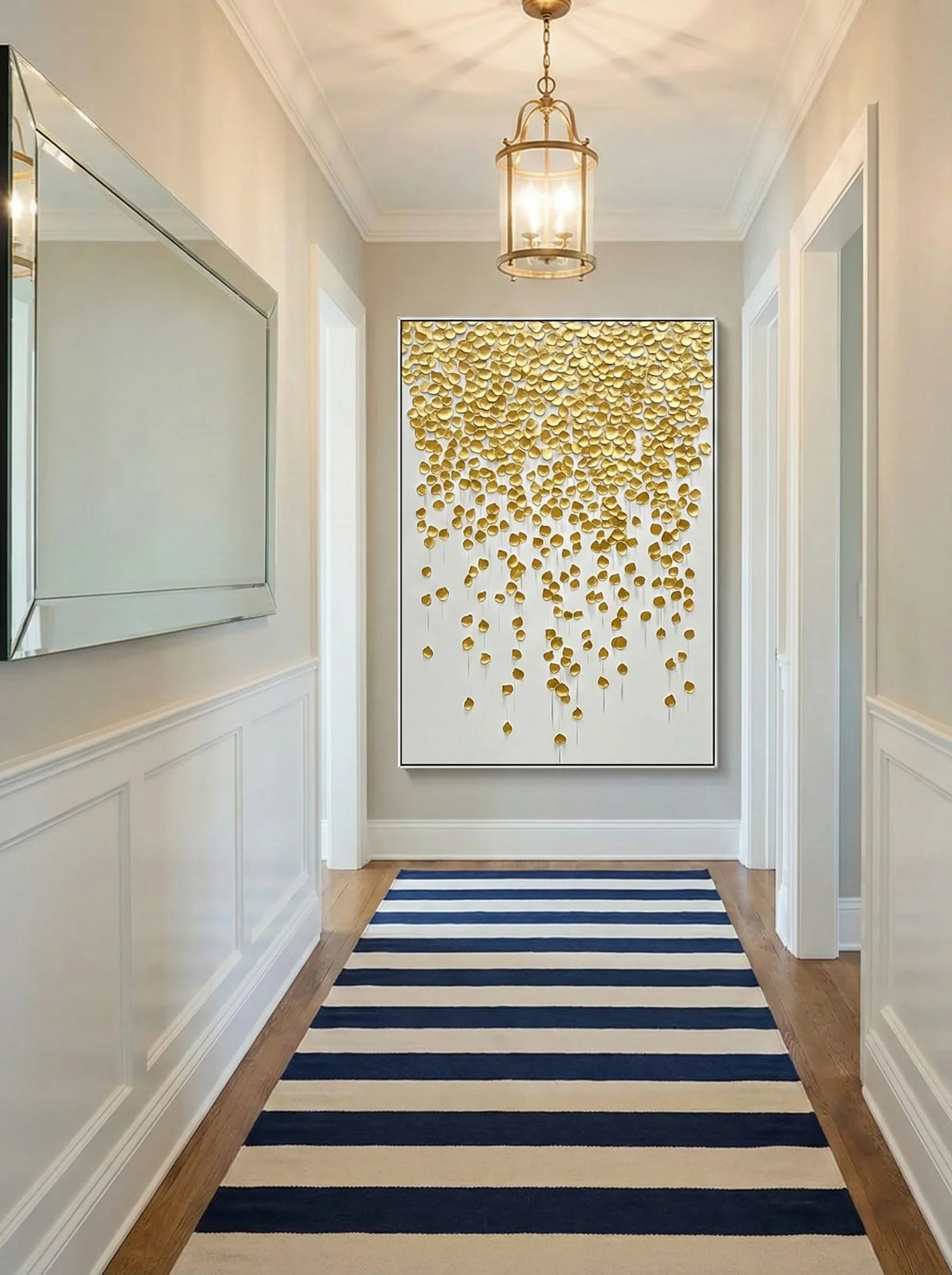
Dynamic Depth: Unlike flat prints, a hand-painted oil piece adds "visual rhythm." An abstract cascade of thick impasto strokes draws the viewer in, adding a layer of sophistication that mass-produced art cannot achieve .
2. Solving "Dead Zones": Where to Place Vertical Art
Some walls are too narrow for a landscape piece but look unfinished when left bare. These "transition spaces" are where vertical art shines .
The Hallway Gallery (Narrow Transitions)
Hallways and stairwells are notoriously difficult to decorate . A vertical oil painting fits these "awkward" dimensions perfectly .
-
Pro Tip: Place a Textured Abstract Painting at the end of a hallway. The physical texture of the oil paint catches the light, turning a boring walk into a gallery experience.
The "Zero Footprint" Entryway
First impressions matter . In smaller apartments, floor space is premium real estate . A tall piece of art in the foyer adds personality and color without cluttering the floor with furniture . It sets a tone of elegance immediately upon entering .
3. Curator’s Rules: Balancing Scale and Frame (Design Tips)
To get the most out of your vertical art, keep these curatorial tips in mind :
-
The 2/3 Rule for Verticals: If you are hanging a painting above a specific piece of furniture (like an accent chair or a small console), the artwork's width should be roughly two-thirds (2/3) the width of the furniture below it . This ensures the art feels grounded and not top-heavy .
-
Color & Atmosphere:
-
To Open Up a Room: Opt for artworks with lighter tones or airy backgrounds .
-
To Create a Cozy Nook: For a reading corner, darker and richer tones work best to create intimacy .
-
-
Let it Breathe: Vertical art commands attention. Ensure there is enough negative space (empty wall) around the frame—at least 6 inches on either side—so the piece doesn't feel squeezed in .
Frequently Asked Questions (FAQ)
-
Q: Can I hang two vertical paintings side-by-side?
-
A: Absolutely. This is called a "Diptych." Placing two matching vertical paintings above a sofa is a modern alternative to one large horizontal piece.
-
-
Q: What frame works best for vertical art?
-
A: To emphasize height, we recommend a sleek Floater Frame. It provides a minimal border that doesn't "cap" the visual upward movement, unlike thick ornate frames .
-
Ready to Lift Your Gaze?
Don't ignore the vertical potential of your home. The right perspective can transform a cramped room into a sanctuary.
👉 Browse the Vertical Oil Painting Collection at Rosemary Art