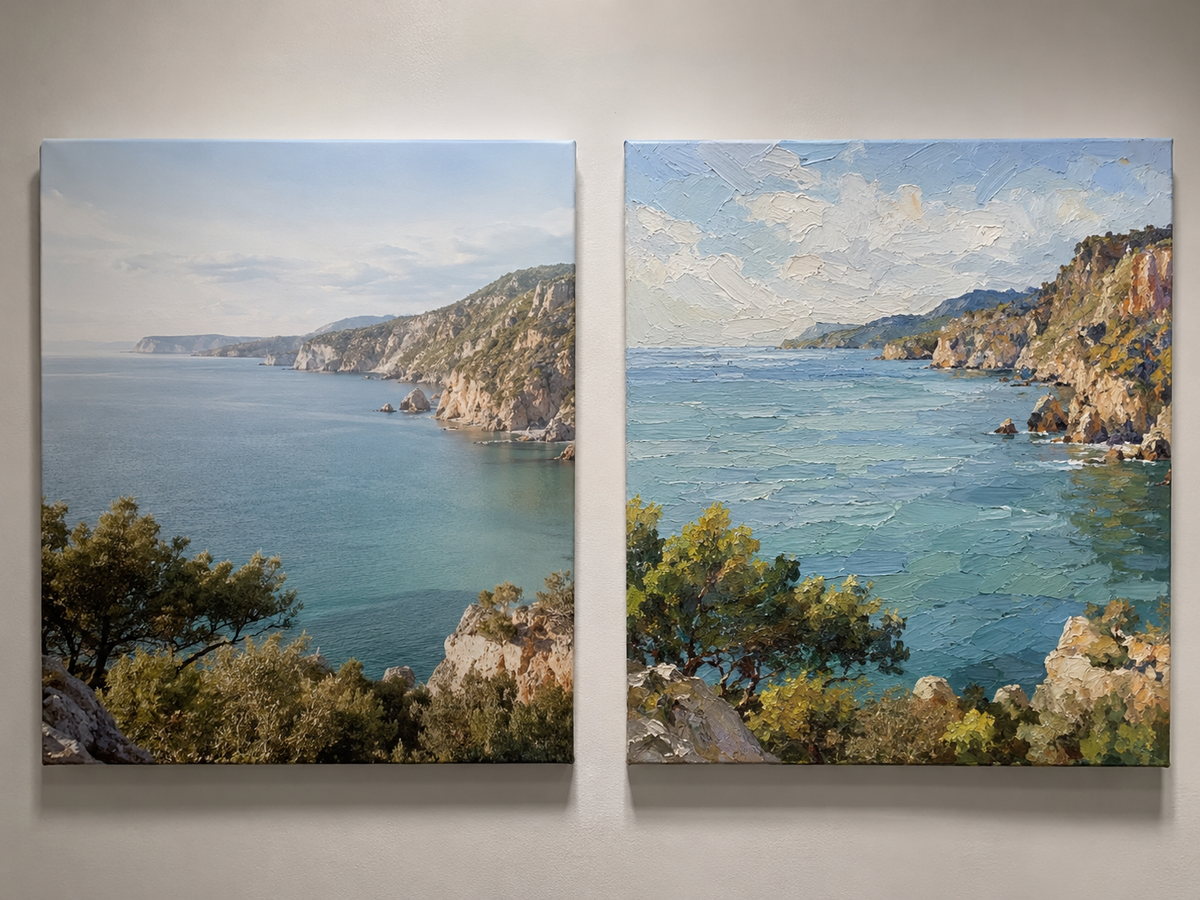

A true 3D wall painting should not only look deep in a product photo. It should have real texture you can see, feel, and enjoy in daily light.
That is where many buyers get disappointed. Online, a flat printed artwork can look like it has raised waves, thick flowers, layered stone, or sculpted brushstrokes. But when it arrives, the surface is smooth. The “3D” effect is only printed on the canvas.
It may still decorate a wall. But it is not real textured canvas wall art.
For homeowners, interior designers, hotel buyers, and art collectors, this difference matters. A printed illusion fills space. A real hand-painted oil painting brings surface, light, movement, and presence into the room.
What Does 3D Wall Painting Really Mean?
The phrase 3D wall painting is often used too loosely.
Some sellers use it for flat prints with shadow effects. These artworks may look raised from far away, especially in edited photos. But the canvas itself has no physical depth.
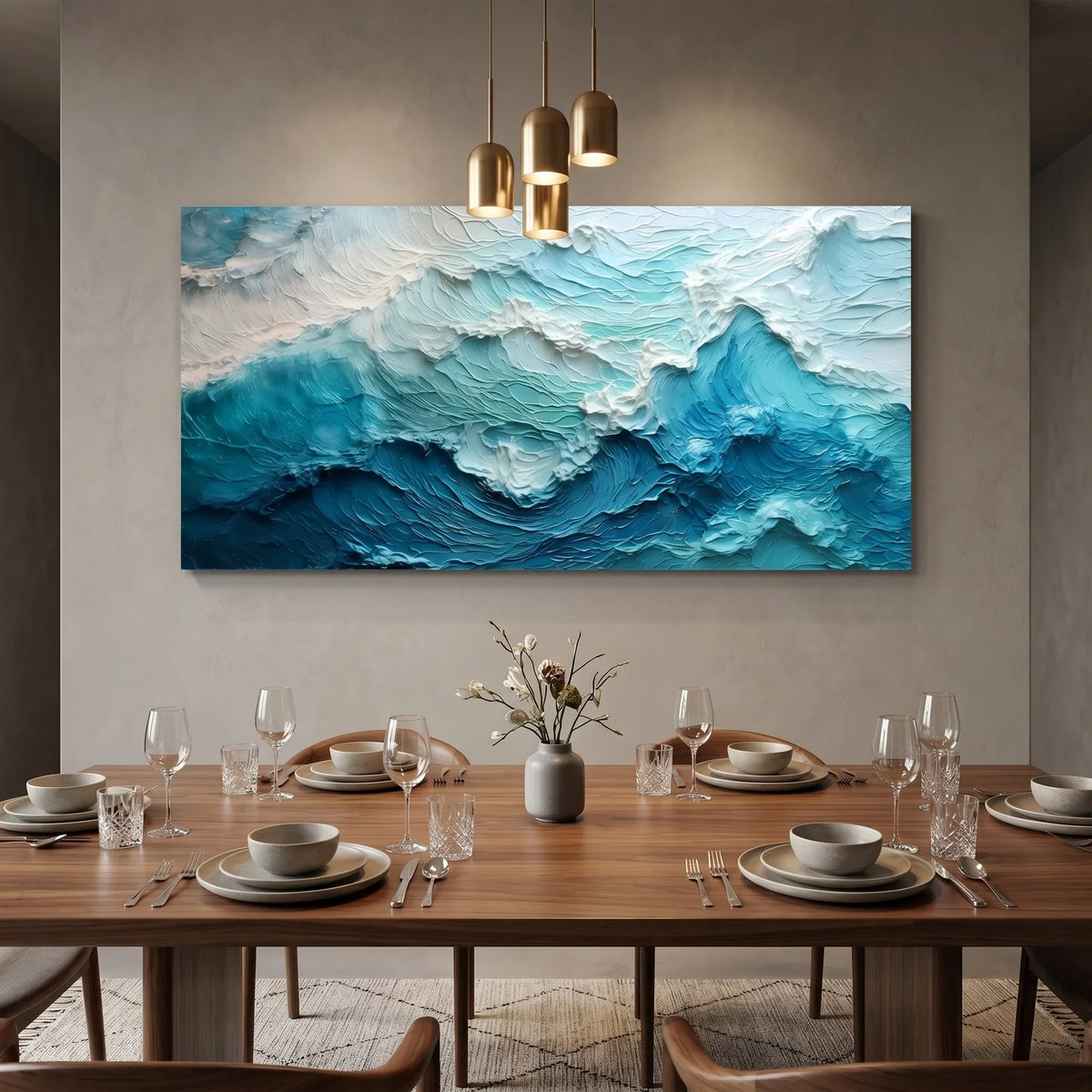
A real 3D wall painting should have actual raised texture. The artist builds the surface with paint, paste, gel, or layered brushwork. When light hits the artwork from the side, the texture creates natural shadows. When you walk closer, you can see the real hand-painted surface.
Here is the simple difference:
| Type | Depth Comes From | Surface Feel | Best For |
|---|---|---|---|
| Flat printed illusion | Printed shadow effect | Smooth | Budget decor |
| Textured canvas wall art | Raised material | Light texture | Modern homes |
| Hand-painted textured oil painting | Real brushwork and paint layers | Rich, touchable surface | Premium interiors |
The problem is not printed art itself. The problem is calling a flat image “3D” when there is no real texture.
Why Flat Printed Illusions Often Look Better Online Than in Real Life
A screen hides the biggest weakness of flat printed art: it is already flat.
When you view a product photo online, printed shadows can look convincing. But once the artwork is placed in a real room, the difference becomes easier to see.
The surface does not catch light naturally. The shadows do not change as the room changes. From the side, the artwork looks flat. In large sizes, this becomes even more obvious.
This is especially risky for large wall art above a sofa, bed, staircase, dining area, or hotel reception wall. A big artwork needs real presence. If the “texture” is only printed, the piece may feel more like a poster than a premium canvas.
Real texture does not need to fake depth. It has depth.
Why Real Textured Canvas Feels More Expensive
Real texture changes how a room feels.
A flat beige print may look clean, but it can also disappear on a neutral wall. A beige textured oil painting feels warmer because the raised surface adds shadow, softness, and movement. A white textured canvas can feel calm and architectural. A blue textured painting can make a room feel coastal without looking too themed.
Texture helps a room feel finished without making it busy.
That is why textured oil paintings work so well in:
-
Modern living rooms
-
Luxury bedrooms
-
Hotel lobbies
-
Designer villas
-
Dining rooms
-
Offices and reception spaces
-
Commercial interiors
The surface adds quiet detail. It gives people something to notice when they enter the room—and something to appreciate when they come closer.
For example, a large hand-painted textured artwork above a sofa can make the seating area feel more complete. In a hotel lobby, one oversized textured canvas can create a stronger first impression than several small flat prints.
This is not about being loud. It is about having presence.
Why Hand-Painted Texture Has More Value Than Printed Texture
A hand-painted oil painting carries the artist’s touch.
You can see where the brush moved. You can see where the paint is heavier, softer, smoother, or more raised. These small variations make the artwork feel human.
Printed texture repeats an image. Hand-painted texture creates a surface.
That difference matters for high-end interiors. A handmade piece feels less generic. It works better with natural materials like wood, linen, stone, plaster, leather, and metal. It can soften a modern room or add richness to a simple wall.
A custom oil painting also gives more freedom. You can adjust the size, color palette, style, texture level, and frame to fit the room.
This is useful when a standard artwork does not match the wall. For hotel projects, designers may need a repeated style across several rooms. For homeowners, the goal may be simpler: the painting should fit the sofa, wall color, and overall mood.
That is where real handmade art has a clear advantage.
You can view Rosemary Art’s 3D Textured Painting collection for raised canvas styles designed for large walls, modern homes, and project spaces.
How to Choose the Right 3D Wall Painting for Your Space
Before choosing a 3D wall painting, do not only look at the front image. Look at the surface.
Ask these questions:
-
Is the texture physically raised?
-
Are there close-up photos of the brushwork?
-
Can the size be customized?
-
Can the color be adjusted?
-
Does the style match the room’s mood?
-
Is the frame suitable for the space?
For a calm bedroom, choose soft texture and gentle colors such as cream, beige, white, gray, or pale blue. For a living room, medium texture often works well. For a hotel lobby or large commercial wall, stronger texture can help the artwork hold the space.
Size also matters.
If the painting is too small, it may look weak. If it is too large, it may make the wall feel crowded. For a sofa or bed wall, a good starting point is to choose artwork around two-thirds to three-quarters of the furniture width.
For a more organic, quiet luxury look, you can also explore Rosemary Art’s Wabi-Sabi Art collection, especially if your space uses neutral tones and natural materials.
Final Thoughts
A flat printed illusion can be useful for simple decor. But if you want a real 3D wall painting, the surface should be real.
Real textured canvas wall art has depth, shadow, movement, and touch. It changes with light. It feels more personal. It gives a room a stronger sense of quality.
For homes, hotels, designer projects, and large feature walls, that difference is not small.
A printed illusion may look good in a photo. A hand-painted textured oil painting feels good in the room.
That is the better standard.
FAQ
What is a real 3D wall painting?
A real 3D wall painting has physical raised texture on the canvas. The depth comes from paint, brushwork, or textured material, not only from printed shadows.
Is printed 3D wall art the same as textured canvas wall art?
No. Printed 3D wall art only creates a visual effect. Textured canvas wall art has real surface depth that can catch light and create natural shadows.
Are textured oil paintings good for large wall art?
Yes. Textured oil paintings work very well as large wall art because the raised surface gives the piece more presence and prevents the wall from feeling flat.
Can I customize a 3D wall painting?
Yes. A custom oil painting can usually be adjusted by size, color, style, texture level, and frame, which makes it easier to match homes, hotels, and designer projects.
What rooms are best for 3D textured canvas art?
3D textured canvas art works well in living rooms, bedrooms, dining rooms, hotel lobbies, offices, reception areas, and other spaces that need warm, premium wall decor.